

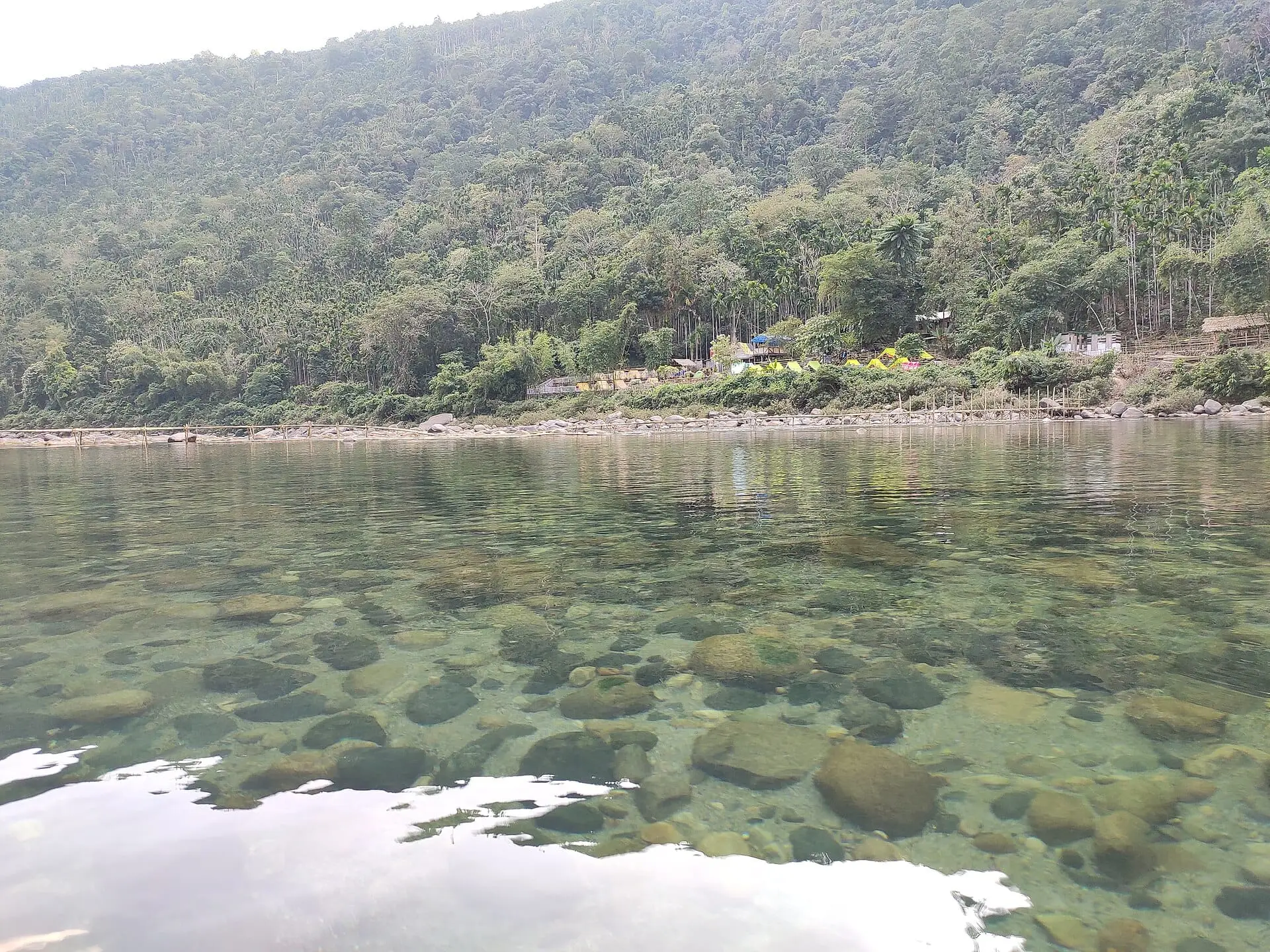
Dawki Travel Guide: Umngot River, Shnongpdeng and Mawlynnong
Plan a trip to Dawki in Meghalaya: boat on the clear Umngot river, camp at Shnongpdeng, visit Mawlynnong, and learn the best time to go and how to get there.
Photo: ANKAN, CC BY-SA 4.0
Dawki at a glance
- Best time
- October to May (clearest water in winter)
- Nearest airport
- Shillong (Umroi), about 120 km; Guwahati
- Nearest railway station
- Guwahati
- By road
- About 70 to 85 km from Shillong, around 3 hours
- Permits
- No Inner Line Permit for Indian visitors
- On the water
- Boat rides, kayaking, snorkelling, camping
- Ideal stay
- 2 days
Photos of Dawki
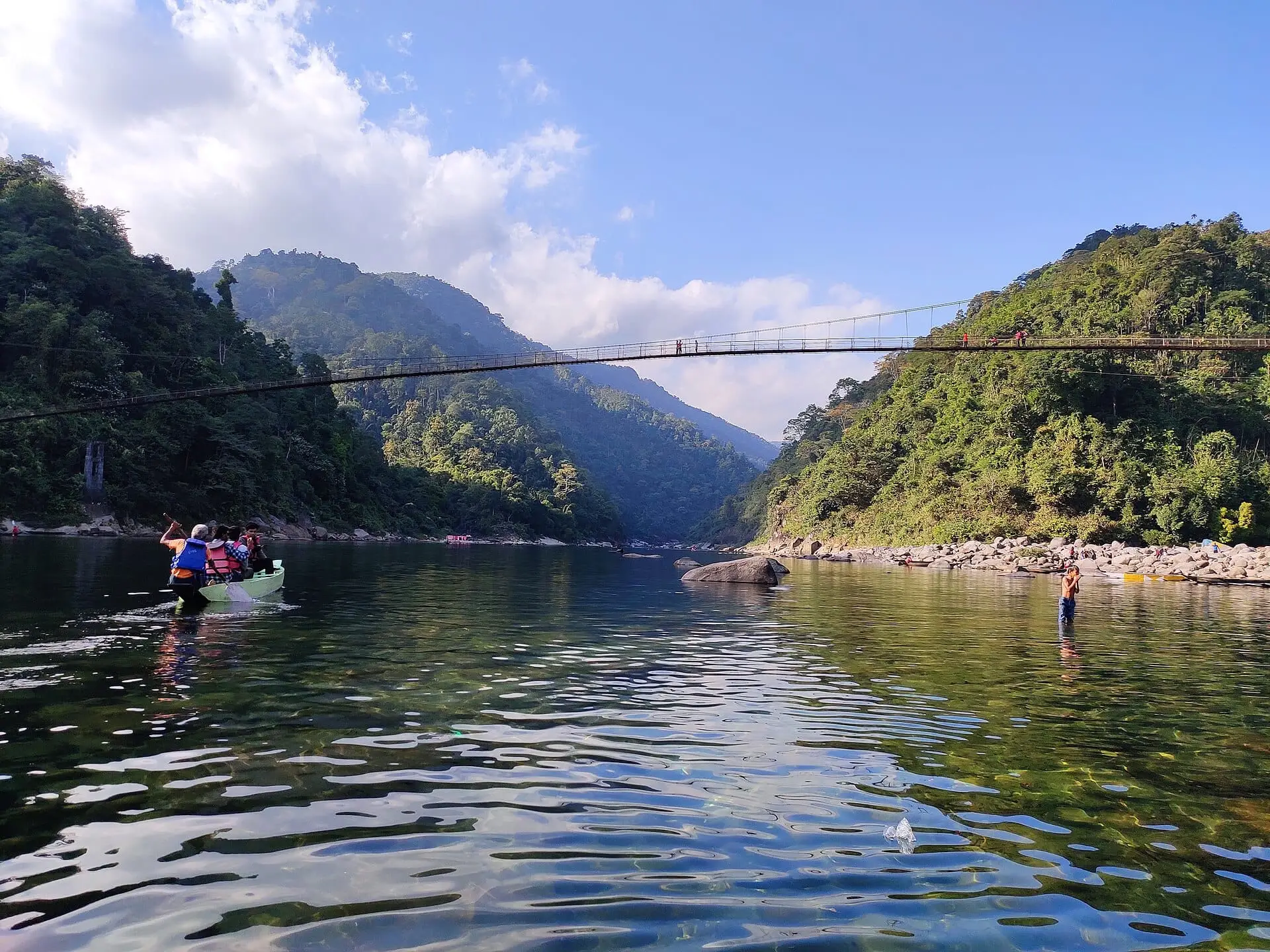
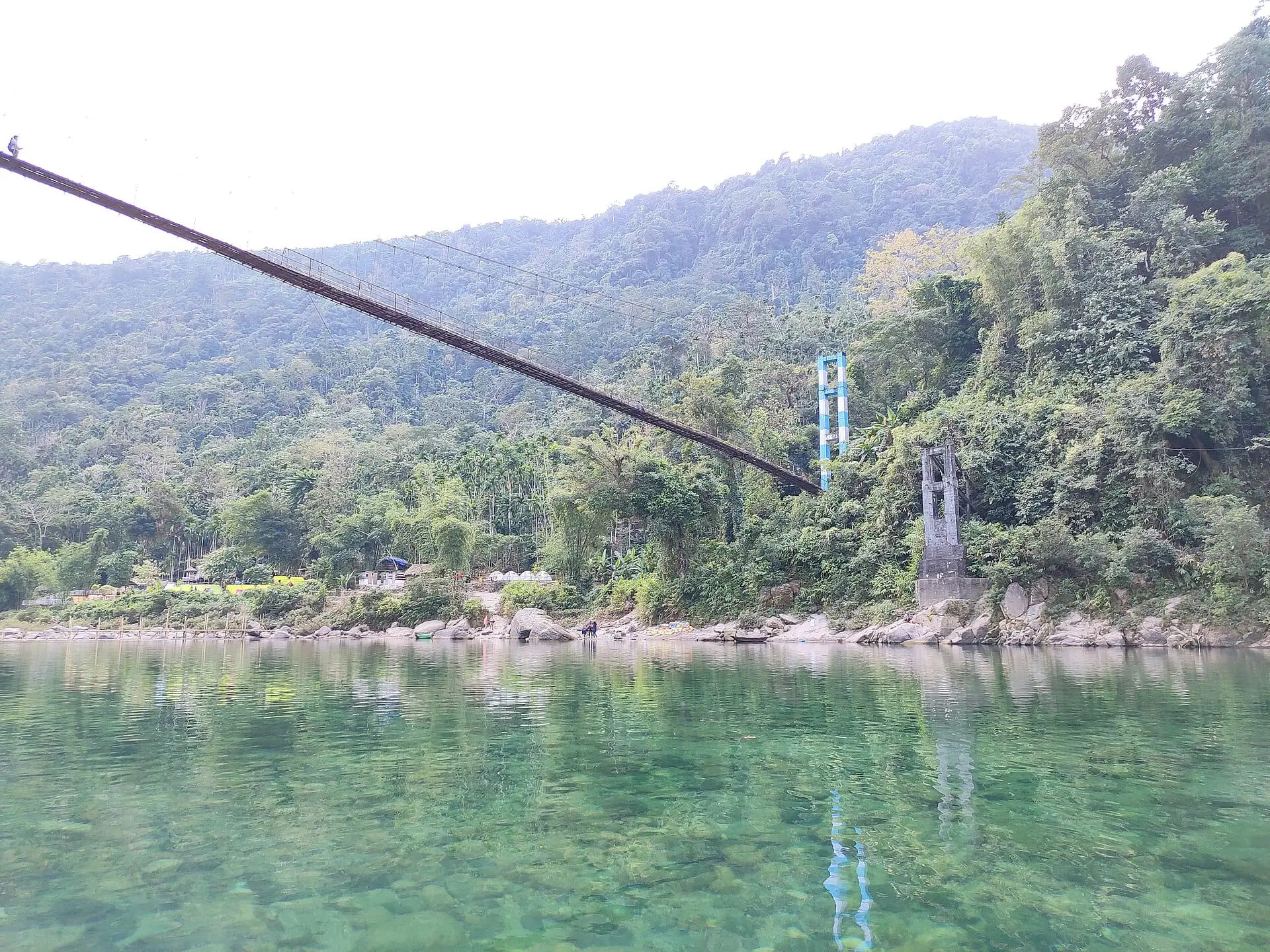
The old Dawki suspension bridge stretched across the Umngot river between wooded hills. Photo: ANKAN, CC BY-SA 4.0 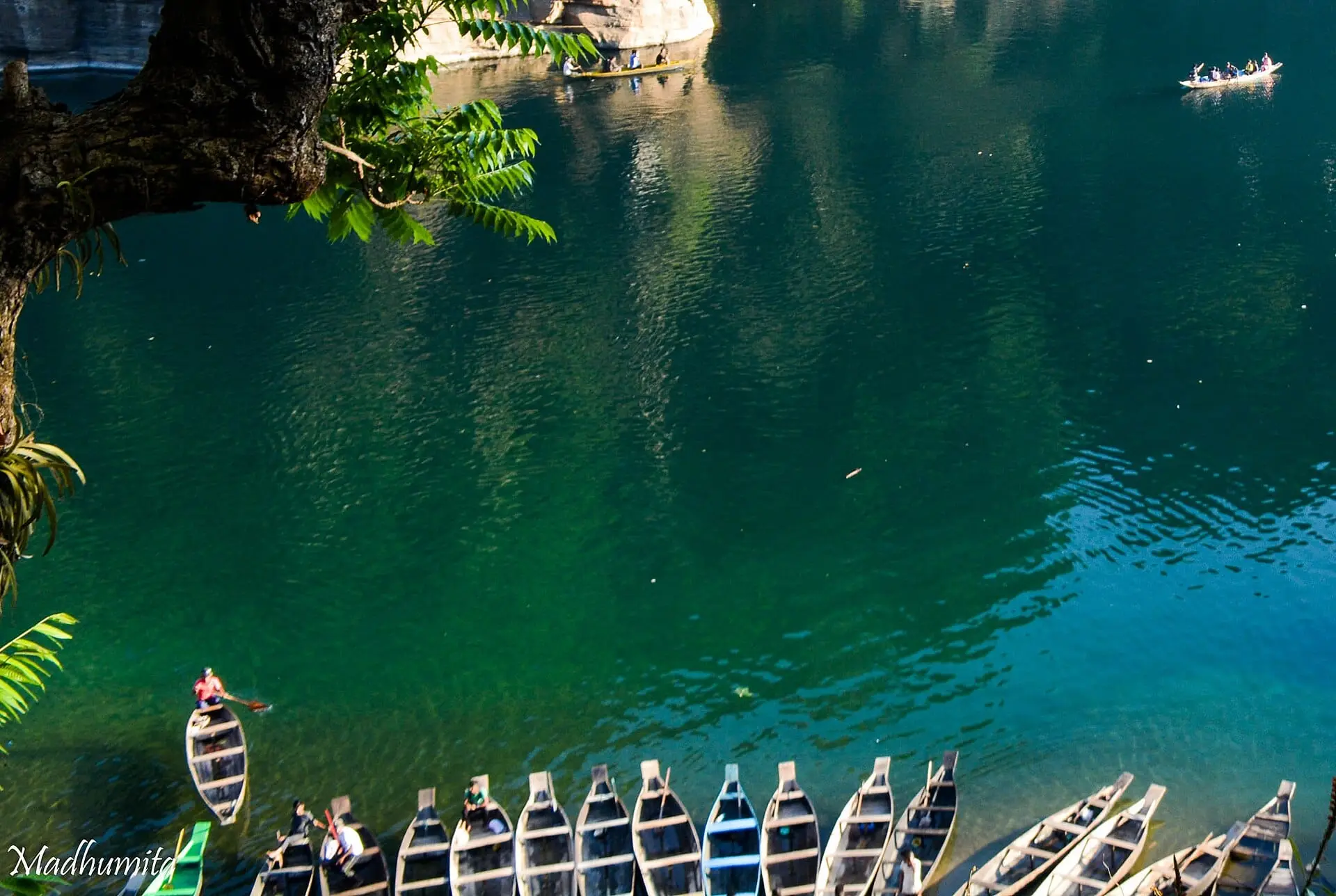
Wooden boats resting on the Umngot river at Dawki. Photo: Madhumita Das, CC BY-SA 4.0 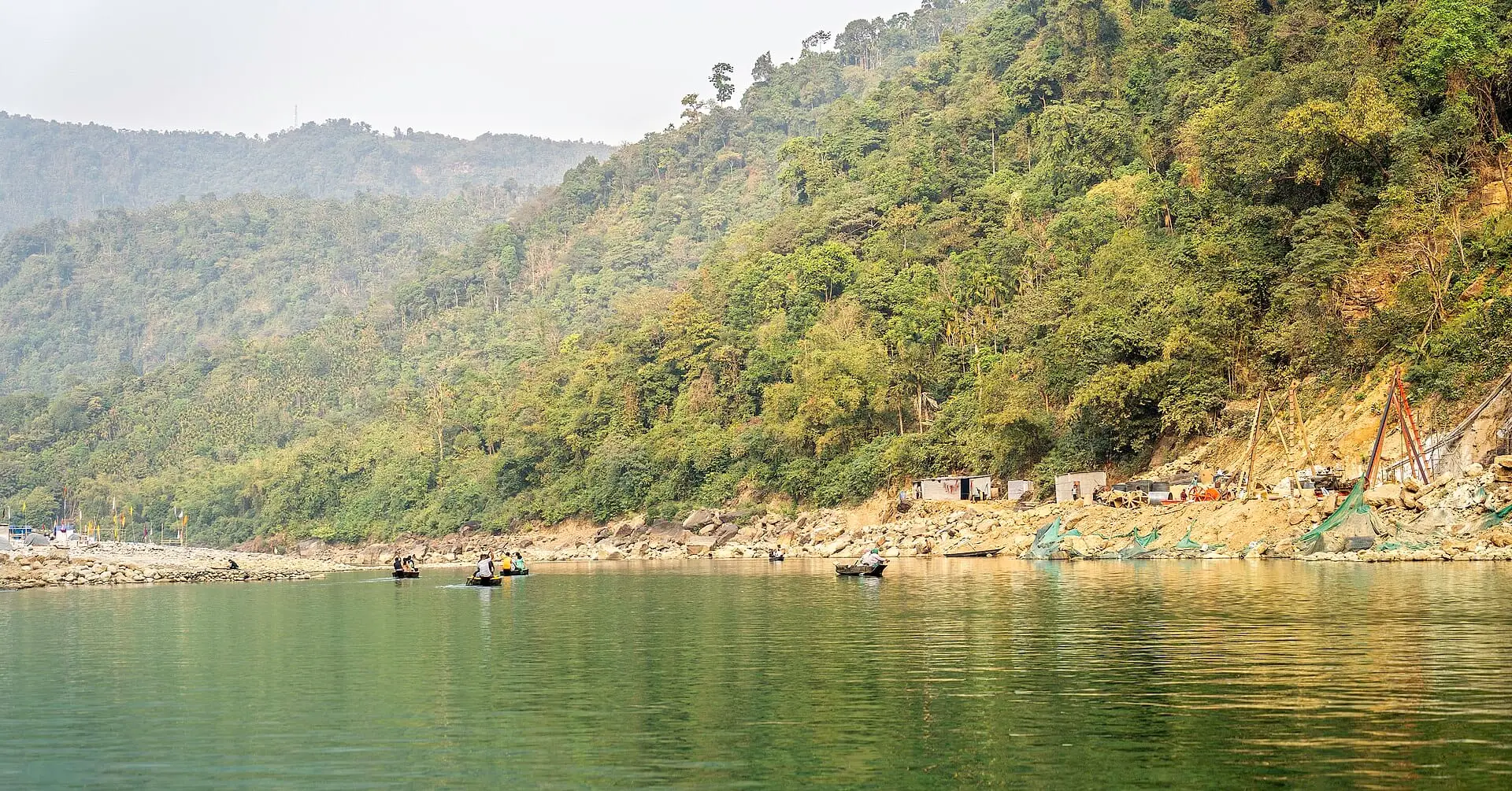
Wide view of the Umngot river at Dawki, a calm stretch of water between green hills. Photo: Joydeep Chakraborty, CC BY-SA 4.0 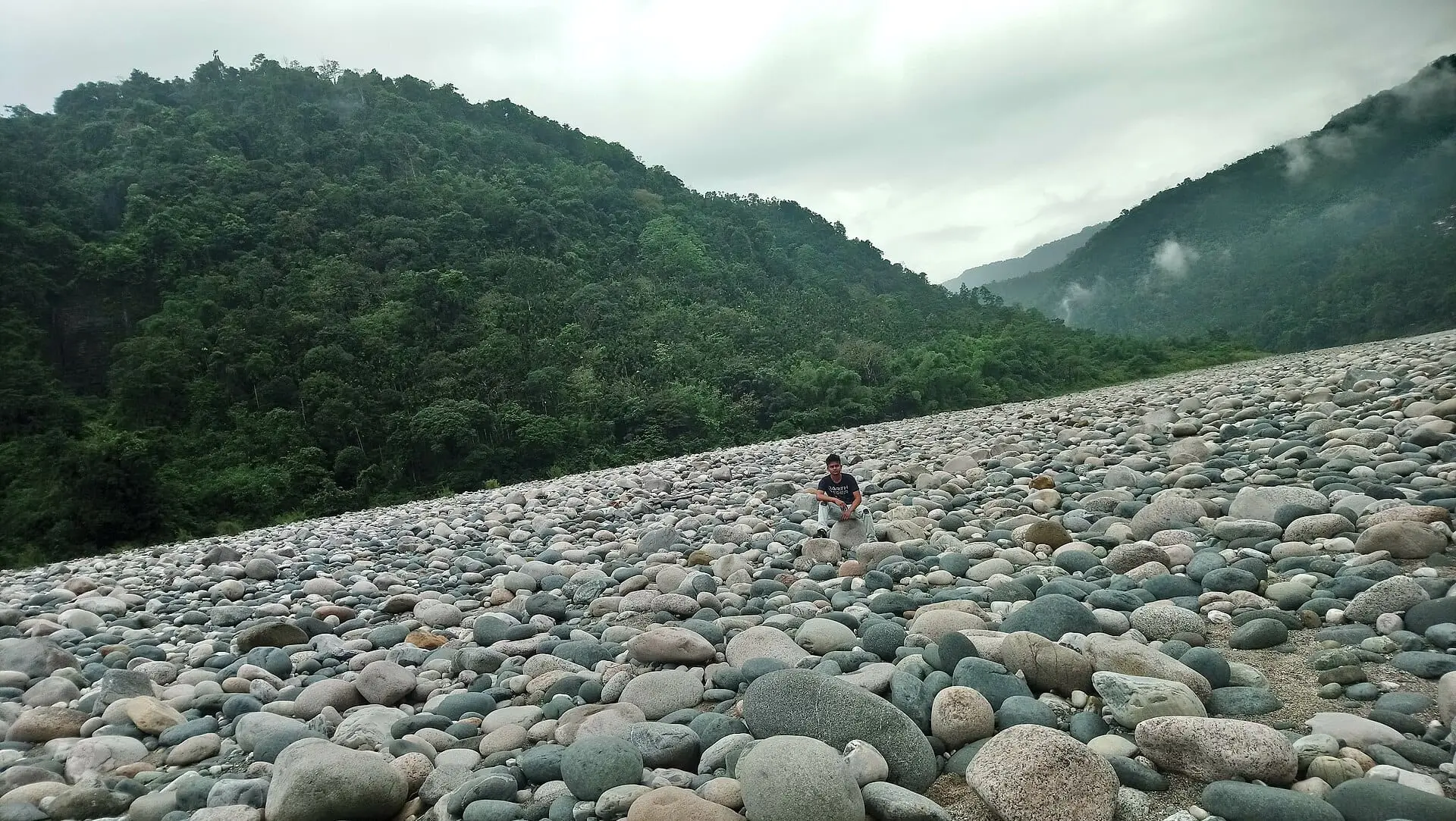
Smooth stones on the bank of the Umngot river at Dawki. Photo: Prabhat114, CC BY-SA 4.0 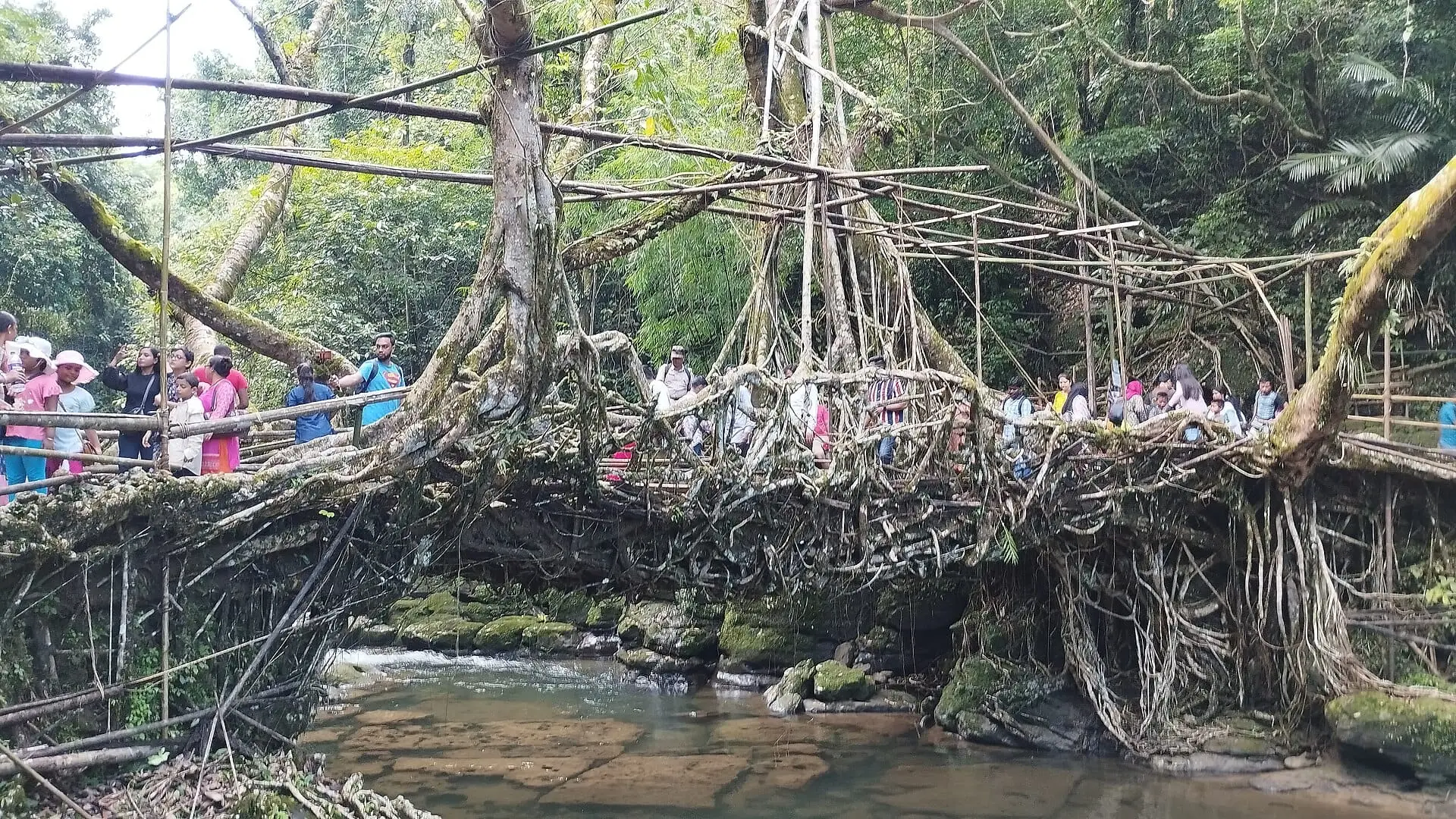
The single living root bridge at Riwai village near Mawlynnong, roots arching over a forest stream. Photo: Arindambasu2, CC BY-SA 4.0 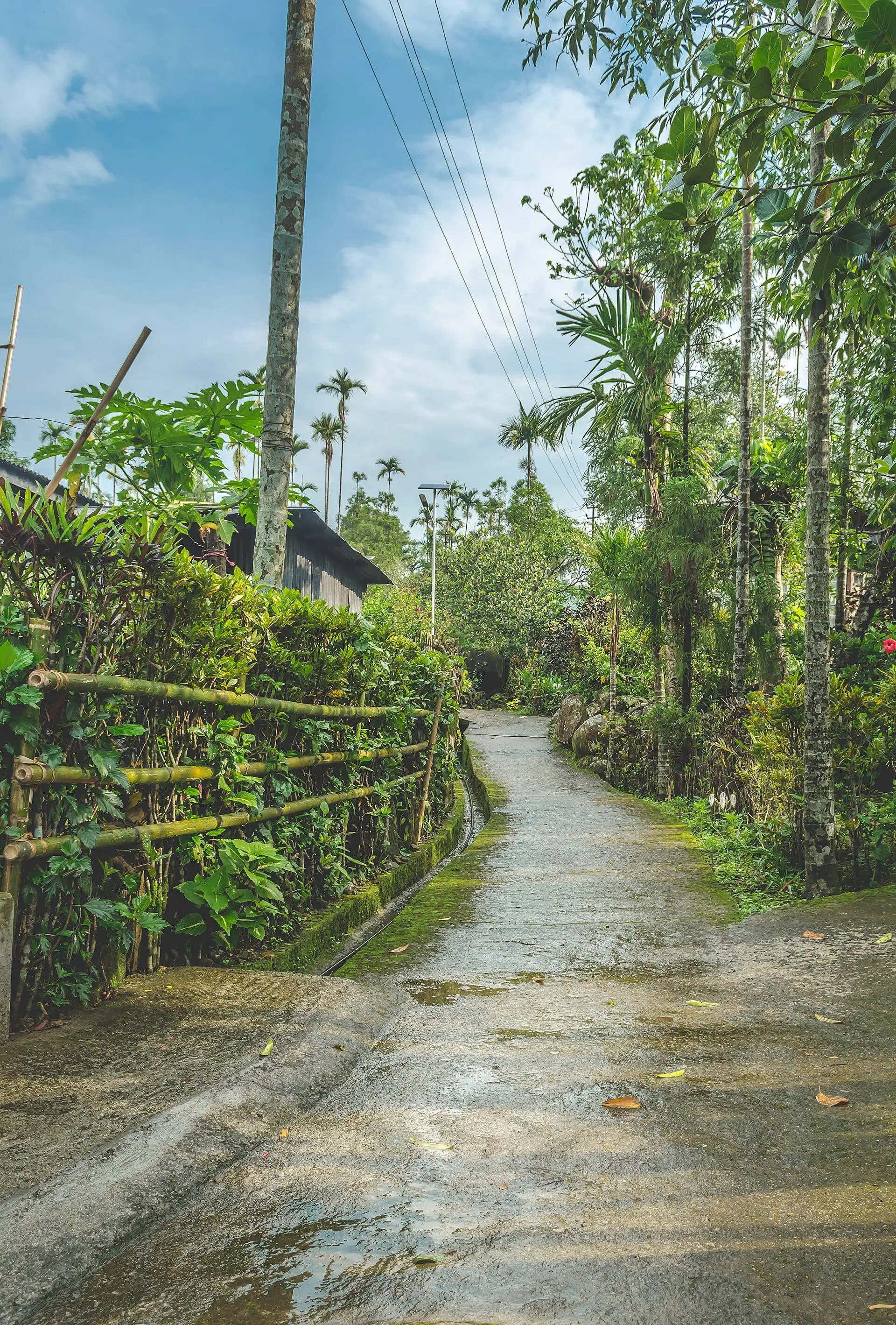
A tidy village lane lined with plants in Mawlynnong in the early morning. Photo: Sai Avinash, CC BY-SA 4.0 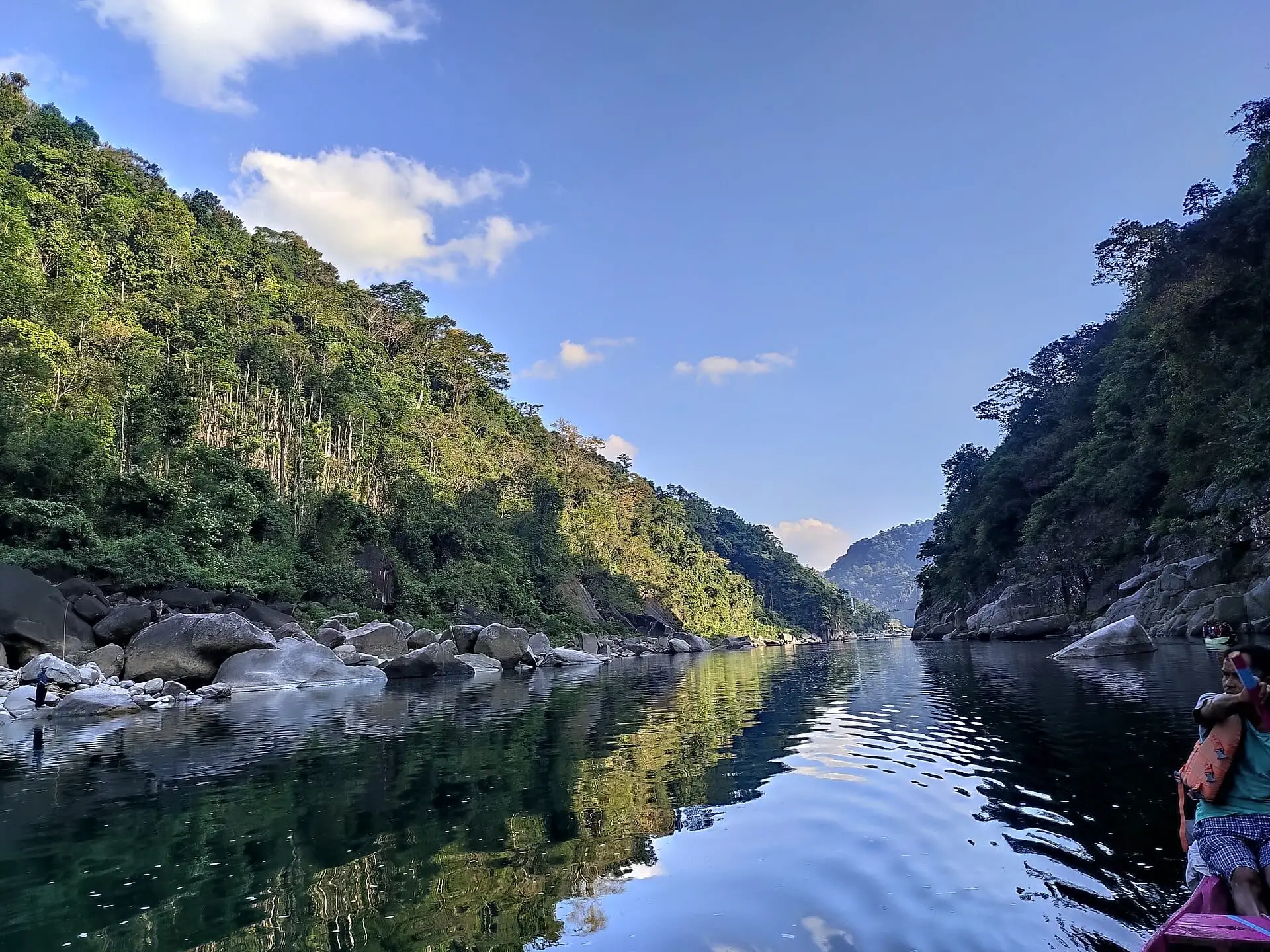
The Umngot river winding between forested hills near Dawki. Photo: ANKAN, CC BY-SA 4.0
Did you know?
A bridge from 1932
The suspension bridge over the Umngot at Dawki was built by the British in 1932 and is still one of the main sights in town.
You can see the bottom
Meghalaya Tourism says visibility in the Umngot can reach about 30 feet, which is why boats look as if they are floating on air.
A river on the border
Dawki sits on the India and Bangladesh border, and a white, faster stretch of the river marks the unofficial line between the two countries.
A river to play in
Just along the river at Shnongpdeng you can kayak, cliff jump, snorkel and even scuba dive, then camp on the sandy banks in the dry months.
Discover Dawki
Dawki is a small border town at the foot of the Jaintia Hills in Meghalaya, right where India meets Bangladesh. It is known for one thing above all: the Umngot river, whose water is so clear in the dry months that the boats seem to hang in the air above the stones on the riverbed. Meghalaya Tourism calls it the cleanest river in India.
Most people come for a boat ride under the old suspension bridge, then head a little way along the river to Shnongpdeng for kayaking, swimming and a night in a riverside camp. Mawlynnong, the village famous for being spotless, and its living root bridge at Riwai, are close enough to fit into the same trip. It is an easy, relaxed side of Meghalaya, best enjoyed slowly.
Things to do in Dawki
Take a boat ride on the Umngot
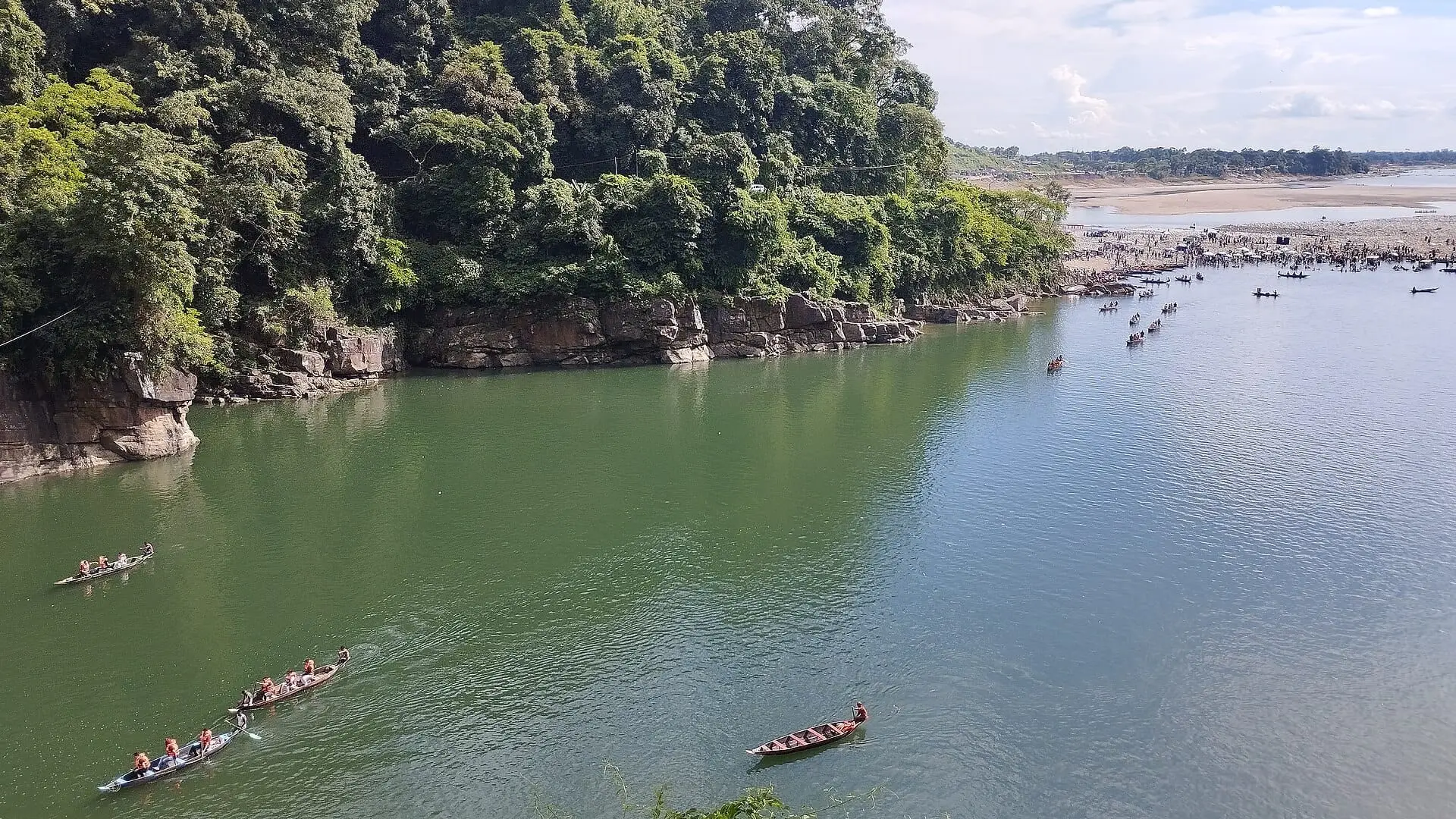
The classic Dawki experience is a ride in a wooden country boat on the green, glassy water. On a still winter morning you can look straight down to the pebbles below; Meghalaya Tourism says visibility can reach about 30 feet. Go early, before the crowds and the afternoon breeze, for the calmest water and the best photos.
See the Dawki suspension bridge
The British built the suspension bridge over the Umngot in 1932, and it is still a landmark. From the bridge you get a long view down the river and across to the trade route into Bangladesh. Dawki is one of the few road crossings between the two countries, with the Tamabil post on the Bangladesh side, and in the busy season hundreds of trucks a day cross here.
Kayak, swim and camp at Shnongpdeng
Shnongpdeng is a riverside village a short way from Dawki, and it is quieter than the town. Kayaking and cliff jumping are the big draws here, and Meghalaya Tourism also lists snorkelling, scuba diving, zip-lining and rock climbing along the river. In the dry months, when the water is low, camps set up on the sandy banks and you can swim from right in front of your tent. Darrang, nearby, has riverside camps too.
The Umngot River Festival has been held at Shnongpdeng, with boating, swimming, water polo and a decorated boat competition. Homegrown also describes an annual boat race on the river around March and April near Umsyiem village.
Walk to Kudengrim
Meghalaya Tourism mentions guided forest trails from the river to Kudengrim village, known for its living root bridges and waterfalls. It is a good half day if you want to stretch your legs after time on the water.
Visit Mawlynnong and the Riwai root bridge
Mawlynnong, in the East Khasi Hills near the Bangladesh border, was named Asia’s cleanest village by Discover India magazine in 2003. Its Khasi residents take real pride in keeping it that way. A bamboo viewing tower looks out over the Bangladesh plains. Close by, at Riwai, a single living root bridge crosses a forest stream; it is a short and easy walk compared with the long trek to Nongriat near Cherrapunji.
Look for birds and otters
Meghalaya Tourism notes that the forests along the Umngot are good for birdwatching, and that otters are sometimes seen near the water. Sit quietly on the bank in the early morning for the best chance.
How to reach Dawki
By air: Shillong Airport at Umroi is about 120 km from Dawki, with flights to Kolkata, Guwahati and a few other cities. Most visitors fly into Guwahati instead, about 196 to 208 km away, as it has many more flights.
By rail: There are no railway lines into the Khasi and Jaintia Hills. The nearest useful railway station is Guwahati, about 104 km from Shillong.
By road: Dawki is reached through Shillong. From Guwahati to Shillong takes about 3 hours by bus on National Highway 40, or about 2 hours by sumo or taxi. From Shillong, Dawki is about 70 to 85 km, and Meghalaya Tourism puts the drive at roughly 3 hours. Shared taxis leave Shillong every morning for the border post at Dawki, and there are also shared taxis from Jowai, about 55 km away via Amlarem. For Shnongpdeng and Darrang, a private car from Shillong gives you the most freedom. In the monsoon, heavy rain can cause landslides and road blocks on hill roads, so check the forecast before you travel.
Best time to visit Dawki
October to May: Meghalaya Tourism recommends this window, when the weather is pleasant for outdoor activities. The river is usually at its clearest through the winter and into spring. From October to March the water is low enough for camping on the sandbanks. February to April is the busiest time, so book camps and stays early.
June to September (monsoon): Heavy rain turns the river full, fast and muddy, and the clear water you came for disappears. Landslides can also block roads. This is the season to skip if Dawki is your main reason for travelling.
One more thing to know: in late 2025 The Tribune reported that silt from construction on the Shillong to Dawki road was clouding the river, even outside the rains. Boat rides carried on as usual, but it is worth asking about current conditions before you set off.
Permits and practical tips
- Permits: Meghalaya is not an Inner Line Permit state, so Indian visitors need no permit. Foreign visitors should check current rules with Meghalaya Tourism.
- Border town: Dawki is right on the international border. Respect the border area, stay away from the fence and follow instructions from the security forces.
- Visiting hours: Meghalaya Tourism lists the riverside as open from 6 am to 6 pm.
- Water safety: Only kayak, snorkel or swim with trained local operators and proper life jackets. The river can be deeper than it looks.
- Guides: Meghalaya Tourism suggests a local guide who knows the area and the language.
- What to pack: In winter, warm layers and a light rain jacket. In the wet months, waterproof gear, shoes with good grip and a small health kit.
- Cash and network: Carry some cash for boats, food stalls and village stays, as signal and card payments can be unreliable.
- Keep it clean: The river’s clarity is fragile. Take all your rubbish away with you, and avoid soaps or shampoos in the water.
Where to stay
You have three main choices. Dawki town has simple places to stay. At Shnongpdeng and Darrang, riverside camps with tents on the sand and village homestays put you right by the water, which is the nicest way to see the river at dawn. In Mawlynnong, Khasi families run homestays. Shillong has the widest range if you prefer a day trip, but you will spend about six hours on the road. Winter is busy, so book early.
A suggested itinerary
Day 1: Shillong to Dawki and Shnongpdeng. Leave Shillong early. Take a boat ride at Dawki and walk out onto the suspension bridge. In the afternoon move on to Shnongpdeng, try kayaking or a swim, and spend the night in a riverside camp.
Day 2: The river at dawn, then Mawlynnong. Wake early to see the water at its clearest. After breakfast, drive to Mawlynnong to walk the village lanes and climb the bamboo viewing tower, then visit the root bridge at Riwai. Return to Shillong in the evening, or stay the night in a Mawlynnong homestay.
Day 3 (optional): On to Cherrapunji. Extend the trip to Sohra for waterfalls, caves and the double decker root bridge.
Dawki: questions people ask
When is the Umngot river at Dawki clearest?
The water is usually clearest in the dry months, roughly winter into spring. In the monsoon, from about June to September, rain washes mud into the river and the famous clear look is lost. In late 2025 silt from roadworks on the Shillong to Dawki road also clouded the water at times, so ask about current conditions before you go.
How far is Dawki from Shillong?
Sources give about 70 to 85 km, and Meghalaya Tourism puts the drive at roughly 3 hours. Shared taxis and private cabs run from Shillong and from Jowai, which is about 55 km away via Amlarem.
Can I go boating in Dawki in the monsoon?
The river runs high, fast and muddy in the monsoon, so it is not the season to come for boating or clear water. For the best boat rides, plan your trip between October and May.
What is the difference between Dawki and Shnongpdeng?
Dawki is the border town with the old suspension bridge and boat rides. Shnongpdeng is a village a little way along the same river, quieter, with riverside camps, kayaking and cliff jumping. Many people visit Dawki and then stay the night at Shnongpdeng.
Do I need a permit to visit Dawki?
Indian visitors do not need an Inner Line Permit for Meghalaya. Dawki is a border town, so stay away from the border fence and follow any instructions from the security forces. Foreign visitors should check current rules with Meghalaya Tourism.
Can I visit Mawlynnong and Dawki on the same day?
Yes. Mawlynnong is in the East Khasi Hills, about 76 to 90 km from Shillong, and many visitors combine it with Dawki in one long day. Not on a Sunday, though: since January 2026 Mawlynnong is closed to day visitors on Sundays (overnight guests are welcome). Staying a night nearby makes it much more relaxed.
Is it safe to swim or snorkel in the Umngot?
Swimming, snorkelling and kayaking are offered at Shnongpdeng, but only do water activities with trained local guides and proper safety gear. The river can be deeper and faster than it looks.
Want to see Dawki with us?
Tell us your dates and who is coming. We will put together a custom trip or a ready package to Dawki, with stays, a car and a local guide, and send it to you on WhatsApp.
More places nearby
 Meghalaya
Mawlynnong
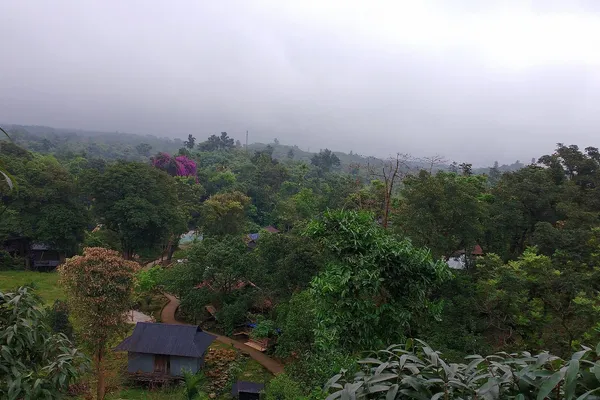
Plan a visit to Mawlynnong in Meghalaya: Asia's cleanest village, the Riwai living root bridge, the bamboo sky view, village rules and how to get there.
 Meghalaya
Shillong
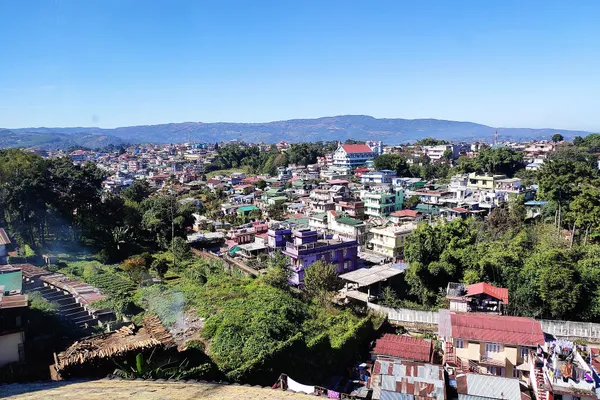
Plan a trip to Shillong in Meghalaya: Ward's Lake, Shillong Peak, Elephant Falls, Laitlum, live music, the best time to visit and how to reach from Guwahati.
 Meghalaya
Cherrapunji
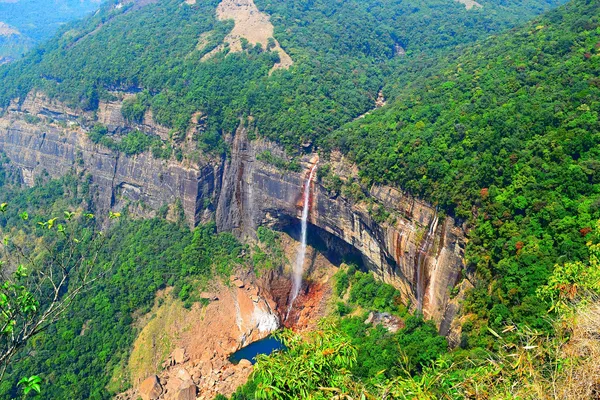
Plan a trip to Cherrapunji (Sohra) in Meghalaya: living root bridges, Nohkalikai Falls, caves, the best time to visit and how to get there from Shillong.
Sources
Last checked 17 November 2026. Rules, roads and opening months change, so check with us or the local authorities before you travel.
- Meghalaya Tourism: Dawki, Shnongpdeng and Darang
- Meghalaya Tourism: Shnongpdeng, Dawki water adventures
- Meghalaya Tourism: Umngot
- Meghalaya Tourism: Umngot River Festival, Dawki 2021
- Meghalaya Tourism: Mawlynnong
- The Week (PTI): Mawlynnong to be closed to tourists on Sundays
- Wikipedia: Dawki
- Wikipedia: Umngot River
- Wikipedia: Mawlynnong
- Incredible India: Cherrapunjee (Riwai root bridge)
- Homegrown: Dive into Dawki's clear waters
- Trawell: Best time to visit Dawki
- The Tribune: Why has the Umngot river turned murky
- East Khasi Hills District: How to reach
- Wikipedia: Inner Line Permit