

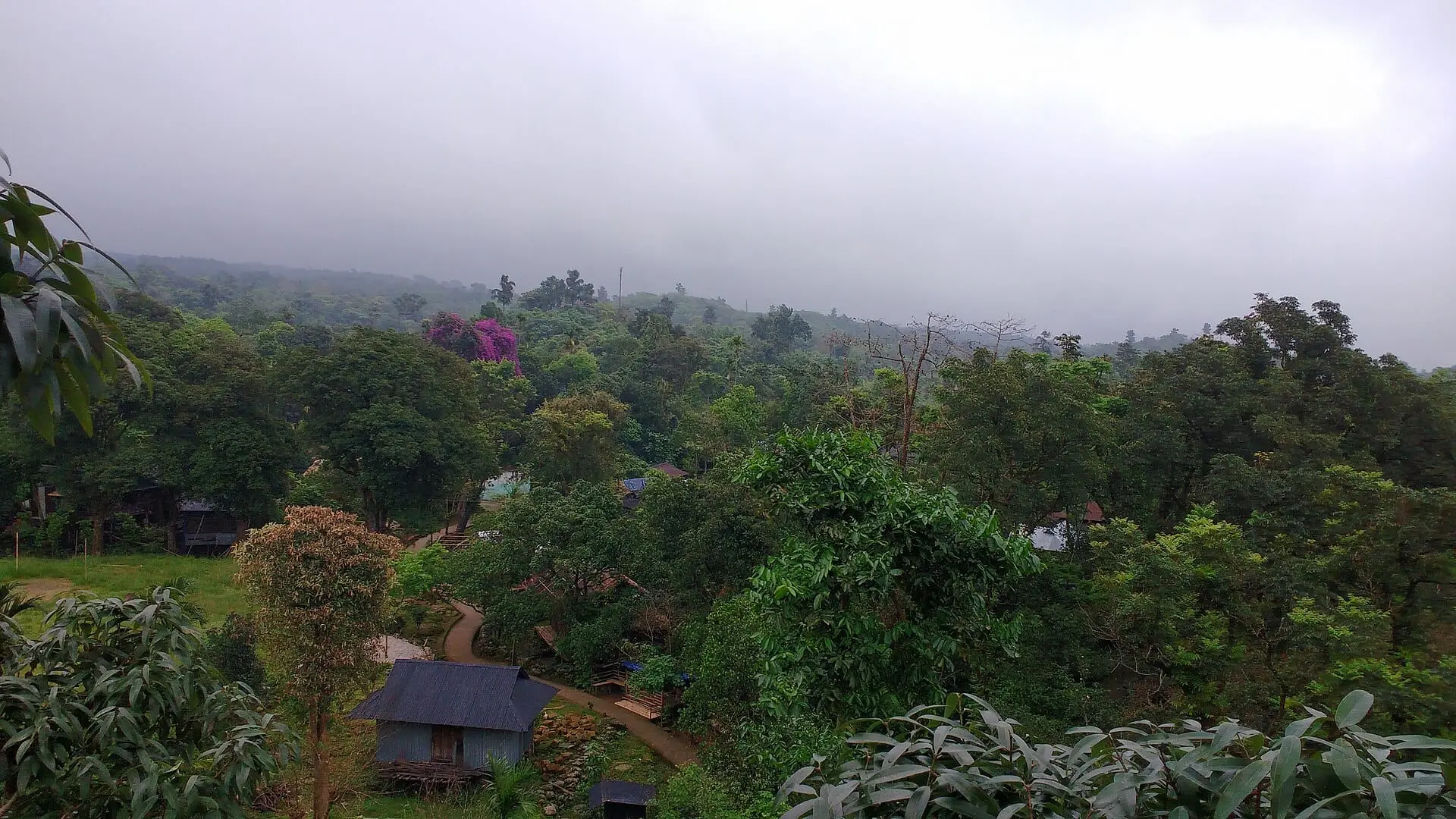
Mawlynnong Travel Guide: Asia's Cleanest Village and Root Bridge
Plan a visit to Mawlynnong in Meghalaya: Asia's cleanest village, the Riwai living root bridge, the bamboo sky view, village rules and how to get there.
Mawlynnong at a glance
- Best time
- All year; drier trails after the monsoon and in winter
- Nearest airport
- Shillong (Umroi), about 103 km; Guwahati
- Nearest railway station
- Guwahati
- By road
- About 76 to 92 km from Shillong via Pynursla
- Permits
- No Inner Line Permit for Indian visitors
- Sundays
- Closed to day visitors; overnight guests welcome
- Ideal stay
- 1 night
Photos of Mawlynnong
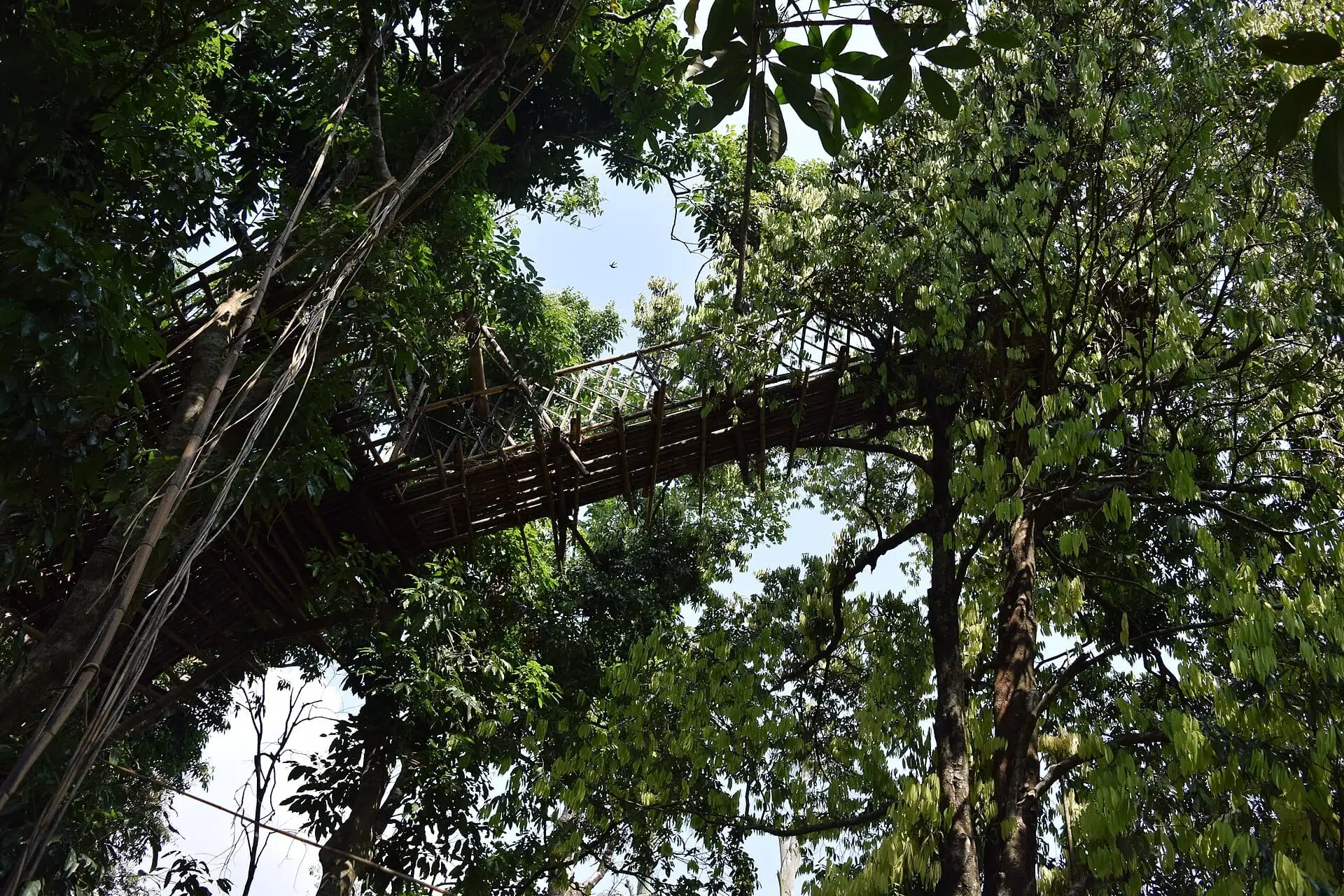
Bamboo tree house and lookout in Mawlynnong, built high among the trees. Photo: Sujan Bandyopadhyay, CC BY-SA 4.0 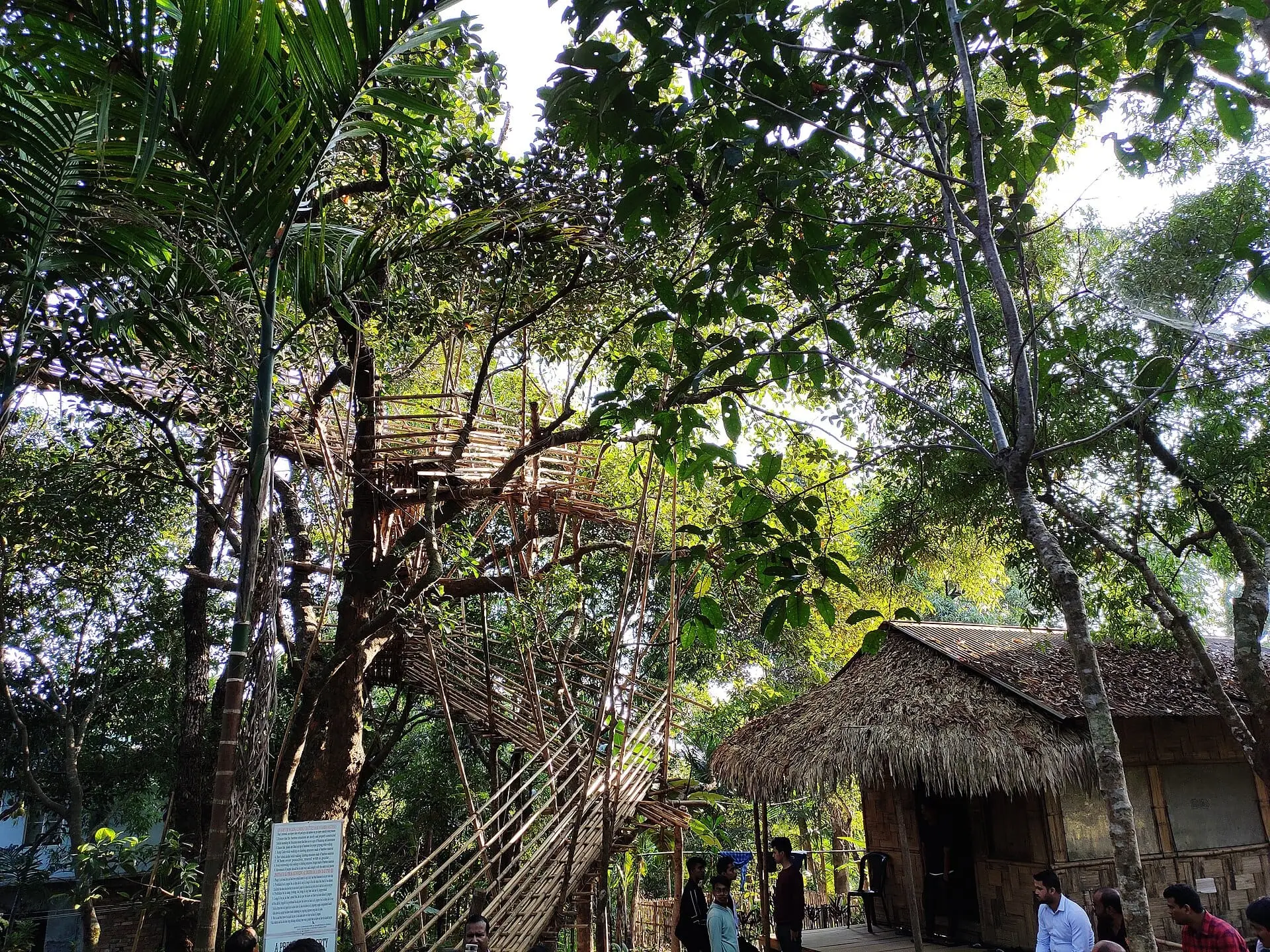
View from Mawlynnong across forested slopes to the flat plains of Bangladesh. Photo: ANKAN, CC BY-SA 4.0 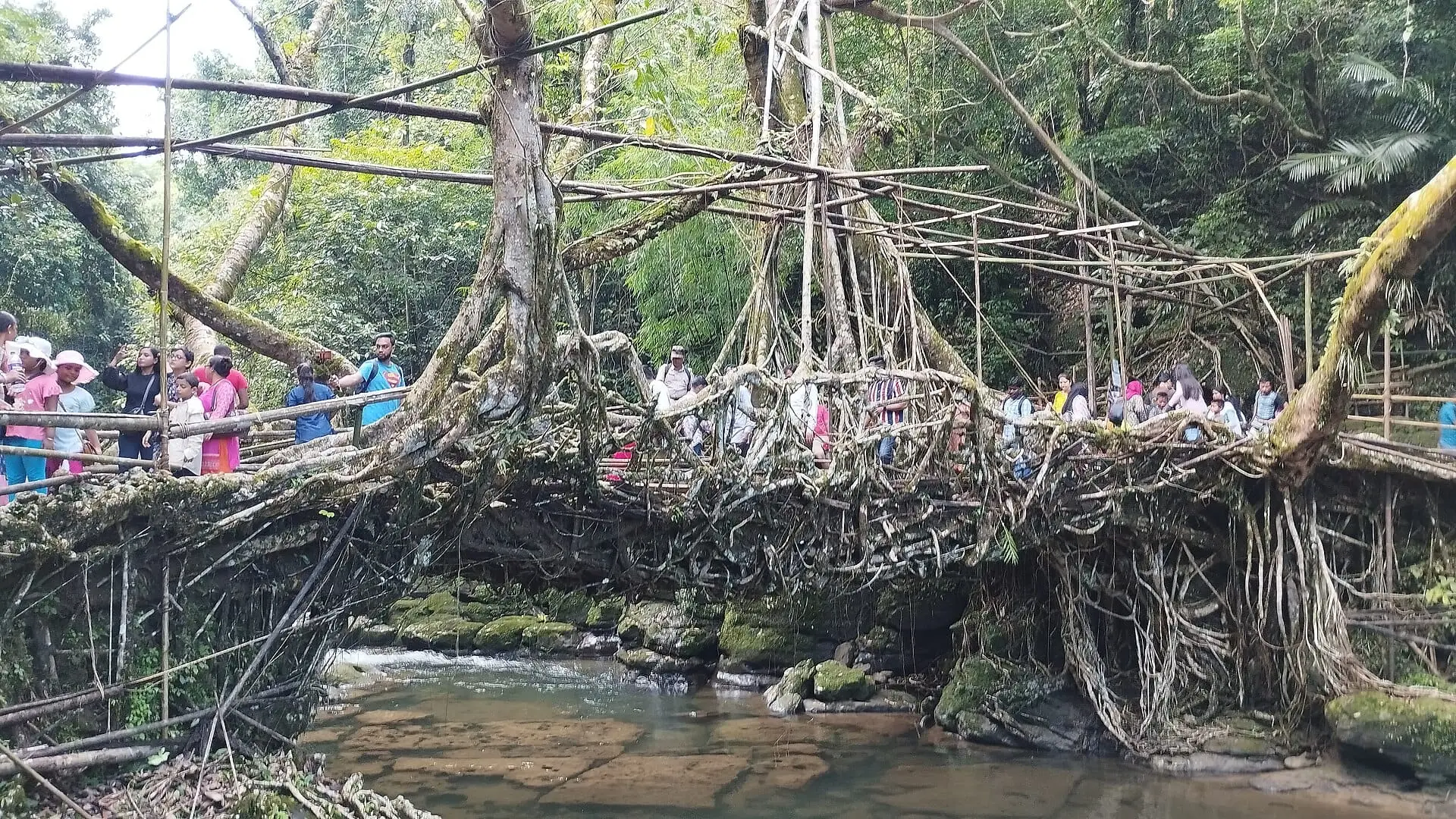
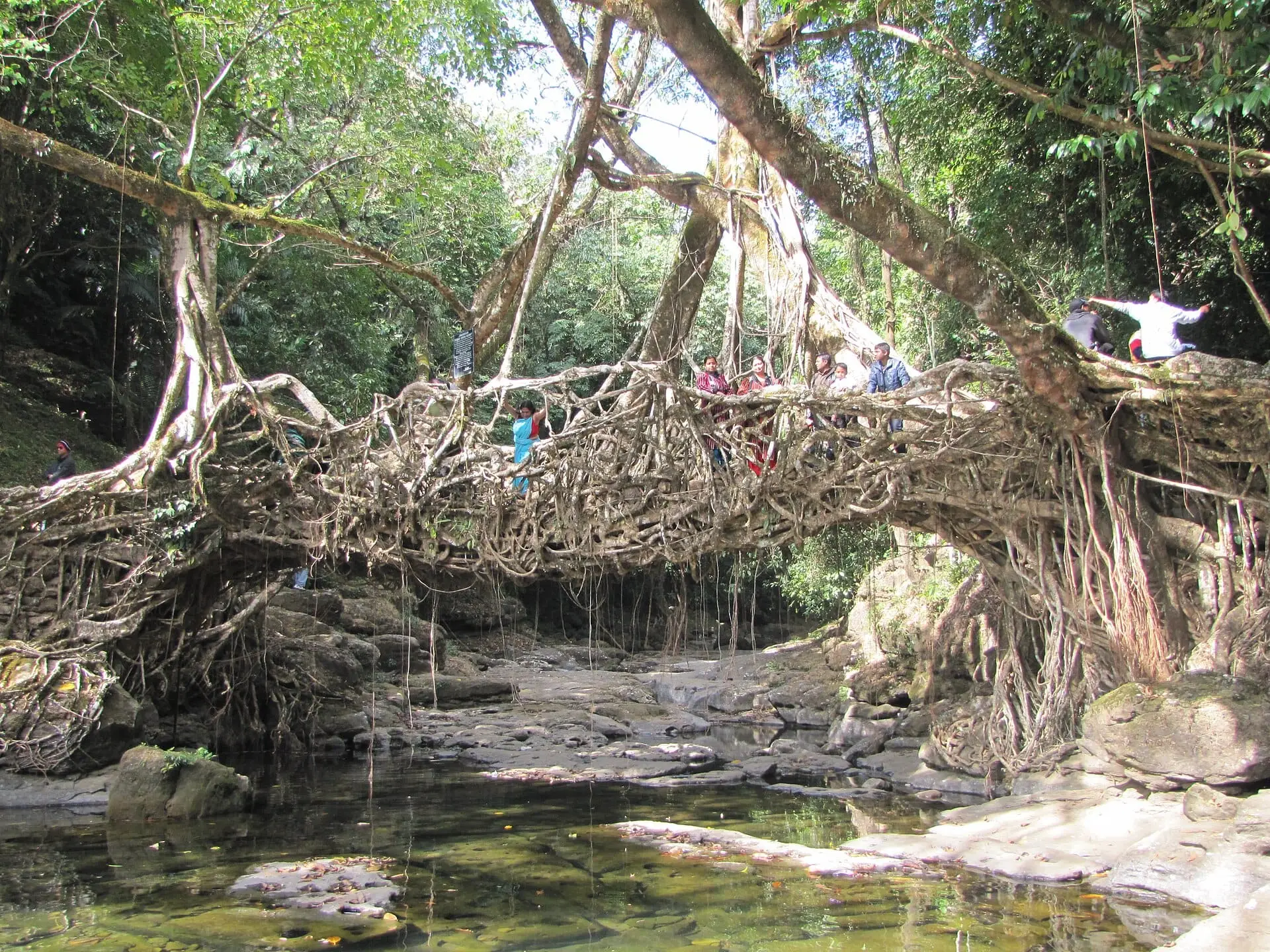
The single living root bridge at Riwai near Mawlynnong, roots arching over a forest stream. Photo: Arindambasu2, CC BY-SA 4.0 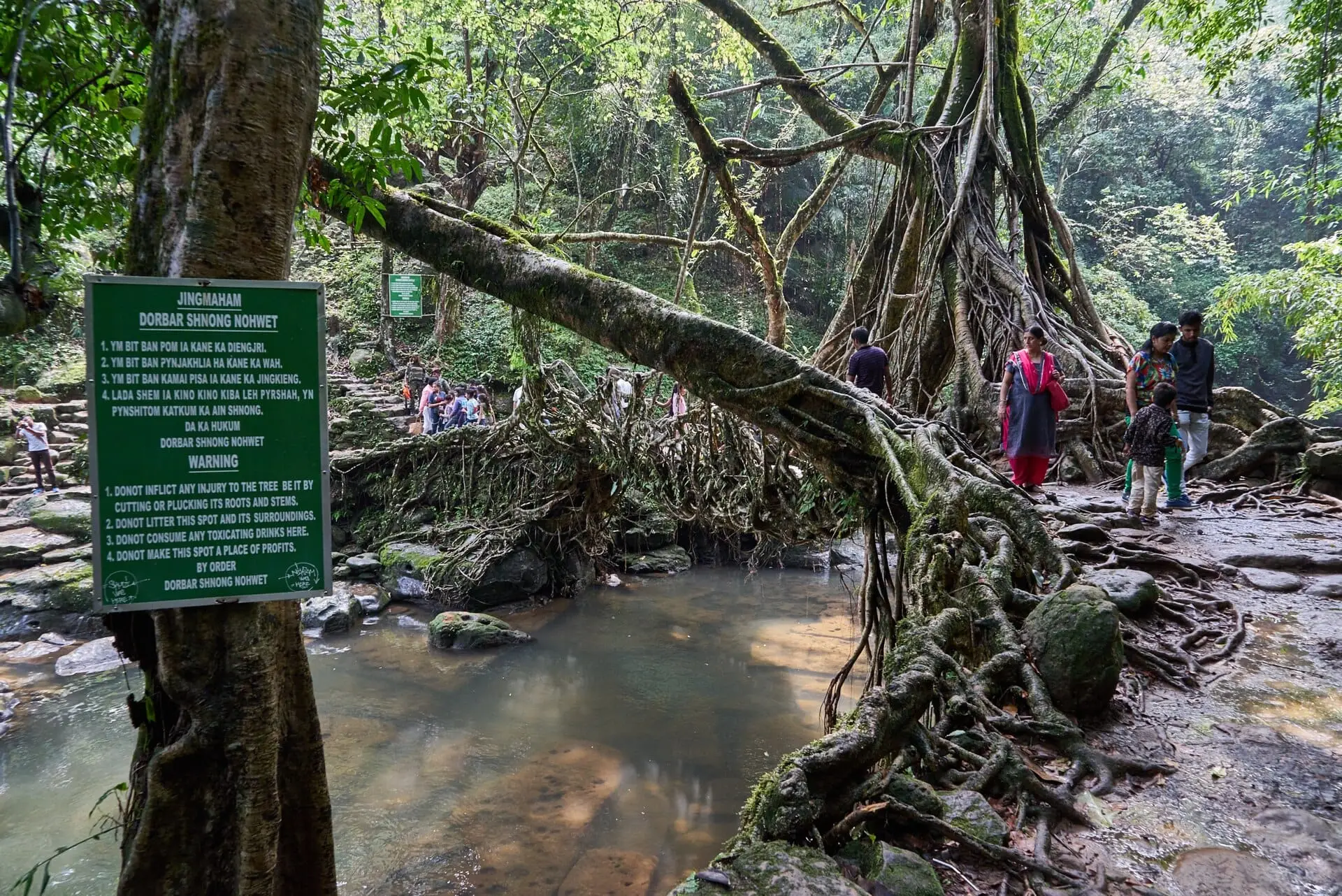
Tree trunks and roots growing across a stream to form the root bridge at Riwai. Photo: Debasissaha1959, CC BY-SA 4.0 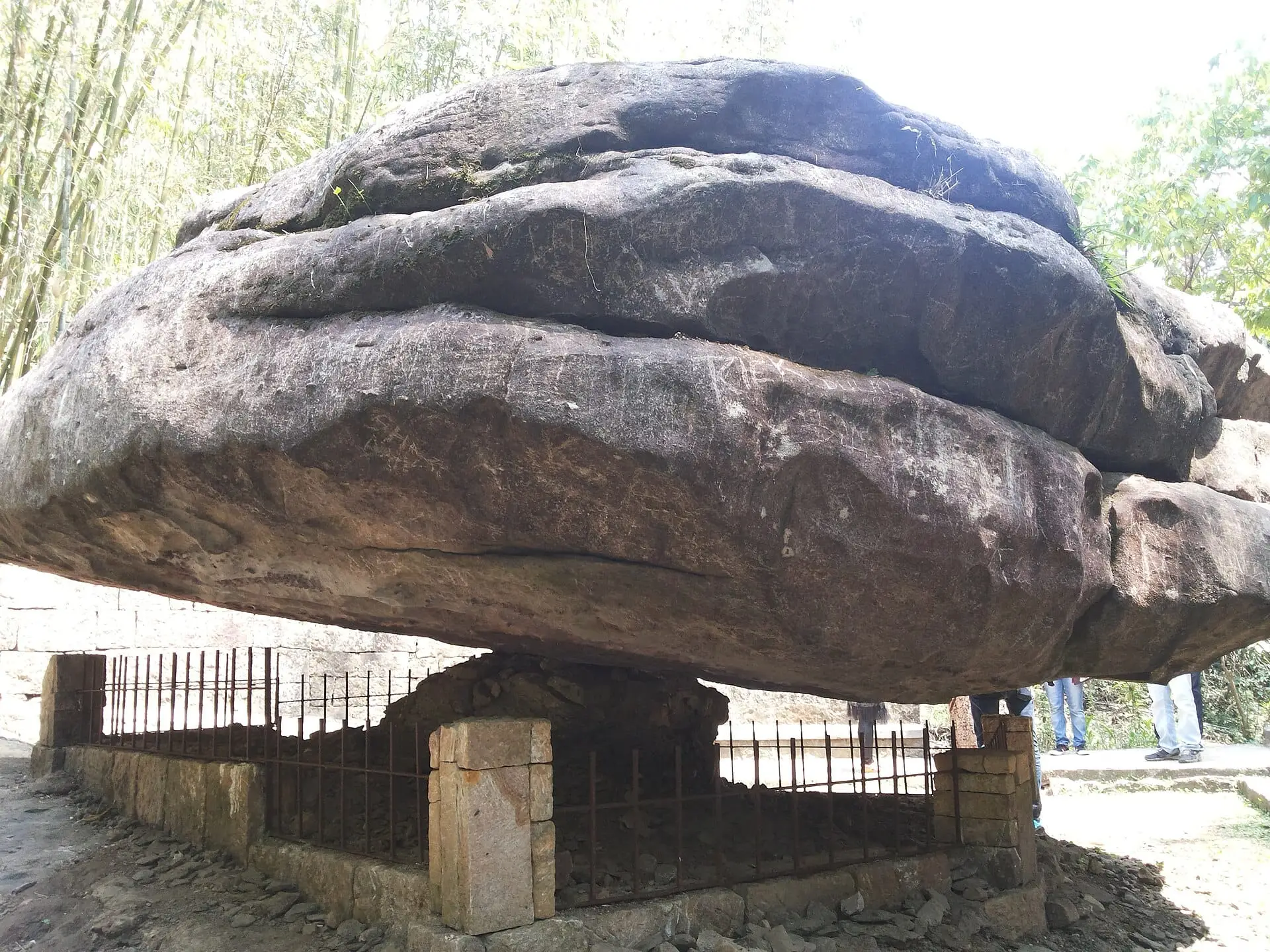
A large boulder resting on a much smaller rock at the balancing rock near Mawlynnong. Photo: Nirbangogoi, CC BY-SA 4.0 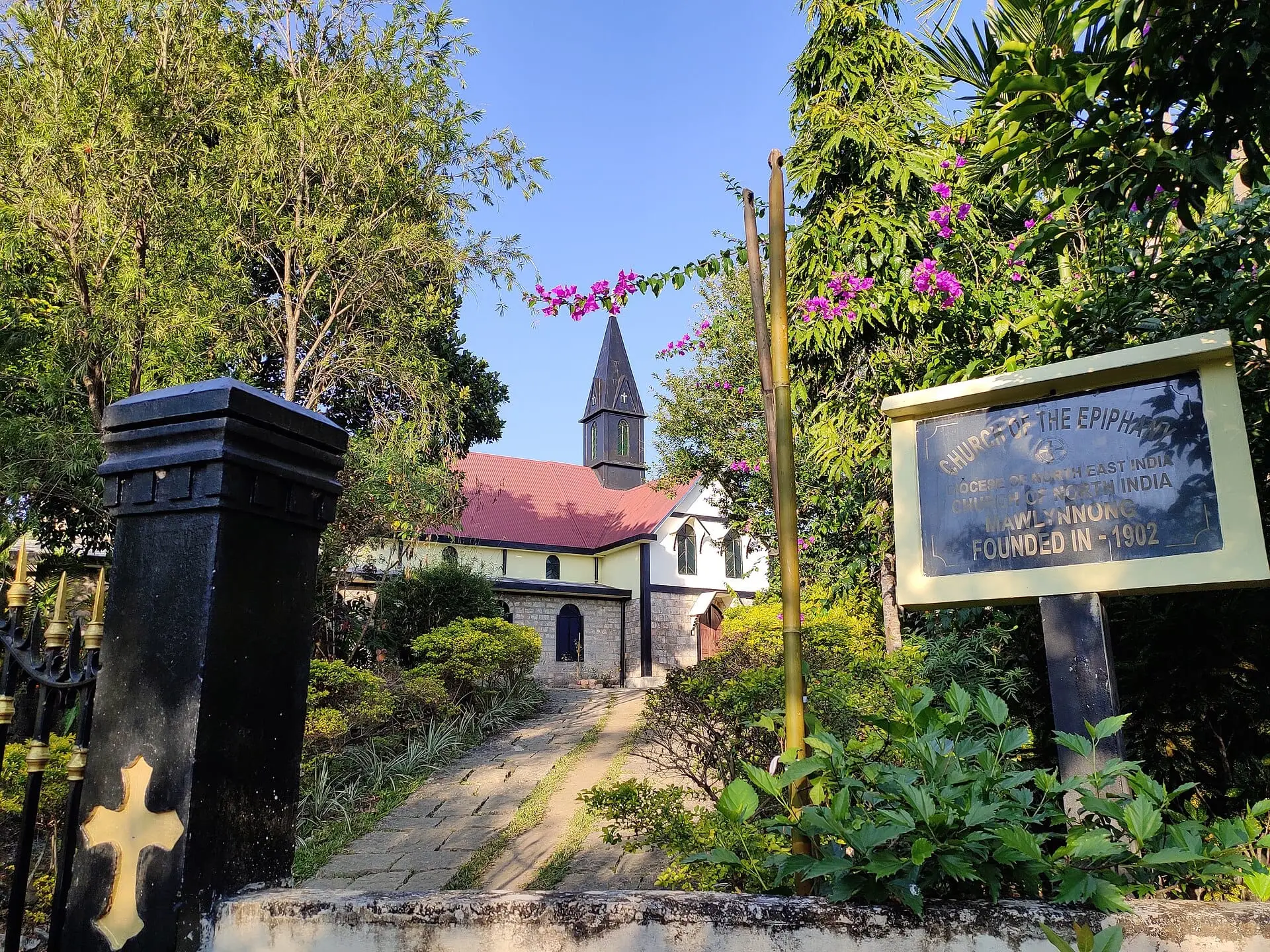
The Church of the Epiphany in Mawlynnong surrounded by its garden. Photo: ANKAN, CC BY-SA 4.0 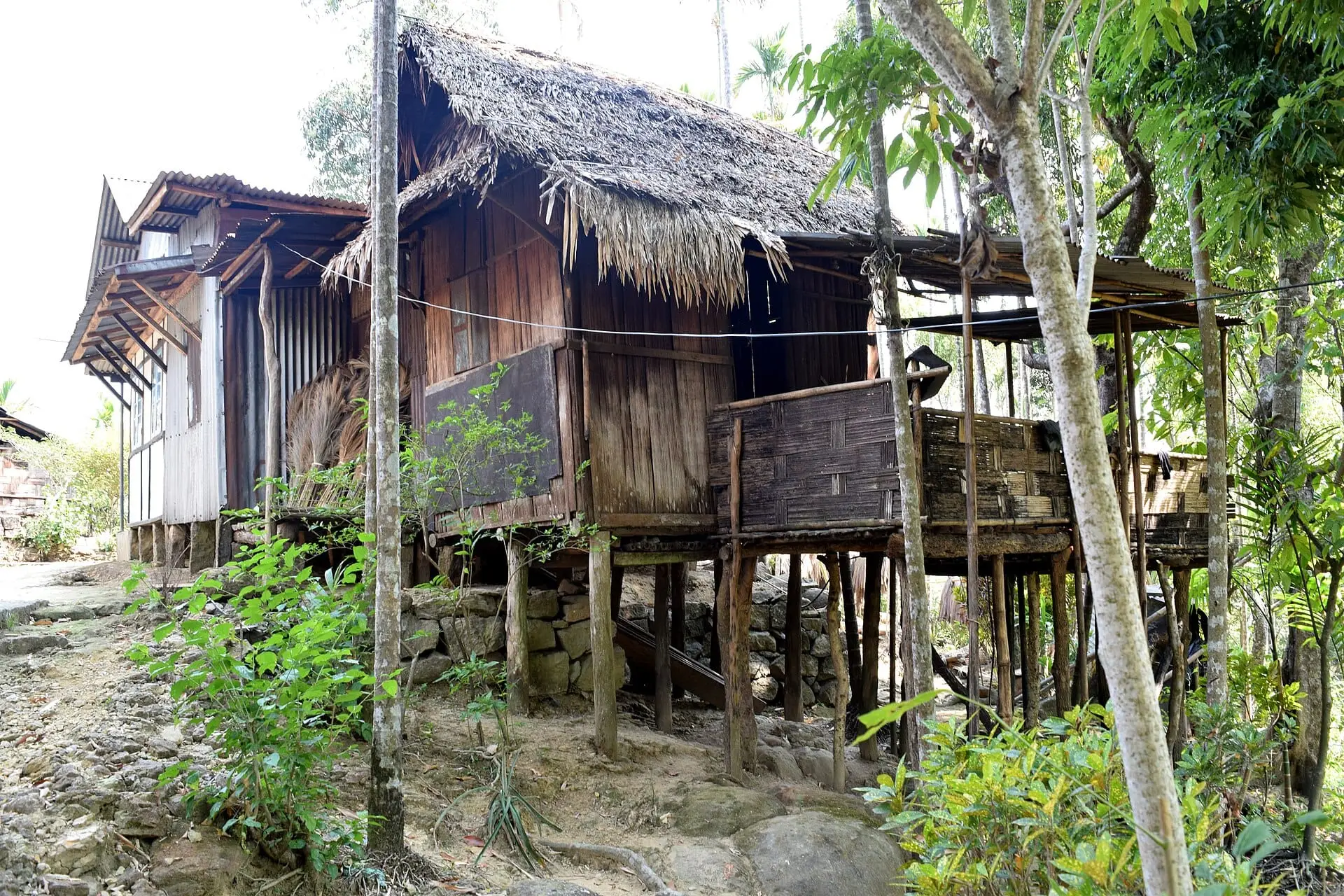
A traditional Khasi house in Mawlynnong with plants around it. Photo: Sujan Bandyopadhyay, CC BY-SA 4.0 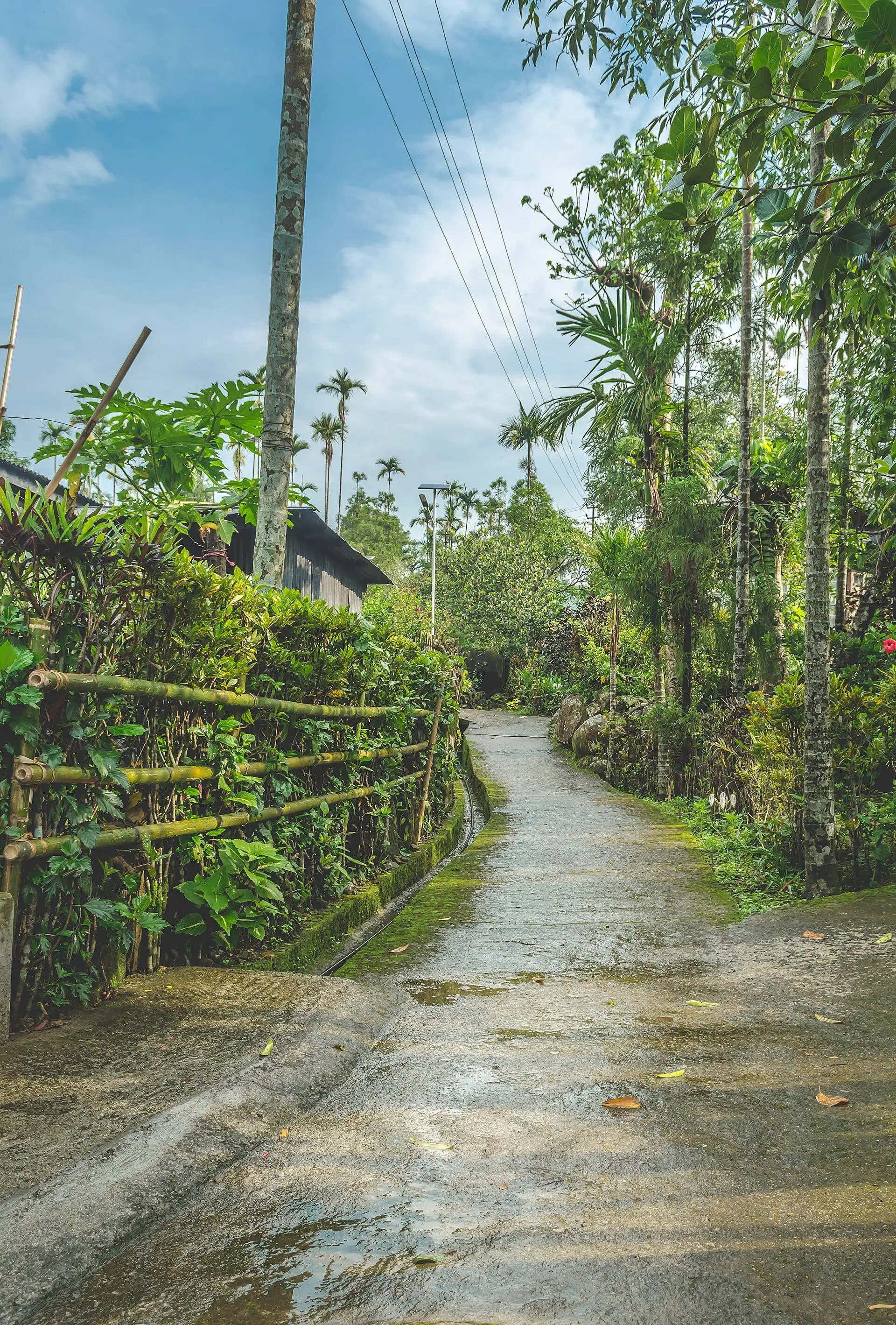
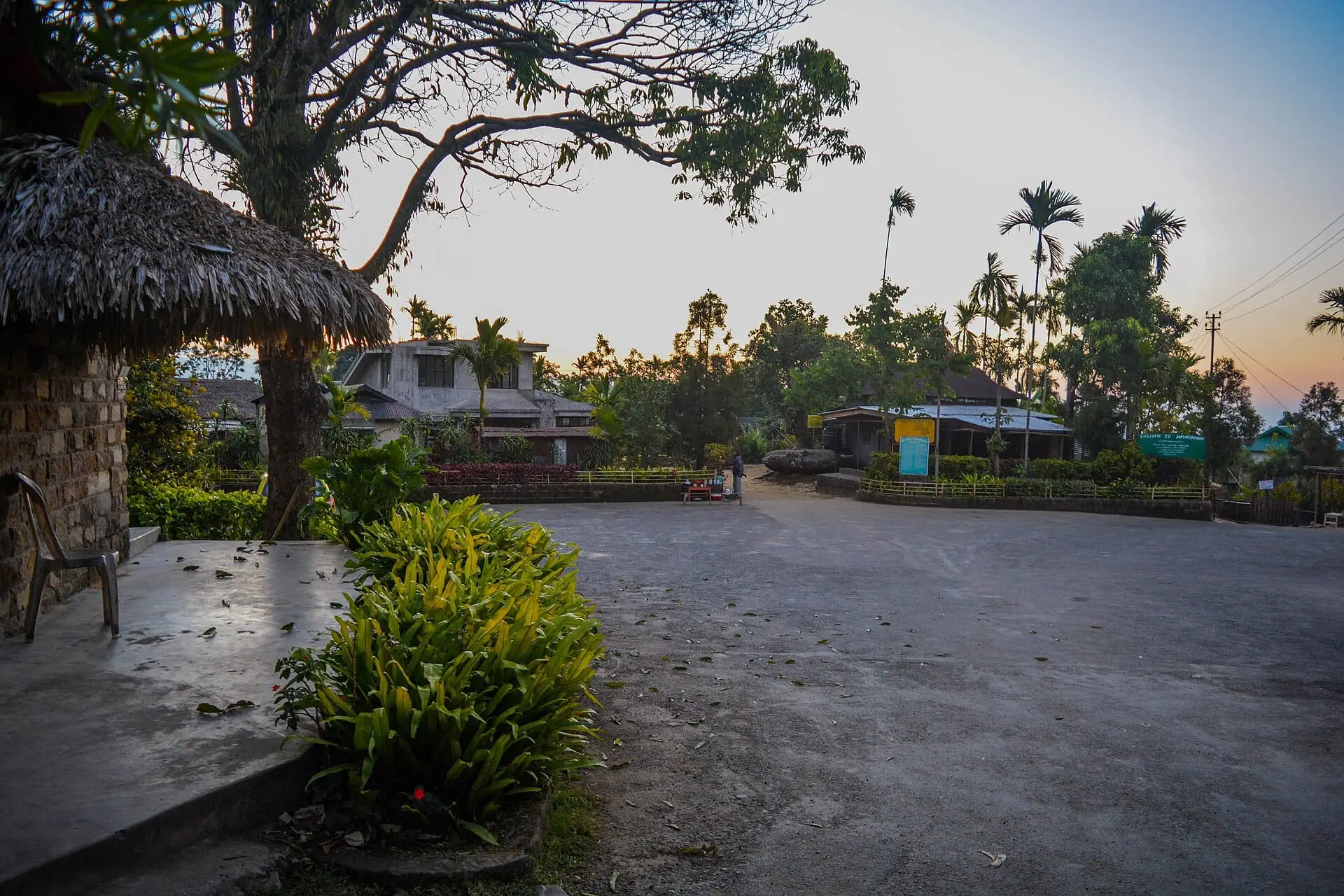
A tidy village lane lined with plants in Mawlynnong in the early morning. Photo: Sai Avinash, CC BY-SA 4.0
Did you know?
Cleanest in Asia, then India
The travel magazine Discover India named Mawlynnong the cleanest village in Asia in 2003, and the cleanest in India in 2005.
Bins made of bamboo
Rubbish goes into bamboo baskets placed along the lanes, then into a pit where it turns into manure for the gardens. Since 2007 every household has had a working toilet.
The youngest daughter inherits
Like other Khasi communities, Mawlynnong is matrilineal. Property passes from the mother to her youngest daughter, who also keeps the mother's surname.
A tower rebuilt every year
Outlook Traveller reports that the bamboo sky view tower and its walkway are rebuilt every year after the monsoon.
Discover Mawlynnong
Mawlynnong is a small Khasi village in the East Khasi Hills of Meghalaya, close to the border with Bangladesh. In 2003 the travel magazine Discover India named it the cleanest village in Asia, and it has lived up to the title ever since. Lanes are swept daily, flowers grow along every path, and bamboo dustbins stand at every corner. Meghalaya Tourism calls it God’s Own Garden.
What makes Mawlynnong special is that the cleanliness comes from the people, not from rules handed down from outside. Everyone takes part, from children to grandparents. Come for the root bridge and the view over Bangladesh, but stay a while to see how a village of a few hundred people looks after its home. It sits on the way to Dawki, so the two make a natural pair.
Things to do in Mawlynnong
Walk the village lanes
The best thing to do here is simply walk. Paths wind between stilted houses, betel nut trees and gardens full of flowers, and you will see bamboo baskets set out for rubbish everywhere. Waste is collected, sent to a pit and turned into manure. Since 2007 every household has had a working toilet, and rainwater harvesting is encouraged. Go early in the morning, when villagers are sweeping and the light is soft.
Climb the sky view
On the edge of the village a tall bamboo tower rises above the trees, about 70 to 85 feet high according to different accounts. From the platform at the top you look out over the forest and, on a clear day, all the way across the plains of Bangladesh. Outlook says it holds only about seven people at a time, and that the tower and its bamboo walkway are rebuilt every year after the monsoon. Bamboo tree houses nearby give another view over the village.
Visit the living root bridge at Riwai
The neighbouring village of Riwai has a single living root bridge across a forest stream. You may see it called the Riwai, Nohwet or Jingmaham root bridge. Like other root bridges in the Khasi Hills, it is made by guiding the aerial roots of the rubber fig tree (Ficus elastica) across the water until they grow strong enough to walk on; Outlook says this takes 10 to 15 years. Trawell puts the bridge about 3 km from the Mawlynnong bus stop, with a walk of about 300 metres down stone steps from the parking area. In the dry season you can cool your feet in the stream below. It is a far shorter walk than the big trek to the double decker bridge near Cherrapunji.
See the balancing rock
About 1 km from the bus stop, a huge boulder rests at an odd angle on a much smaller rock. Locals call it Maw Ryngkew Sharatia. It is fenced off and surrounded by bamboo. Some locals say it was a place of sacrifice long ago, while guides describe it as an old Khasi shrine that fell out of use when Christianity came to Mawlynnong and Riwai. Trawell lists it as open from 6 am to 5 pm.
Stop by the Church of the Epiphany
This church, about a hundred years old, stands in the middle of the village with a neat garden around it. Most villagers are Christian, and Sunday is a day for church and family, which is why the village closes to day visitors that day.
How to reach Mawlynnong
By air: Shillong Airport at Umroi is about 103 km away, with a limited number of flights. Most travellers fly into Guwahati, which has many more flights, and drive up through Shillong.
By rail: There are no railway lines in Meghalaya. The nearest station is Guwahati, about 104 km from Shillong.
By road: Mawlynnong is reached from Shillong. Sources give the distance as about 76 to 92 km. The simplest way is a private car or taxi from Shillong. On a budget, take a shared sumo or taxi from Shillong to Pynursla, then a local cab for the last stretch. Dawki is about 30 km away and Cherrapunji about 81 km, so Mawlynnong fits easily into a trip to either. In the monsoon, heavy rain can cause landslides on hill roads, so check the forecast before you set off.
Best time to visit Mawlynnong
After the monsoon and in winter (roughly October to March): Meghalaya Tourism notes that the post-monsoon months and winter are best for outdoor activities. Paths are drier, the sky view is more likely to be clear, and you can step into the stream at the root bridge. Winter is busy, so book stays early.
Monsoon (about June to September): The village is at its greenest, with mist over the forest and butterflies in the gardens. Incredible India even lists June to November as the best time. The catch is that the root bridge steps get muddy and slippery and views can be hidden by cloud.
Any Sunday: Plan around it. Since January 2026 day visitors are not allowed on Sundays.
Permits and practical tips
- Permits: Meghalaya is not an Inner Line Permit state, so Indian visitors need no permit. Foreign visitors should check current rules with Meghalaya Tourism.
- No day visits on Sundays: The village council closed Mawlynnong to one-day visitors on Sundays from January 2026. Restaurants, shops, stalls and public toilets close too. Guests staying overnight in homestays are exempt, and their hosts look after them.
- Village rules: No littering, no smoking and no plastic bags. Use the bamboo bins, and take anything you cannot throw away with you.
- Be a good guest: This is a home, not a theme park. Ask before photographing people or houses, keep your voice down, and stay on the paths.
- Guides: Meghalaya Tourism suggests hiring a local guide for a richer visit.
- What to pack: In the wet months, a rain jacket, umbrella and shoes with good grip. In winter, warm layers for the evenings.
- Cash: Carry some cash for homestays, food and small purchases, as network and card payments can be patchy in villages.
Where to stay
There are no hotels in Mawlynnong. Village families run homestays, some in traditional bamboo houses and some in newer concrete buildings, with simple rooms. Staying overnight is the nicest way to see the village: you get quiet lanes in the evening and early morning, after and before the day visitors. It also means a Sunday in the village is still possible. Shillong has the widest choice of stays if you prefer a day trip, and riverside camps near Dawki are another option.
A suggested itinerary
Day 1: Shillong to Mawlynnong. Leave Shillong in the morning and drive via Pynursla. After lunch, walk down to the living root bridge at Riwai and visit the balancing rock. Check in to a homestay and take an evening stroll through the village.
Day 2: Morning in the village, then Dawki. Wake early to see the lanes being swept, and climb the sky view while the air is clear. Visit the Church of the Epiphany, then drive about 30 km to Dawki for a boat ride on the clear Umngot river. Return to Shillong, or spend the night in a riverside camp.
Mawlynnong: questions people ask
Why is Mawlynnong called the cleanest village in Asia?
In 2003 the travel magazine Discover India named it the cleanest village in Asia, and in 2005 the cleanest in India. Everyone in the village helps keep it that way: there are bamboo dustbins along every lane, rubbish is composted, and smoking and plastic bags are banned.
Is Mawlynnong open on Sundays?
Not for day visitors. Since January 2026 the village council has closed Mawlynnong to one-day tourists on Sundays, because most residents spend the day at church. Restaurants, shops, stalls and public toilets are closed too. If you stay overnight in a homestay, you can still be there on a Sunday.
How far is Mawlynnong from Shillong?
Sources give between about 76 and 92 km. The road goes via Pynursla, and you can drive yourself, hire a taxi, or take a shared sumo to Pynursla and a local cab from there. Dawki is only about 30 km away.
How do I get to the living root bridge near Mawlynnong?
The bridge is at Riwai, the next village, about 3 km from the Mawlynnong bus stop. From the parking area it is a short walk of about 300 metres down stone steps. You may also see it signposted as the Nohwet or Jingmaham root bridge. The steps get slippery in the rain.
Can I visit Mawlynnong and Dawki on the same day?
Yes, they are about 30 km apart, and many people visit both on a long day from Shillong. A night in a Mawlynnong homestay makes the day much calmer and lets you see the village early, before the day visitors arrive.
What is the sky view in Mawlynnong?
It is a tall bamboo tower, about 70 to 85 feet high by different accounts, with a platform at the top. On a clear day you look out over the forest to the plains of Bangladesh. Only a few people can climb at a time, so you may need to wait your turn.
Where can I stay in Mawlynnong?
There are no big hotels. Village families run homestays, some in traditional bamboo houses and some in newer buildings, with simple rooms. Book ahead in winter, which is the busy season.
When is the best time to visit Mawlynnong?
You can visit all year. After the monsoon and in winter the paths are drier and the views clearer. In the rainy months the village is at its greenest, with mist and butterflies, but the root bridge steps get muddy.
Want to see Mawlynnong with us?
Tell us your dates and who is coming. We will put together a custom trip or a ready package to Mawlynnong, with stays, a car and a local guide, and send it to you on WhatsApp.
More places nearby
 Meghalaya
Dawki
Plan a trip to Dawki in Meghalaya: boat on the clear Umngot river, camp at Shnongpdeng, visit Mawlynnong, and learn the best time to go and how to get there.
 Meghalaya
Shillong
Plan a trip to Shillong in Meghalaya: Ward's Lake, Shillong Peak, Elephant Falls, Laitlum, live music, the best time to visit and how to reach from Guwahati.
 Meghalaya
Cherrapunji
Plan a trip to Cherrapunji (Sohra) in Meghalaya: living root bridges, Nohkalikai Falls, caves, the best time to visit and how to get there from Shillong.
Sources
Last checked 17 November 2026. Rules, roads and opening months change, so check with us or the local authorities before you travel.
- Meghalaya Tourism: Mawlynnong
- Incredible India: Mawlynnong Village
- Wikipedia: Mawlynnong
- The Week (PTI): Mawlynnong to be closed to tourists on Sundays
- Outlook Traveller: Mawlynnong takes a Sunday pause
- Outlook India: 4 experiences not to miss in Mawlynnong
- Trawell: Mawlynnong
- Trawell: Balancing Rock, Mawlynnong
- Wikipedia: Living root bridge
- East Khasi Hills District: How to reach
- Wikipedia: Inner Line Permit