

Kohima Travel Guide: War Cemetery, Khonoma and Naga Villages
Plan your Kohima trip: the War Cemetery, Khonoma green village, Kisama and the markets, plus how to reach, the best time to visit and the permits you need.
Photo: Ly.n0m, CC BY-SA 4.0
Kohima at a glance
- Best time
- October to May (dry and cool)
- Nearest airport
- Dimapur (about 74 km)
- Nearest railway station
- Dimapur, then road
- By road
- About 2 hours from Dimapur, 8 to 9 from Guwahati
- Permits
- ILP for Indians, PAP for foreign guests
- Altitude
- About 1,450 m (4,700 ft)
- Ideal stay
- 2 to 3 days
Photos of Kohima
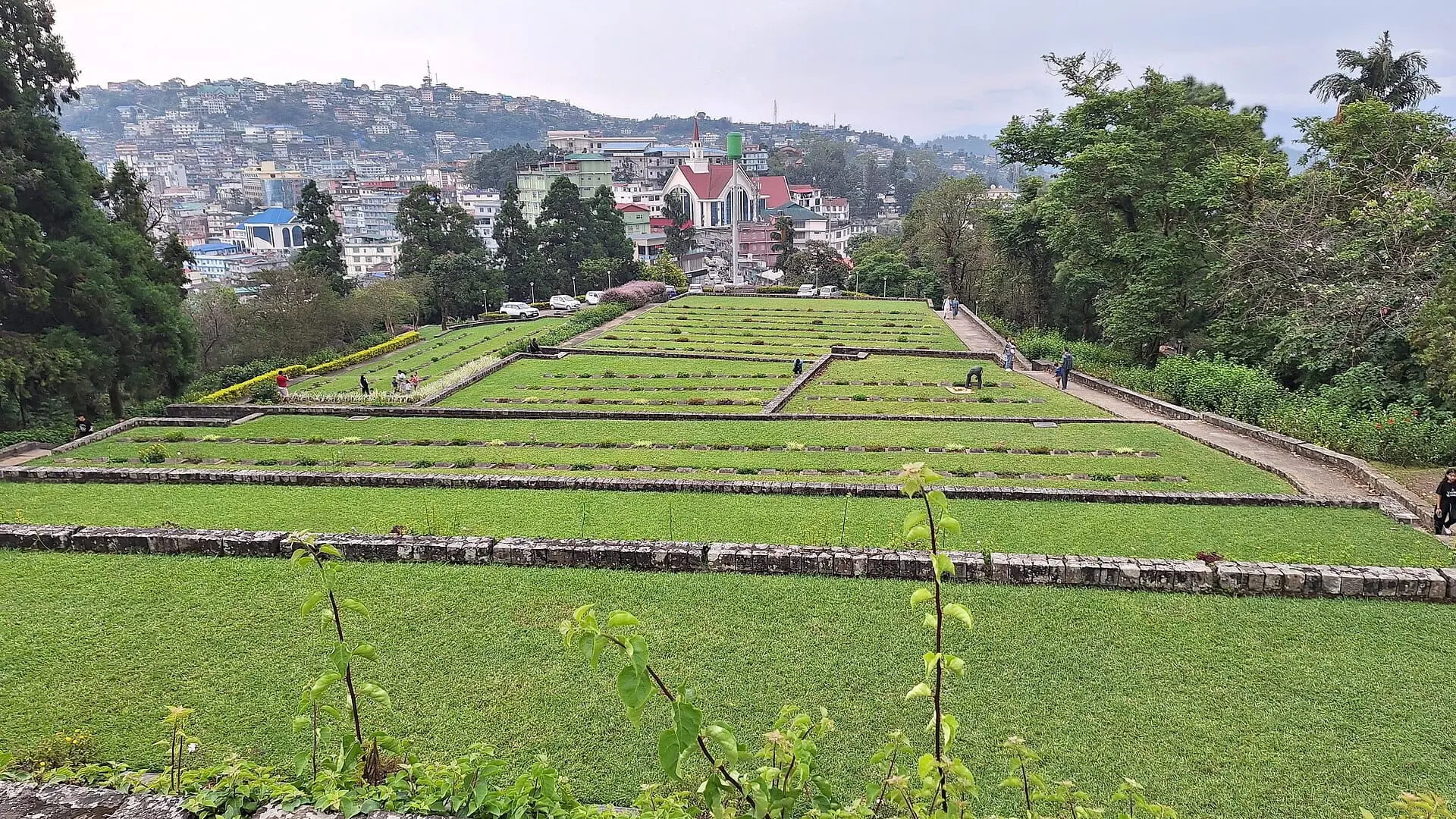
Terraced rows of headstones at Kohima War Cemetery on Garrison Hill, with the town behind. Photo: Ly.n0m, CC BY-SA 4.0 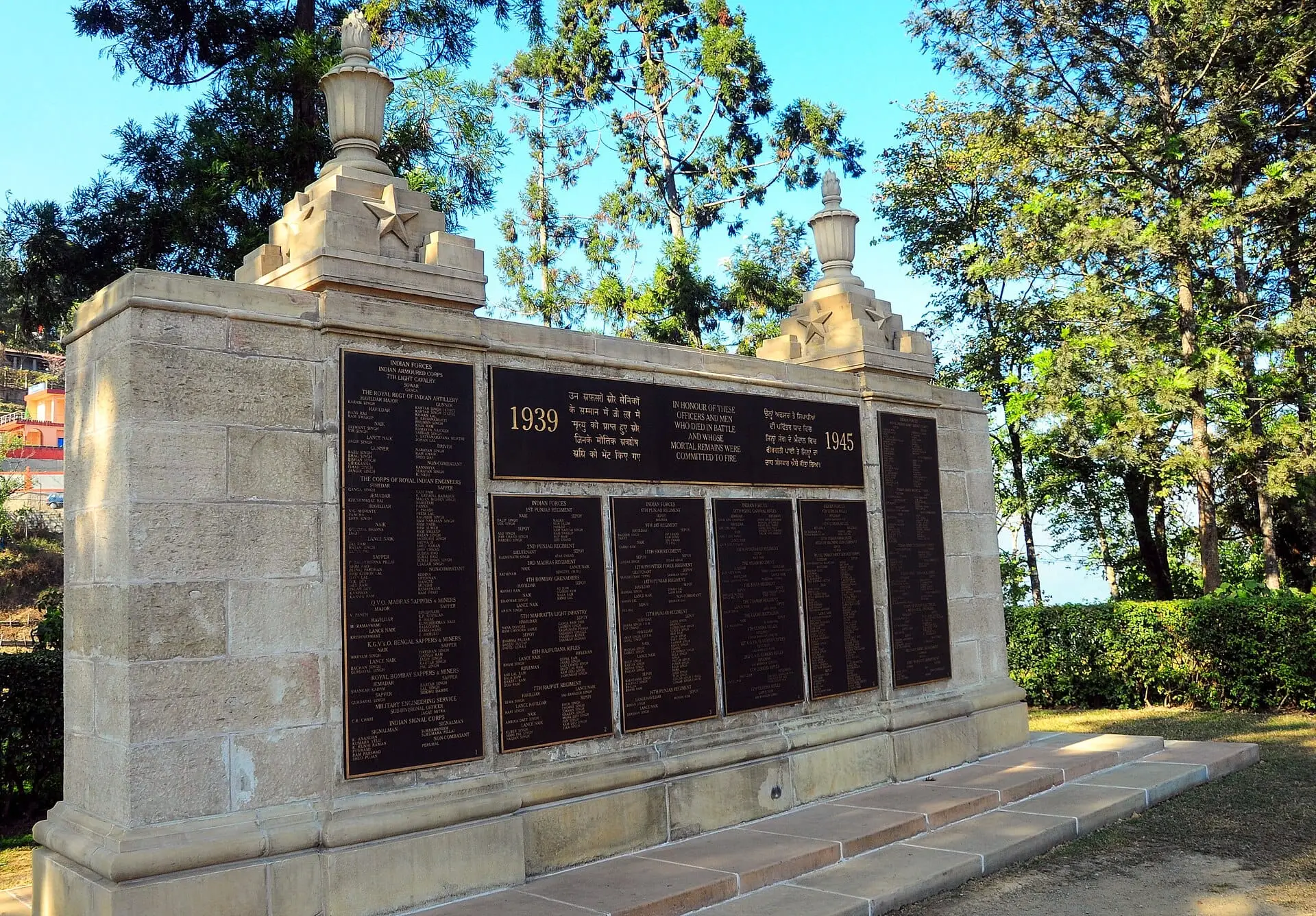
The memorial to Hindu and Sikh soldiers at the top of Kohima War Cemetery. Photo: Kanad Sanyal, CC BY-SA 4.0 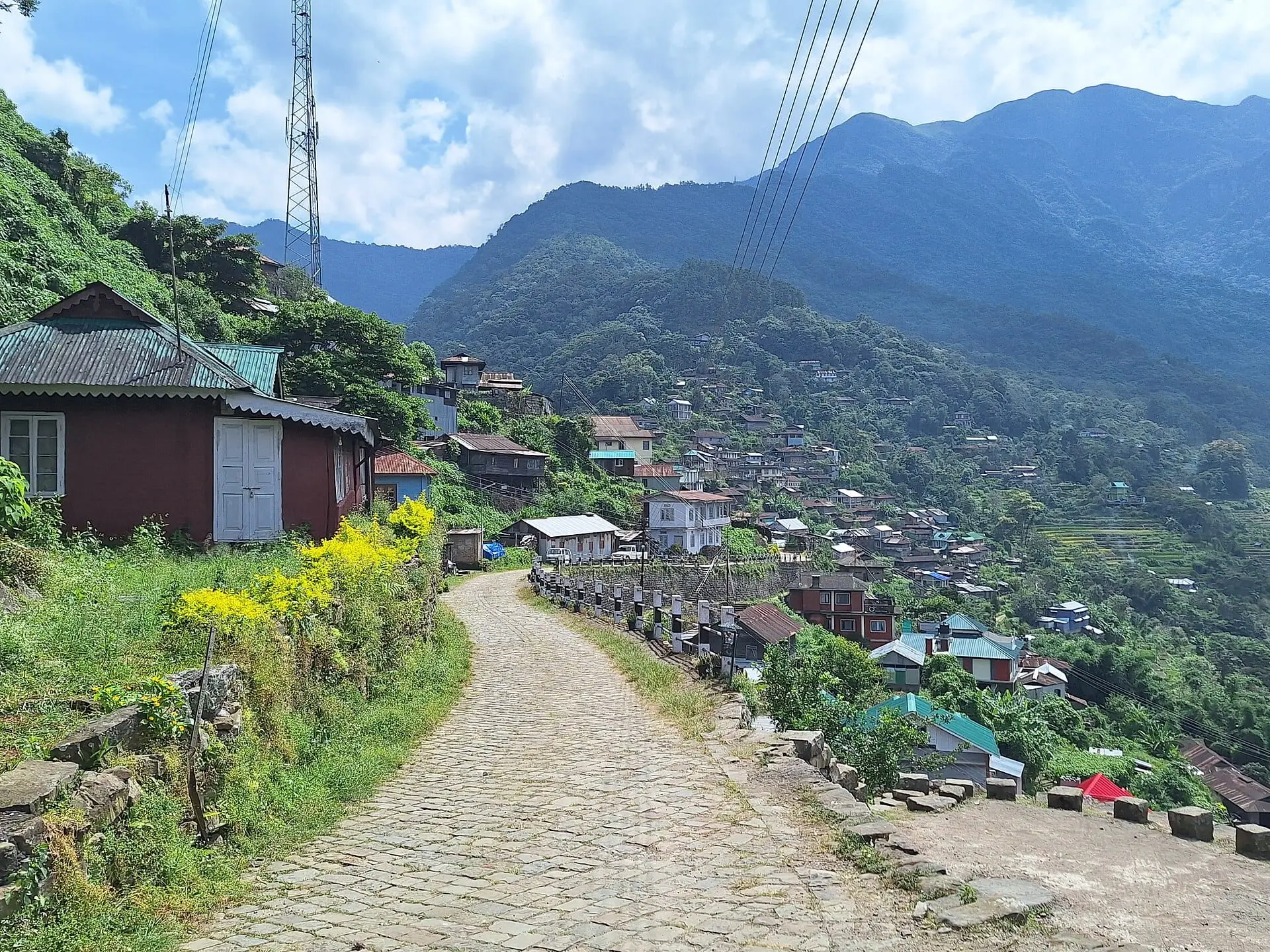
Khonoma village on its hillside, with forested ridges around it. Photo: Ly.n0m, CC BY-SA 4.0 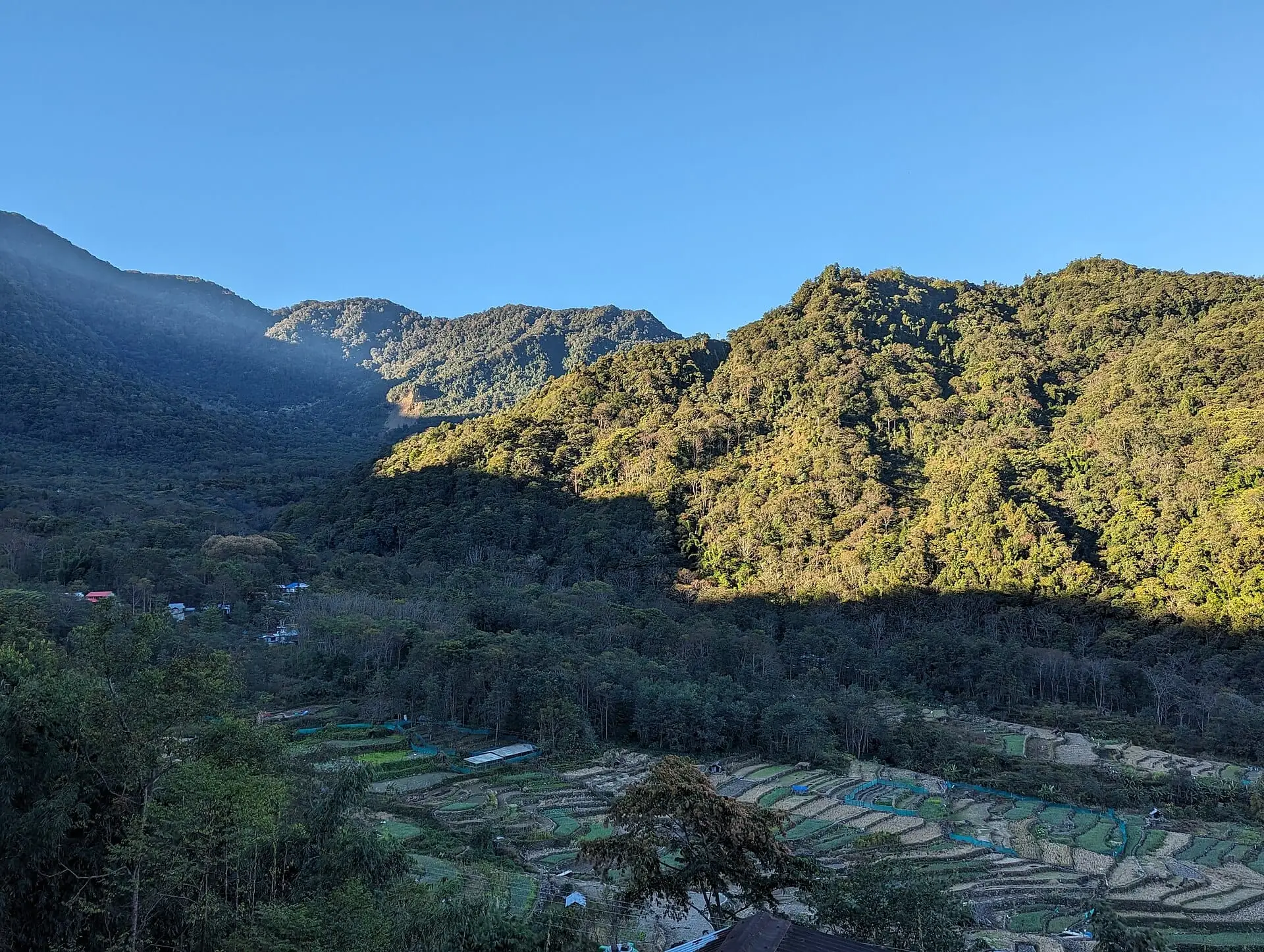
Terraced paddy fields in the valley below Khonoma village. Photo: Joli Rumi, CC BY-SA 4.0 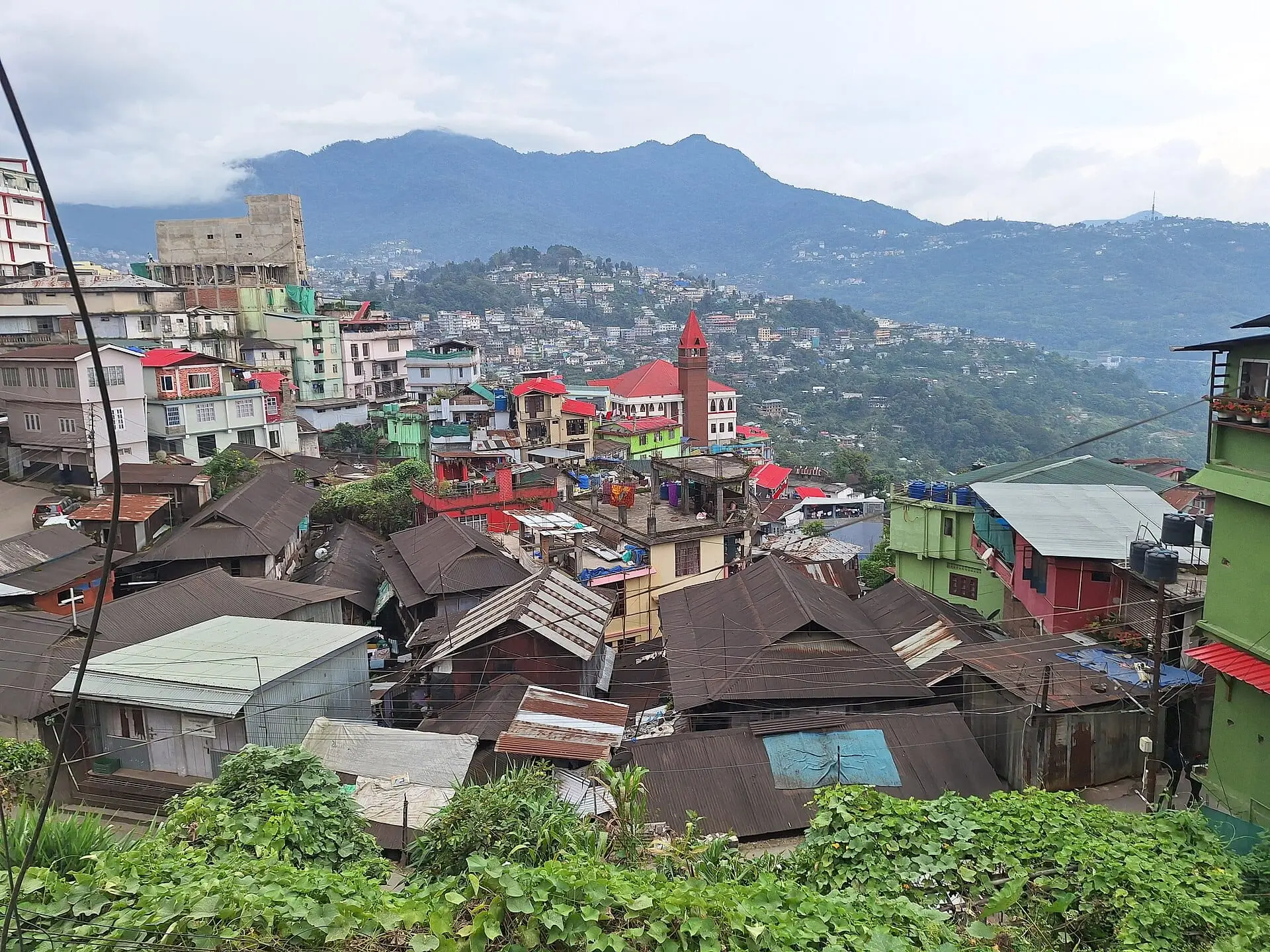
Shops and rooftops of Naga Bazaar in central Kohima. Photo: Ly.n0m, CC BY-SA 4.0 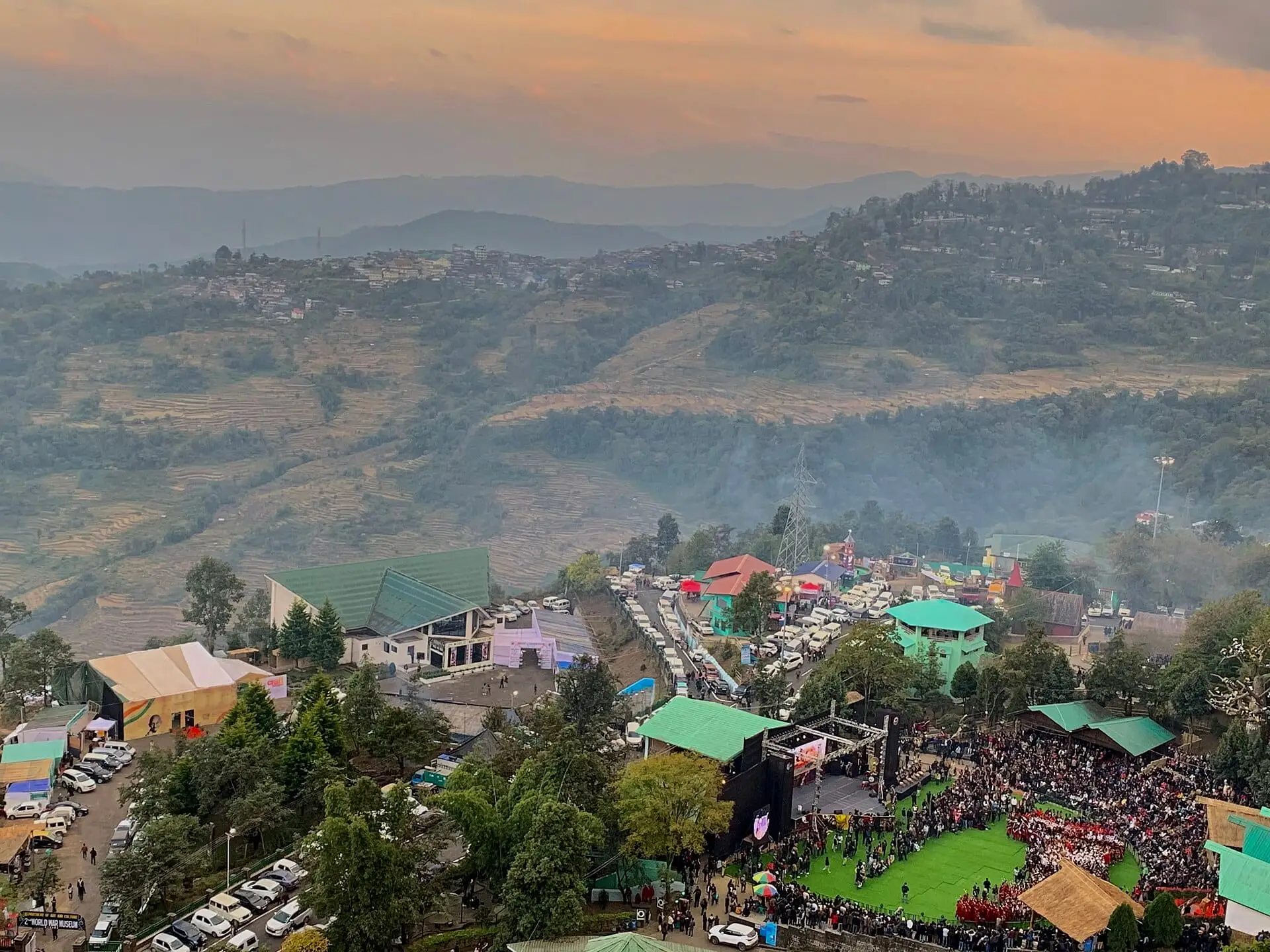
The main arena of Kisama Heritage Village seen from the top of the slope. Photo: Aravind Manickam, CC BY-SA 4.0 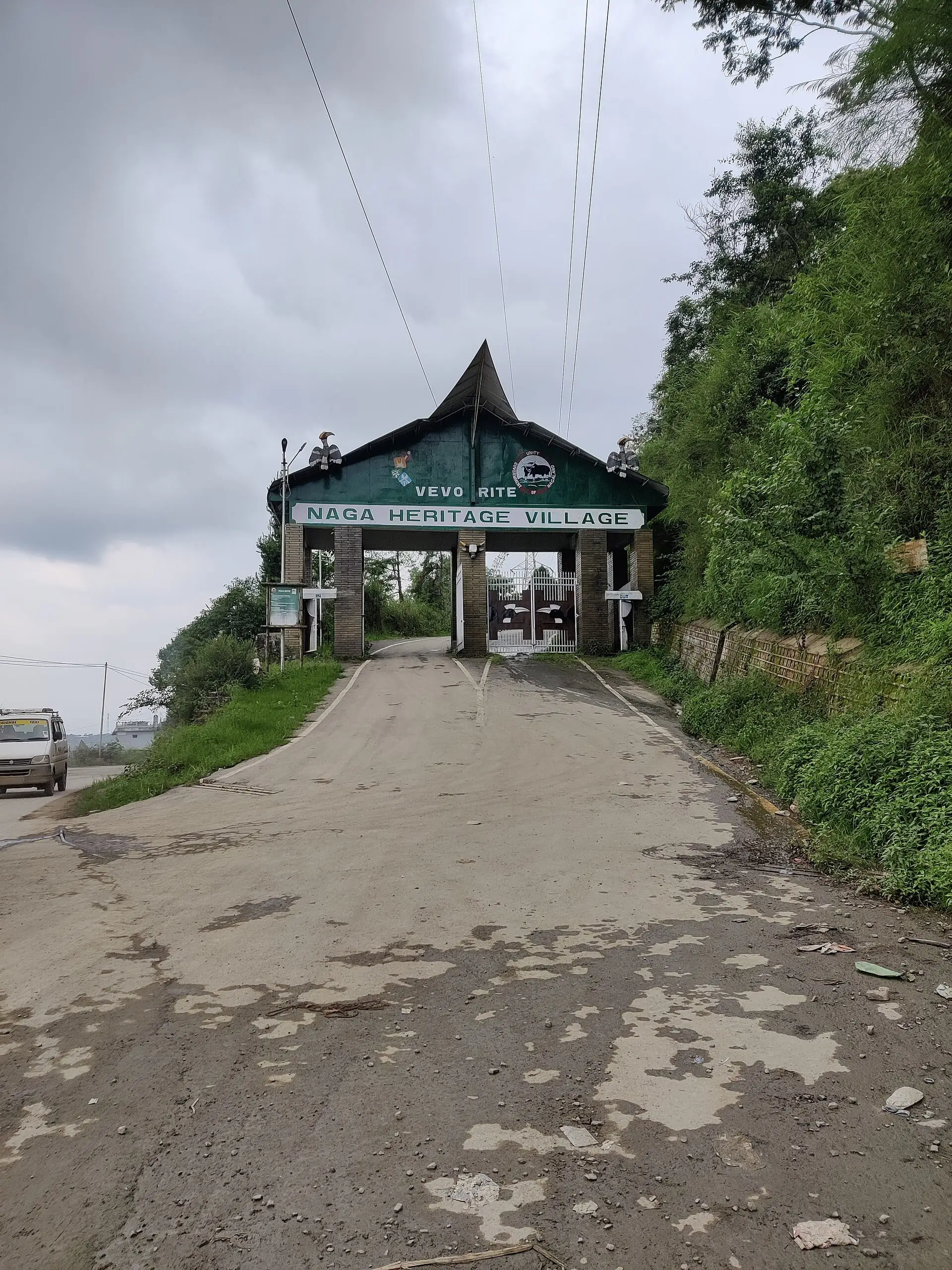
The carved entrance gate of Kisama Heritage Village. Photo: Ganesh Mohan T, CC BY-SA 4.0
Did you know?
A tennis court in history
Inside the War Cemetery on Garrison Hill, white lines still mark the old tennis court where the Battle of Kohima was fought in April 1944.
Every Naga tribe in one place
Each December the Hornbill Festival brings dance, music, food and crafts from every Naga tribe to Kisama, just outside Kohima.
India's first green village
Khonoma, about 20 km from Kohima, banned hunting in 1998 and set up its own tragopan sanctuary. It is now known as India's first green village.
A name made of two villages
Kisama takes 'Ki' from Kigwema, 'sa' from Phesama and 'ma' from both, the two villages it sits between.
Festivals in and around Kohima
Worth timing your trip around. Rooms fill up fast at festival time, so plan early.
Hornbill Festival
DecemberCamp with us
Discover Kohima
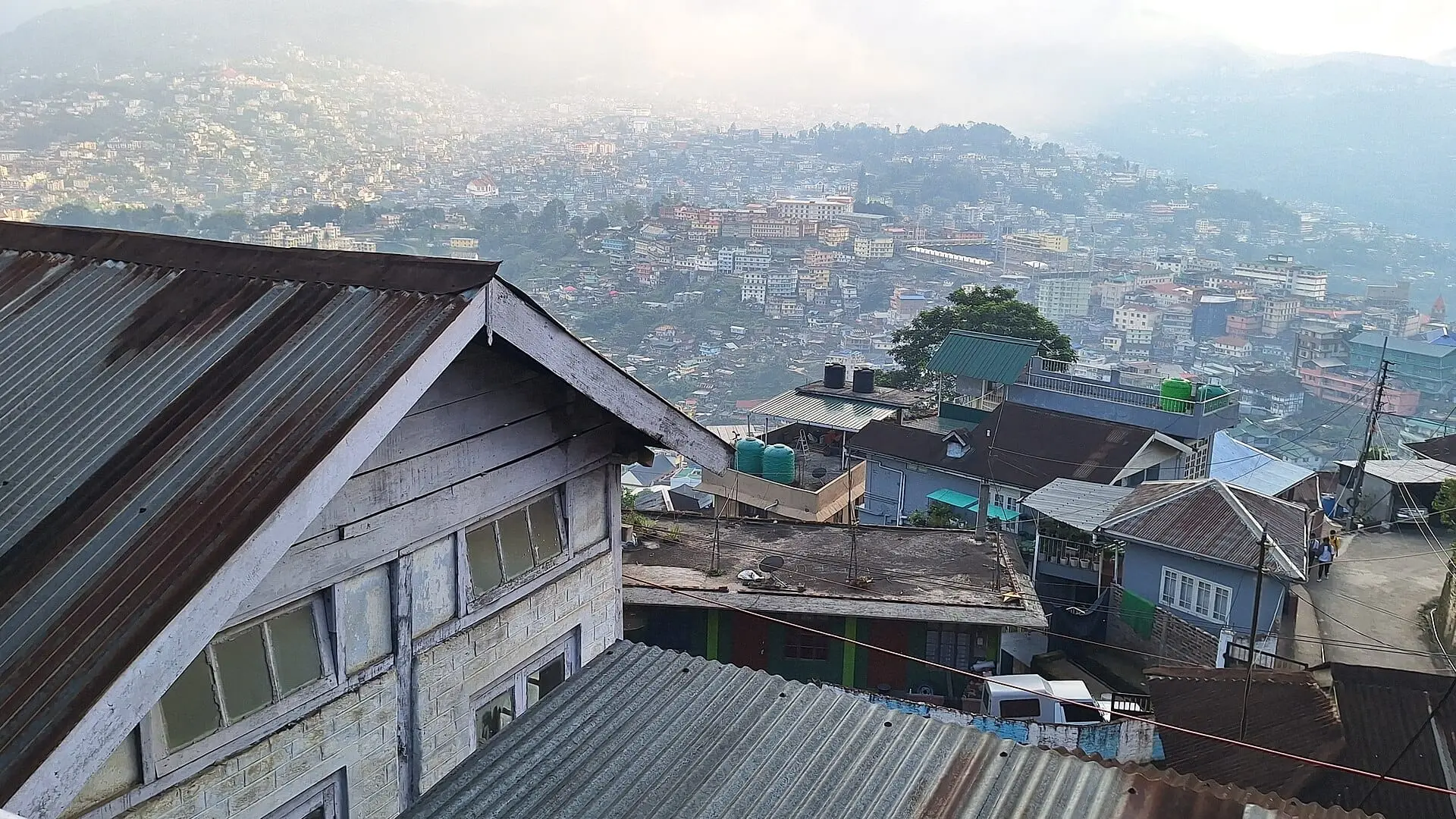
Kohima is the capital of Nagaland, spread over green hills at about 1,450 metres in the south of the state, below the Japfü range. The city grew around an old Angami village once called Kewhira, and that village still sits on its hill above the newer town. Today Kohima is busy, friendly and proudly Naga, with churches on the ridges, crowded markets and good Naga home cooking.
Most visitors come for its history. In 1944 the Battle of Kohima was fought right here, and the War Cemetery on Garrison Hill is one of the most moving places in India. Add a day in Khonoma, Nagaland’s green village, a walk through Kisama Heritage Village and an hour or two in the markets, and you have a short trip that stays with you.
Things to do in Kohima
Kohima War Cemetery
The cemetery climbs the slope of Garrison Hill, the ridge where the British and Indian garrison held out in April 1944. It holds 1,420 Commonwealth graves from the Second World War, and a memorial at the top honours 917 Hindu and Sikh soldiers who were cremated according to their faith. The Battle of Kohima ran from 4 April to 22 June 1944, and the fighting here helped turn back the Japanese advance into India. Look for the white lines marking the old tennis court of the Deputy Commissioner’s bungalow, where some of the hardest fighting took place. Lower down, the 2nd Division memorial carries the famous Kohima Epitaph: “When you go home, tell them of us”. The Commonwealth War Graves Commission looks after the grounds, and they are kept beautifully. Go early or late in the day, walk slowly and keep your voice low.
Khonoma green village
About 20 km west of Kohima, Khonoma is a Western Angami village at about 1,620 metres. In 1998, after hundreds of Blyth’s tragopans were killed in one week, the village council banned hunting and set up the Khonoma Nature Conservation and Tragopan Sanctuary. Khonoma has since become known as India’s first green village. Walk down to the terraced rice fields, which are among the oldest in the region and grow dozens of rice varieties. Khonoma also has a proud history: its warriors fought the British until a peace treaty in March 1880. Hire a local guide from the village to explain the old gates, stone paths and morungs (traditional community houses).
Kisama Heritage Village
Kisama sits on a hill slope about 12 km south of Kohima, between the villages of Kigwema and Phesama. It is laid out like a traditional Naga village, with a morung for each of Nagaland’s 17 ethnic groups, so you can see how the building styles differ from tribe to tribe. Outside festival time it is calm and open, a good place to wander and take photos.
Hornbill Festival
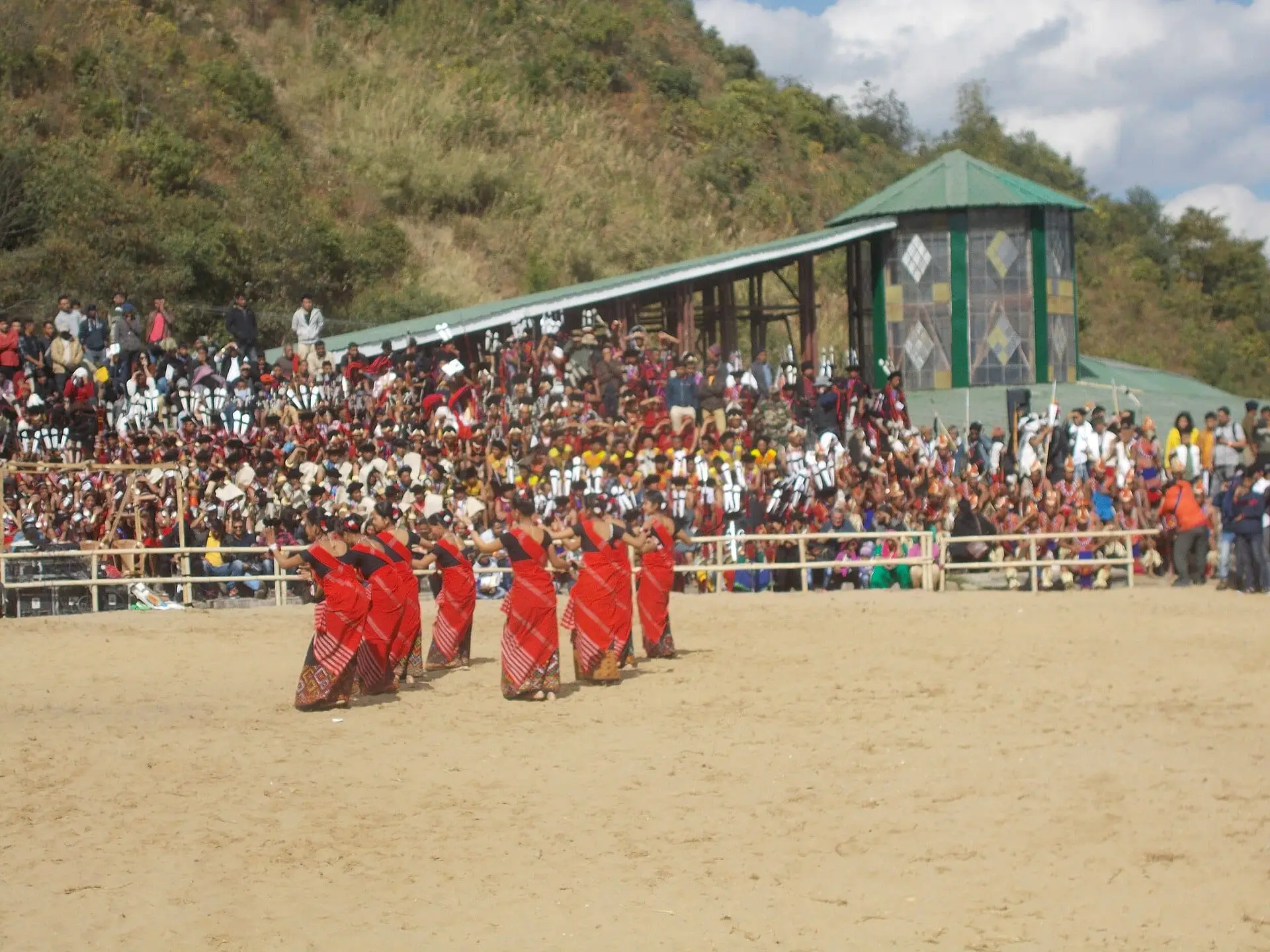
Every year from 1 to 10 December, Kisama hosts the Hornbill Festival, the biggest yearly festival in the Northeast, with dance, music, food and crafts from across Nagaland. If you want to stay right by the grounds, we run Hornbill Festival camping close to the venue.
The markets
Kohima’s markets are the best place to see daily life. Naga Bazaar sits in the town centre, and the Keeda Bazaar food market sells vegetables, many kinds of meat, honeycombs, silkworm larvae and forest ferns. It is noisy, colourful and great for photos, but always ask before taking pictures of people. Some of the larger market areas were damaged by a fire in February 2023, so things may have moved.
Nagaland State Museum
On Bayavü Hill, the State Museum opened in 1970 and shows old sculptures, traditional dress and inscriptions from all over Nagaland. It is a good first stop to understand the different Naga communities before you visit the villages.
Kohima village (Bara Basti)
The old village on the hill above town is where Kohima began. Walk its lanes for views over the city, especially in the evening light.
Dzükou Valley
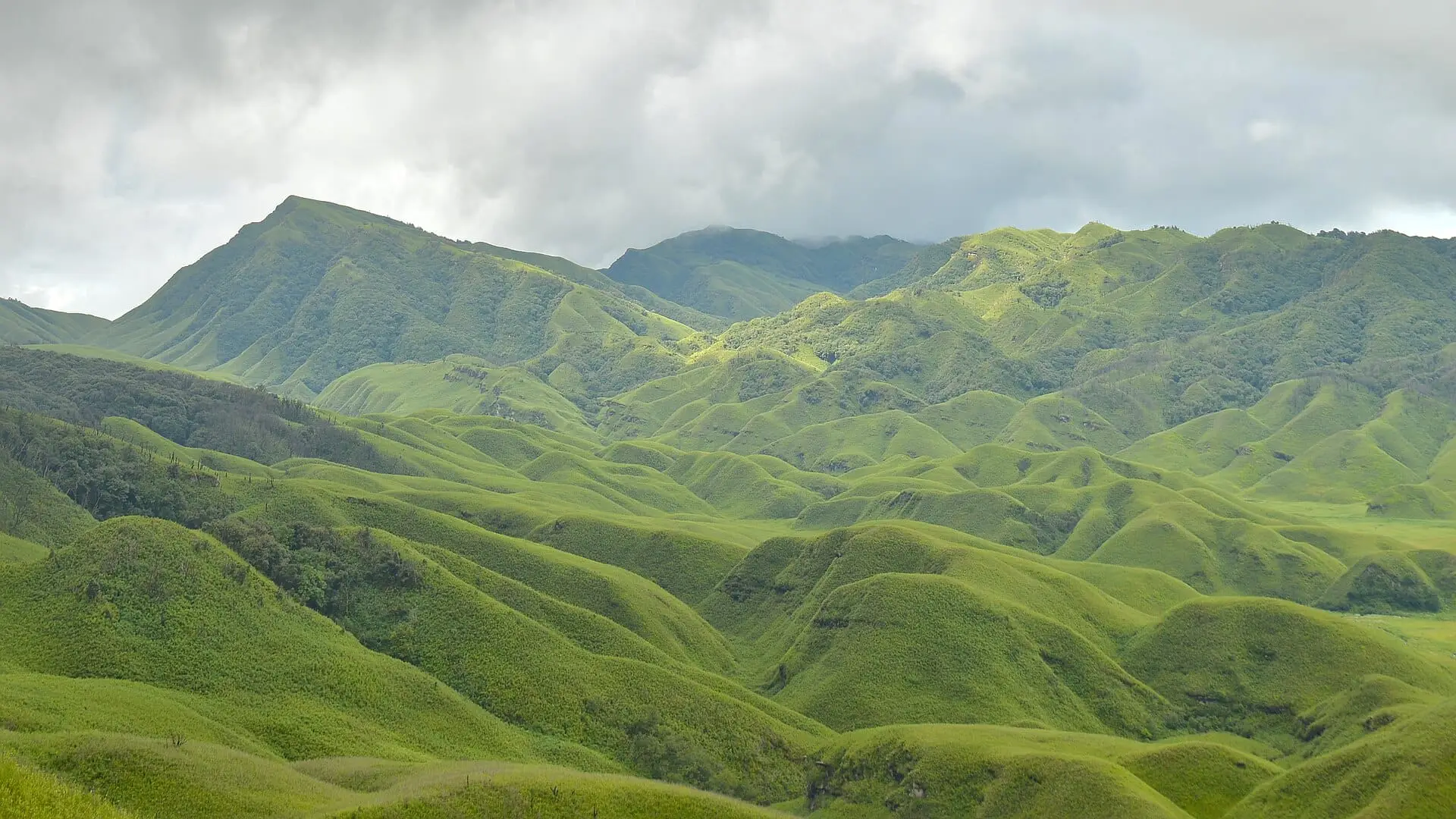
Dzükou Valley is a high, grassy valley at about 2,440 metres, on the border of Nagaland and Manipur. Trails start from Viswema and Jakhama, villages within about 25 km of Kohima, and the pink Dzükou lily blooms in May and June. It needs a night at the top and a guide, so plan two extra days. If you would like company and a guide, see the Dzükou Valley trek.
How to reach Kohima
By air
Dimapur Airport is the only airport in Nagaland, about 74 km from Kohima. It has direct flights from Kolkata and connections from other cities, including Delhi. From the airport it is about two hours by road. Guwahati’s airport has many more flights if you prefer to drive the whole way.
By train
Kohima has no railway station yet. A line to Zubza, near Kohima, is being built, but for now Dimapur is the railhead. Dimapur is on the main line of the Northeast Frontier Railway and has direct trains to Guwahati, Kolkata, Delhi and Chennai.
By road
From Dimapur, shared yellow taxis and full taxis leave from the stand next to the railway station and take about two hours for the 74 km climb to Kohima. State buses also run between the two towns but are slower. Night buses connect Kohima and Dimapur with Guwahati and Shillong. If you drive from Guwahati, plan for about 8 to 9 hours on the road, and try to start and finish in daylight. In the monsoon, landslides can block the hill roads, so keep a spare day in your plans.
Best time to visit Kohima
Autumn (October and November): The rains have gone, the hills are green and the air is clear. A lovely time for Khonoma and the villages. Early December brings the Hornbill Festival and big crowds.
Winter (December to February): Dry and pleasant in the sun, but very cold in the early morning and after mid-afternoon, with frost possible. Days reach only about 16°C in January. Pack warm.
Spring (March to May): Mild and pleasant. May is when the Dzükou lily starts to flower.
Monsoon (June to September): Heavy, frequent rain, with August the wettest month. Landslides and road closures are common, so travel only if your dates are flexible.
Permits and practical tips
- ILP for Indian visitors: Everyone from outside Nagaland needs an Inner Line Permit. Since January 2025 it is applied for online only, on the Nagaland ILP portal (ilp.nagaland.gov.in). Domestic tourists need a recent photo and an ID such as Aadhaar, PAN or Voter ID. Since 2025 Dimapur is covered too, so get your ILP before you arrive. Keep printed and phone copies, as hotels and police may ask to see them.
- Foreign guests: In early 2026 the police in Nagaland confirmed that foreign nationals must hold a Protected Area Permit (PAP), after an earlier relaxation was withdrawn. You can apply online through the e-FRRO portal or through the Nagaland Home Commissioner and other listed offices. You must also register with the district Foreigners Registration Officer within 24 hours of arriving, and apply for the tourist ILP with your passport and visa. Rules here have changed several times, so check again just before you travel.
- Dry state: Nagaland is officially a dry state, so do not count on finding alcohol.
- Weather: Even in spring and autumn, evenings are cool. Bring a warm layer, a rain jacket and good walking shoes for the steep lanes.
- Cash and phone signal: Carry cash for taxis, markets and villages, and expect weaker signal outside town.
- Blockades: Strikes and road blockades can start at short notice. Follow local news and keep a little slack in your plans.
- Etiquette: Ask before photographing people, especially in villages and markets. Be quiet and respectful at the War Cemetery and in churches. In villages, ask your guide before entering a morung or private home.
Where to stay
Kohima has small hotels and guest houses in and around the town centre, from simple budget rooms to a few heritage-style stays, plus a backpacker hostel. Family homestays are a lovely way to see Naga home life, both in town and in villages such as Khonoma. Rooms fill up fast in late November and early December, during the Hornbill Festival, so book early if your dates fall then.
A suggested itinerary
Day 1: Dimapur to Kohima. Take a shared taxi or car up from Dimapur in the morning. In the afternoon, visit the War Cemetery, then walk through Naga Bazaar and the food market.
Day 2: Khonoma. Drive about 20 km west to Khonoma. Walk down to the terraced fields with a local guide, see the old gates and morungs, and stay the night in a homestay if you can.
Day 3: Museum and Kisama. Back in Kohima, see the State Museum on Bayavü Hill and walk up to Kohima village for views. In the afternoon, drive 12 km south to Kisama Heritage Village.
Day 4 (optional): Dzükou Valley. Head to Viswema or Jakhama to start the climb to Dzükou, and spend the night at the top before walking down the next day.
If you would like help planning a Kohima trip, with permits, drivers and village stays, write to us below. You can also pair it with a trip to Haflong in the Dima Hasao hills of Assam.
Kohima: questions people ask
How do I reach Kohima from Guwahati?
Most people take a train or flight to Dimapur, then go up by road for about 74 km, which takes about two hours. Driving all the way from Guwahati takes about 8 to 9 hours. Nagaland Tourism suggests starting early so you finish the drive before dark.
Do I need a permit to visit Kohima?
Yes. Indian visitors from outside Nagaland need an Inner Line Permit (ILP), which is now applied for online on the Nagaland ILP portal. Dimapur also needs an ILP since 2025. Foreign guests need a Protected Area Permit and must register with the Foreigners Registration Officer within 24 hours of arriving.
What is the best time to visit Kohima?
October to May is the dry season and the easiest time to travel. December to February is cold and clear, with frosty mornings. June to September brings heavy rain, and landslides can close roads.
What is special about Kohima War Cemetery?
It holds 1,420 Commonwealth graves from the Second World War and a memorial to 917 Hindu and Sikh soldiers who were cremated. It sits on Garrison Hill, where the 1944 battle was fought, and is cared for by the Commonwealth War Graves Commission. It is a short walk from the town centre.
How far is Khonoma from Kohima?
Khonoma is about 20 km west of Kohima. It is an easy day trip by car or taxi, and many people stay a night in a village homestay to enjoy the quiet.
When is the Hornbill Festival in Kohima?
The Hornbill Festival is held every year from 1 to 10 December at Kisama Heritage Village, about 12 km south of Kohima. Stays fill up early in those weeks, so plan well ahead.
Can I trek to Dzükou Valley from Kohima?
Yes. The usual trails start from Viswema or Jakhama, villages within about 25 km of Kohima. The valley sits at about 2,440 metres, and most people stay a night at the top. Go with a local guide.
How many days do I need in Kohima?
Two or three days is a good start. That gives you a day for the War Cemetery, museum and markets, a day for Khonoma, and time for Kisama. Add two more days if you want to trek to Dzükou Valley.
Want to see Kohima with us?
Tell us your dates and who is coming. We will put together a custom trip or a ready package to Kohima, with stays, a car and a local guide, and send it to you on WhatsApp.
More places nearby
 Assam
Dima Hasao
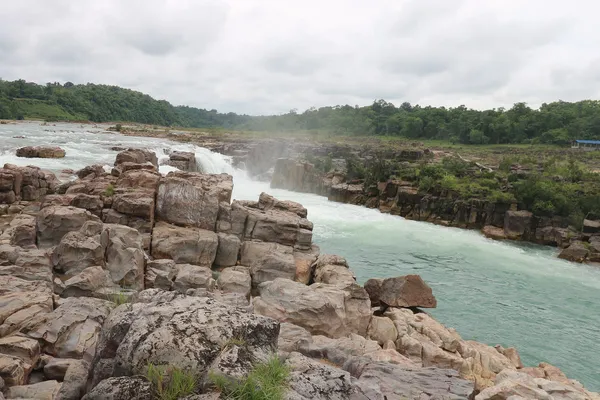
Explore Dima Hasao in the hills of Assam: Jatinga's bird nights, Panimoor falls, old Maibang, Umrangso, Dimasa culture and the Lumding to Silchar railway.
 Assam
Haflong
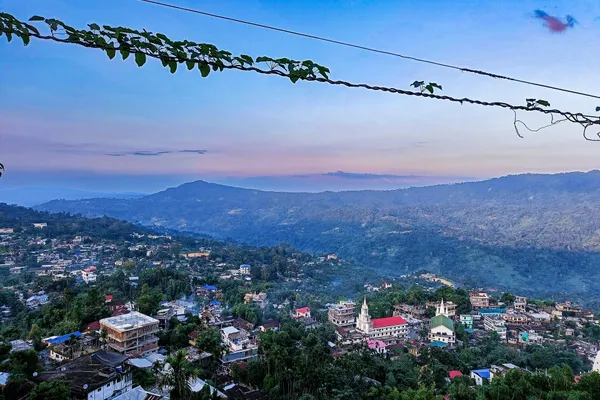
Plan a trip to Haflong, Assam's only hill station: the lake in the middle of town, hilltop views, the hill railway, how to reach and the best time to go.
 Assam
Kaziranga
Plan your trip to Kaziranga National Park in Assam: one-horned rhinos, jeep and elephant safaris, the four safari ranges, the best time to go and how to reach.
Sources
Last checked 18 November 2026. Rules, roads and opening months change, so check with us or the local authorities before you travel.
- Wikipedia: Kohima
- Wikipedia: Kohima War Cemetery
- Wikipedia: Battle of Kohima
- Wikipedia: Khonoma
- Wikipedia: Kisama Heritage Village
- Wikipedia: Dzükou Valley
- Wikipedia: Nagaland State Museum
- Kalpavriksh: Khonoma Village
- Nagaland Tourism: How to get there
- Kohima District: Tourist Places
- Nagaland ILP Portal: About
- Nagaland ILP Portal: Documents checklist
- Eastern Mirror: ILP extended to Dimapur
- All India Radio News: PAP required for foreign visitors to Nagaland (Feb 2026)
- Wikivoyage: Kohima
- TravelTriangle: Things to do in Kohima