

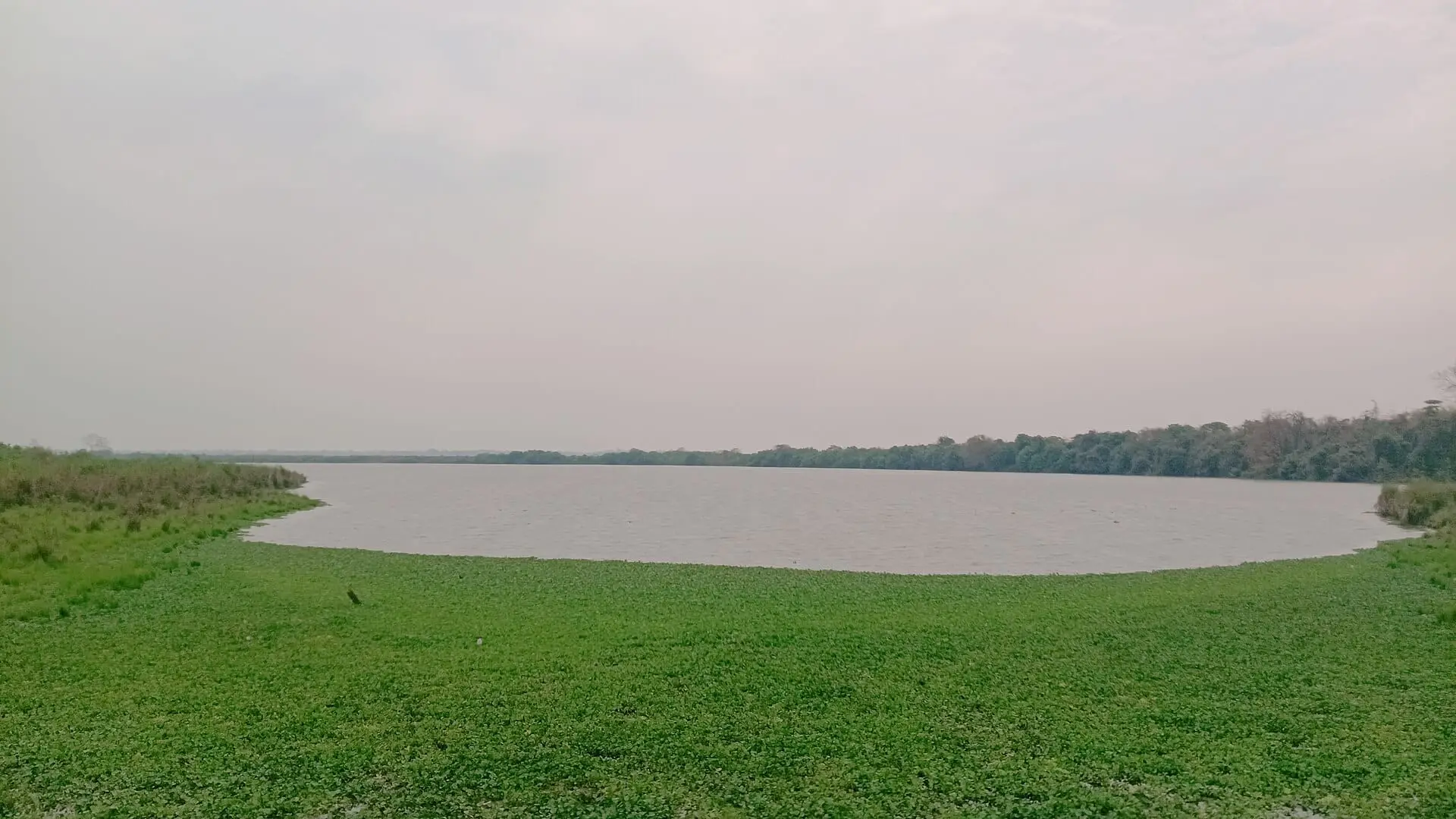
Kaziranga National Park Travel Guide: Rhinos, Safaris and Season
Plan your trip to Kaziranga National Park in Assam: one-horned rhinos, jeep and elephant safaris, the four safari ranges, the best time to go and how to reach.
Photo: Thapalens, CC BY-SA 4.0
Kaziranga at a glance
- Best time
- November to April
- Park season
- Reopens from October, shut in the monsoon
- Nearest airport
- Jorhat, about 97 km
- Nearest railway station
- Furkating, about 75 to 80 km
- By road
- Guwahati, about 195 to 220 km on the highway
- Permits
- No ILP for Assam; safari permits needed
- Ideal stay
- 2 to 3 nights
Photos of Kaziranga
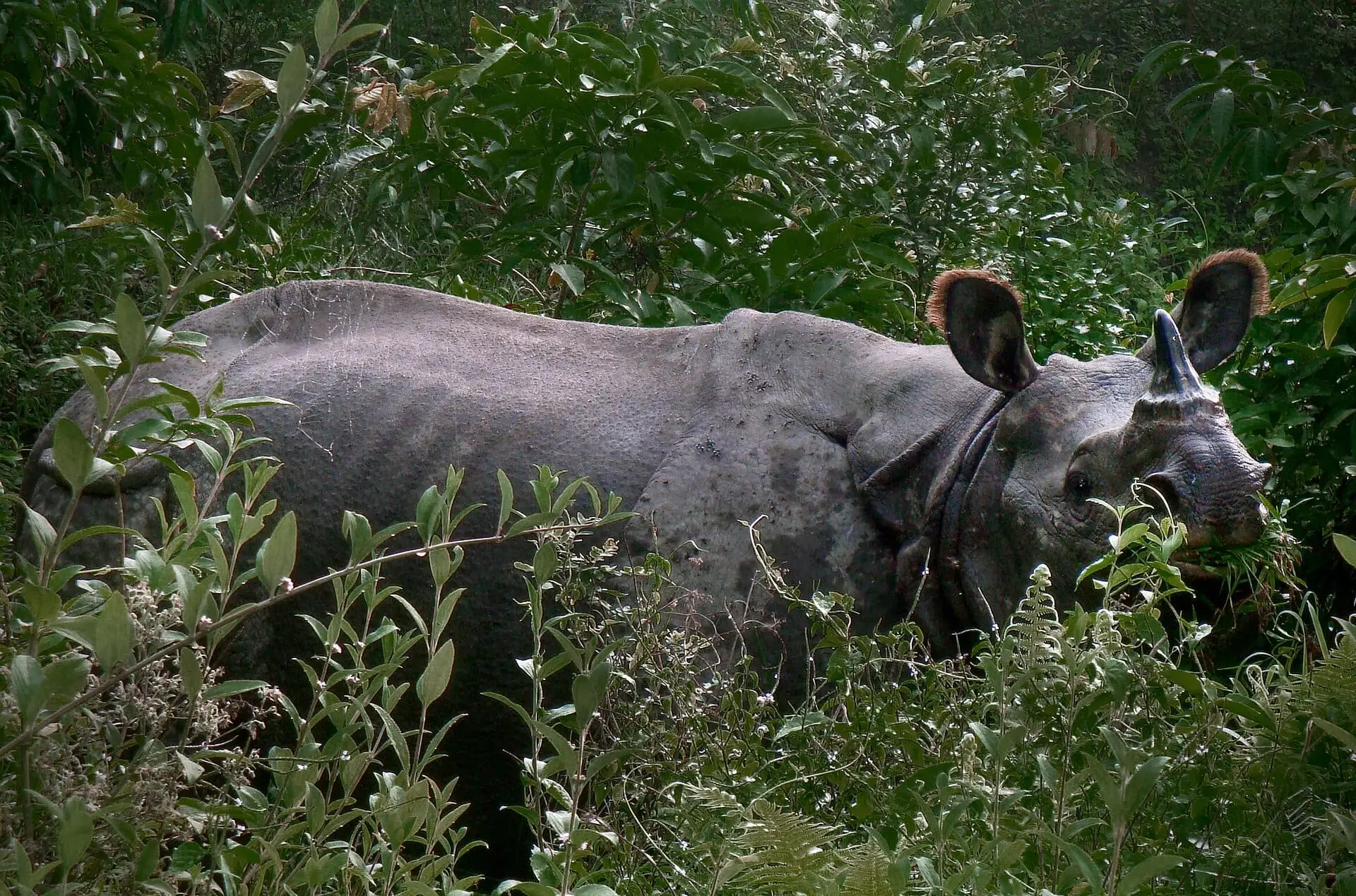
A one-horned rhino standing in the grassland of Kaziranga National Park. Photo: Jha kit, CC BY-SA 4.0 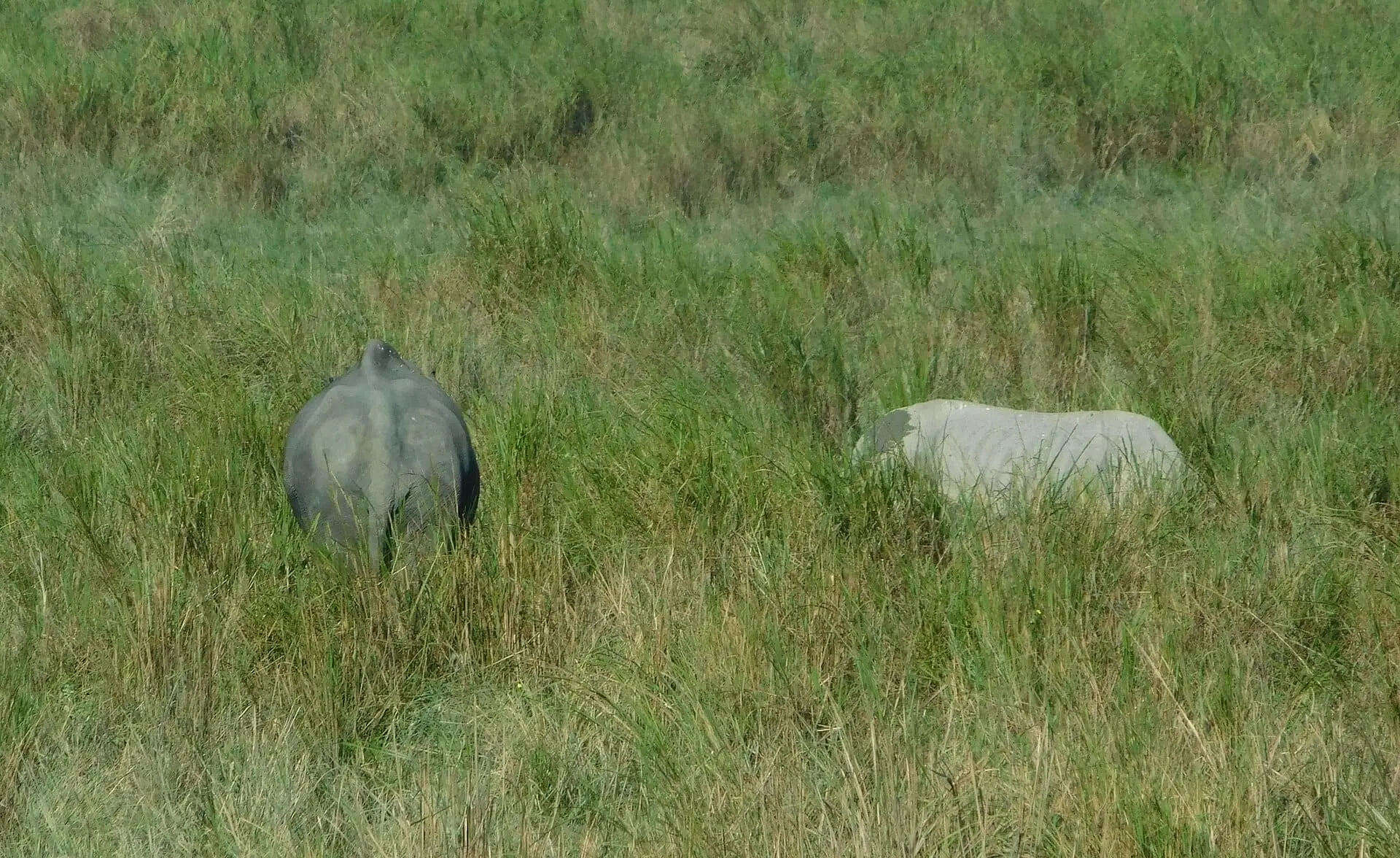
One-horned rhinos and a wild elephant sharing the same stretch of grassland. Photo: PP Yoonus, CC BY-SA 4.0 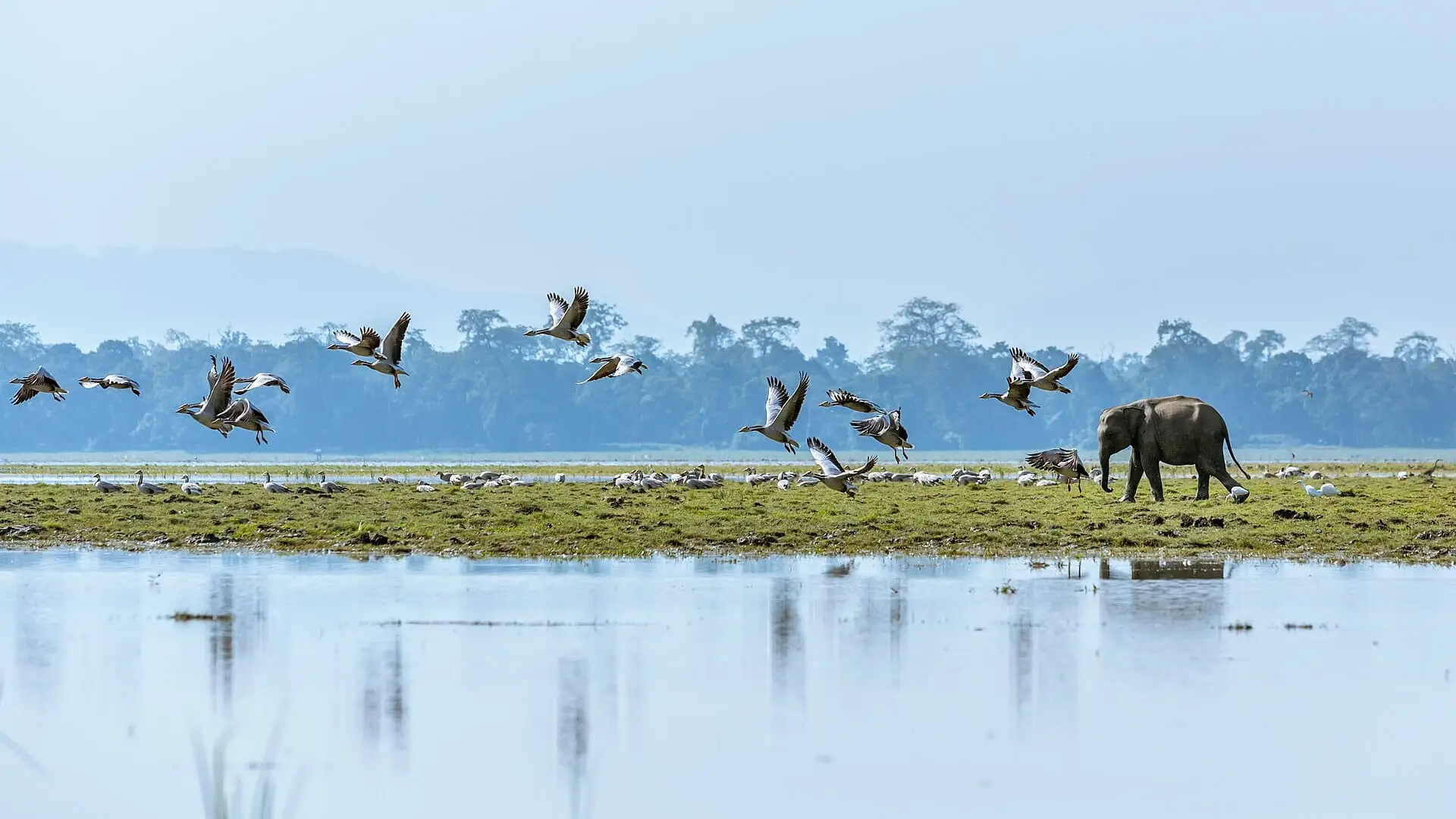
Bar-headed geese taking off as an elephant calf hurries after its herd. Photo: Travelure, CC BY-SA 4.0 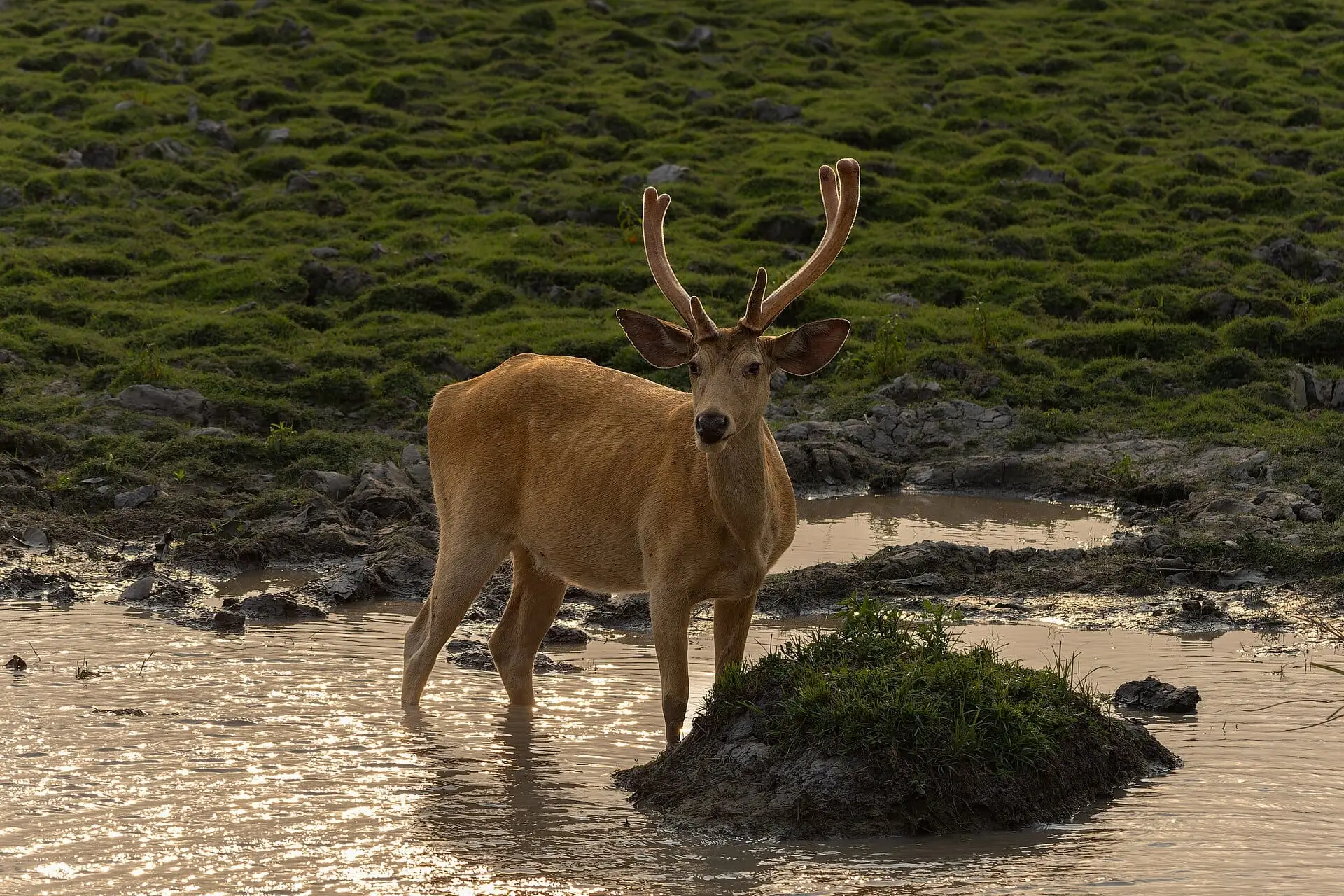
A male swamp deer, or barasingha, in Kaziranga National Park. Photo: Tisha Mukherjee, CC BY-SA 4.0 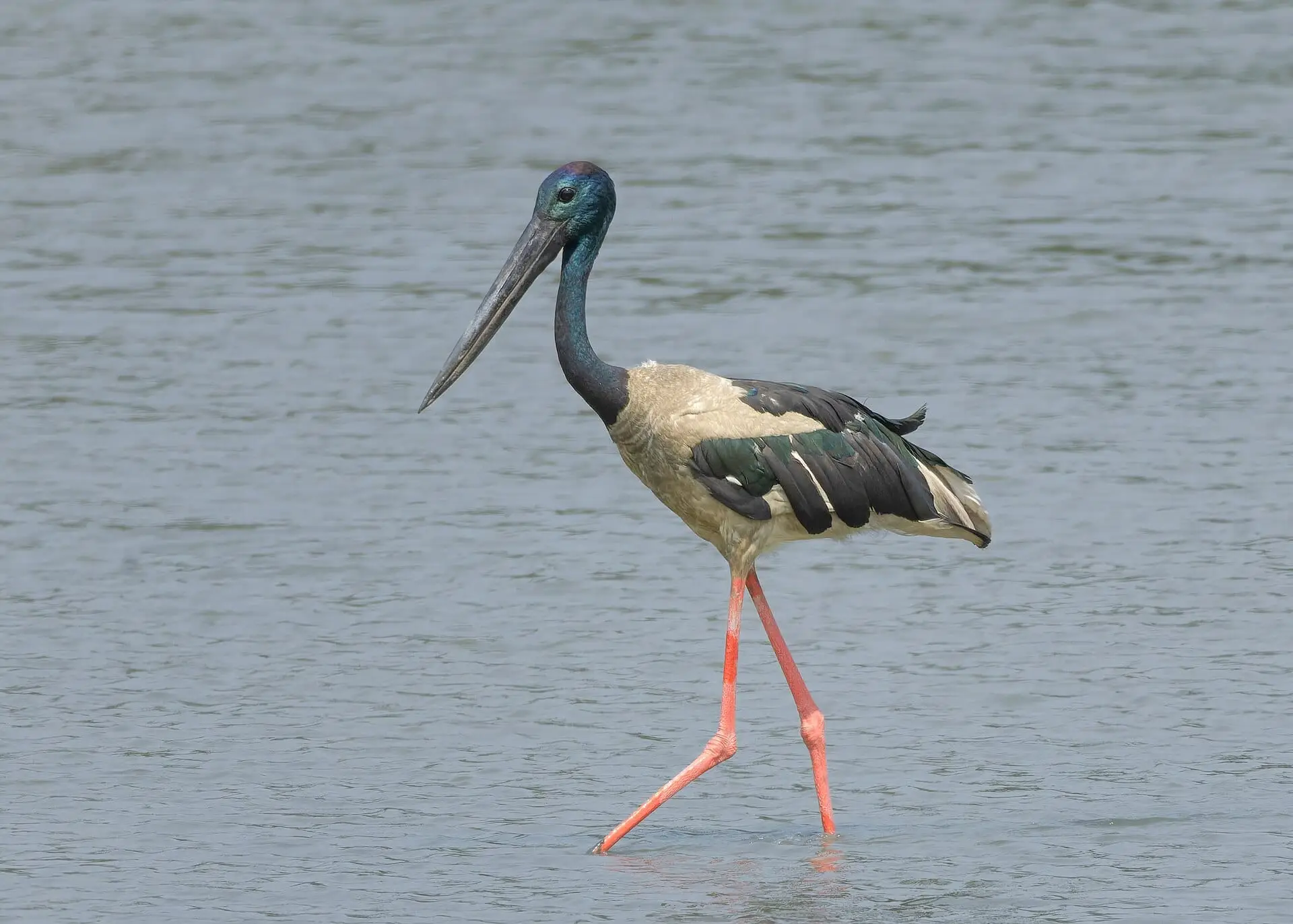
A black-necked stork standing in the wetlands of Kaziranga. Photo: Tisha Mukherjee, CC BY-SA 4.0 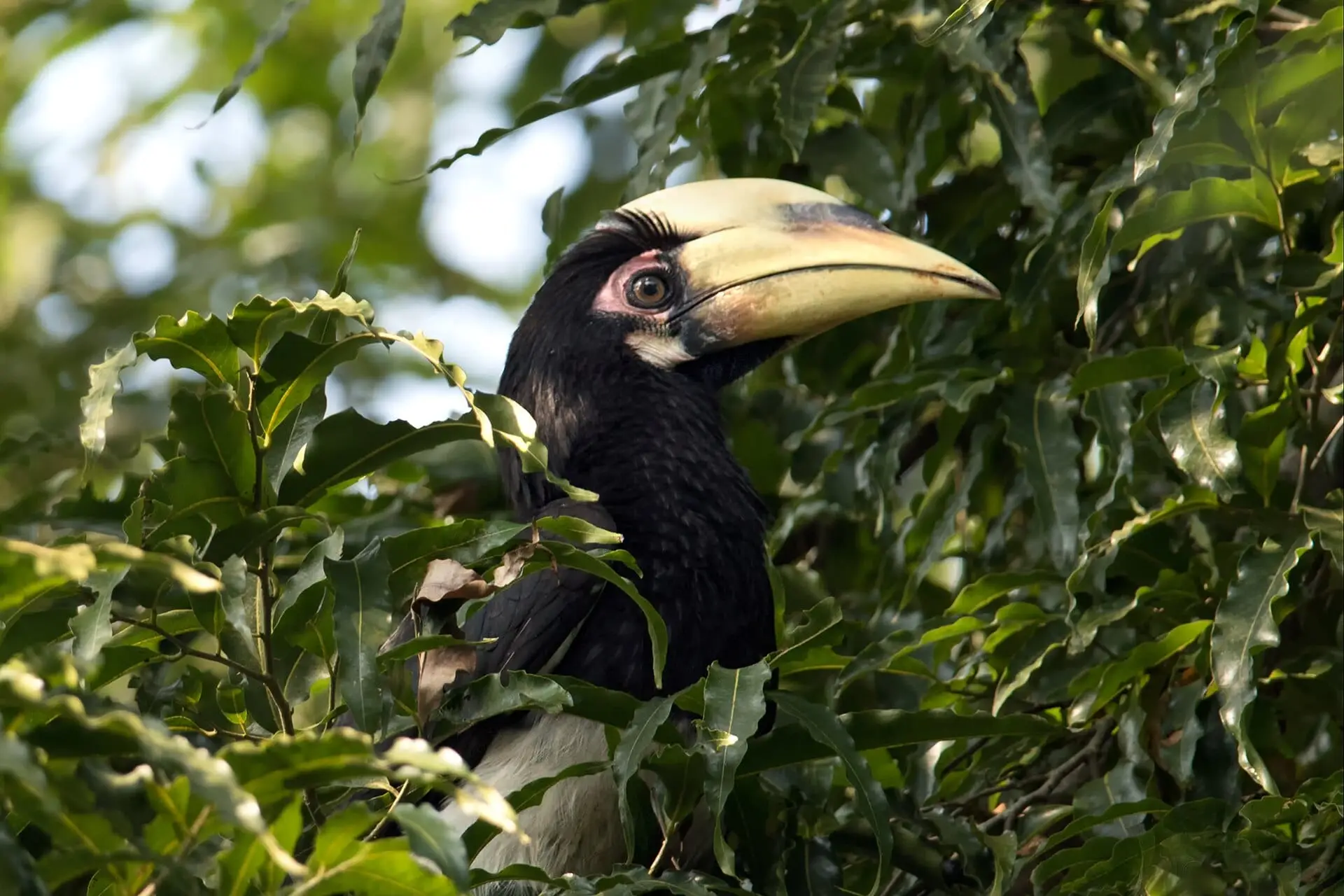
An oriental pied hornbill feeding on berries in the forest canopy at Kaziranga. Photo: Rakeshkdogra, CC BY-SA 4.0 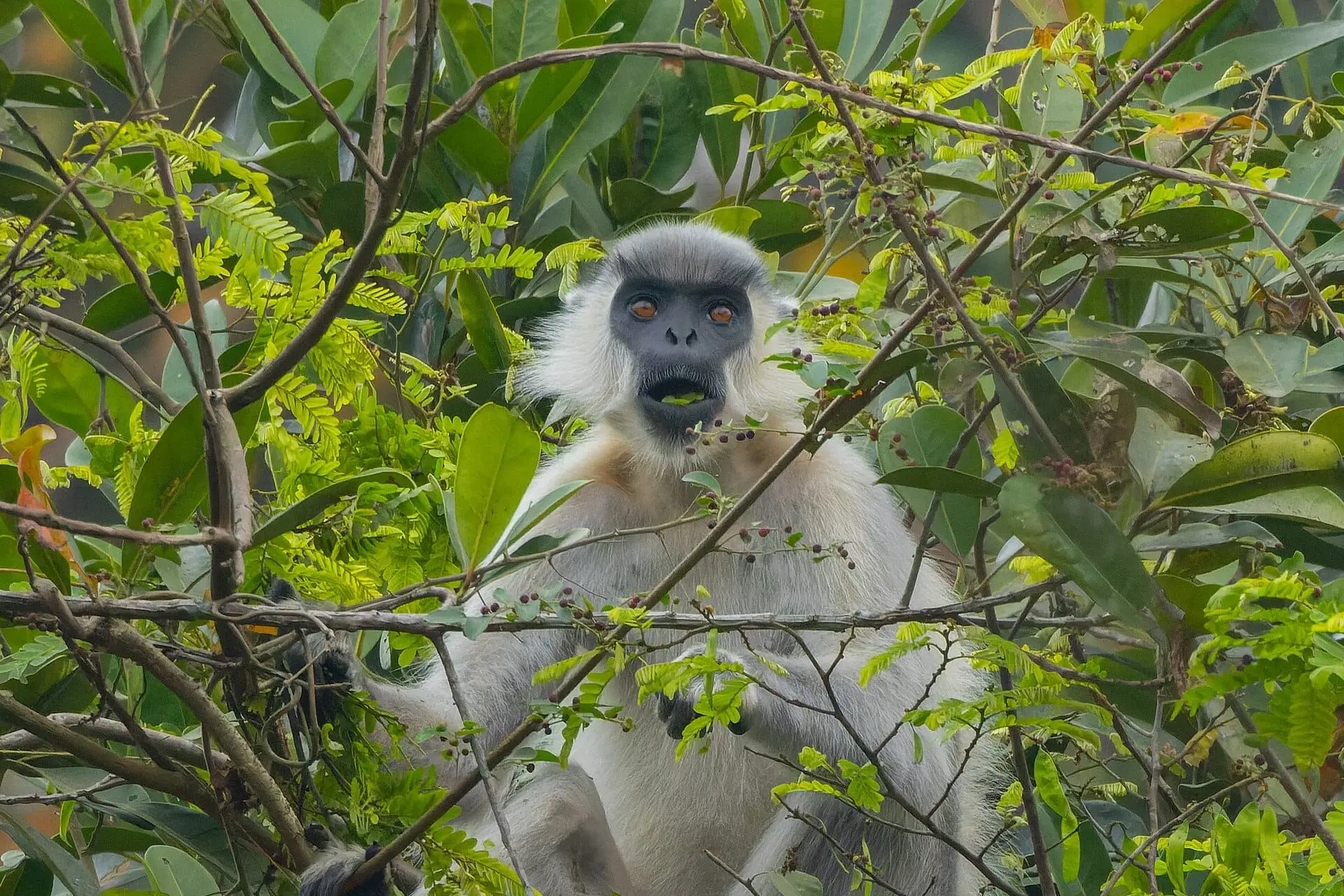
A capped langur sitting in a tree in Kaziranga National Park. Photo: Tisha Mukherjee, CC BY-SA 4.0 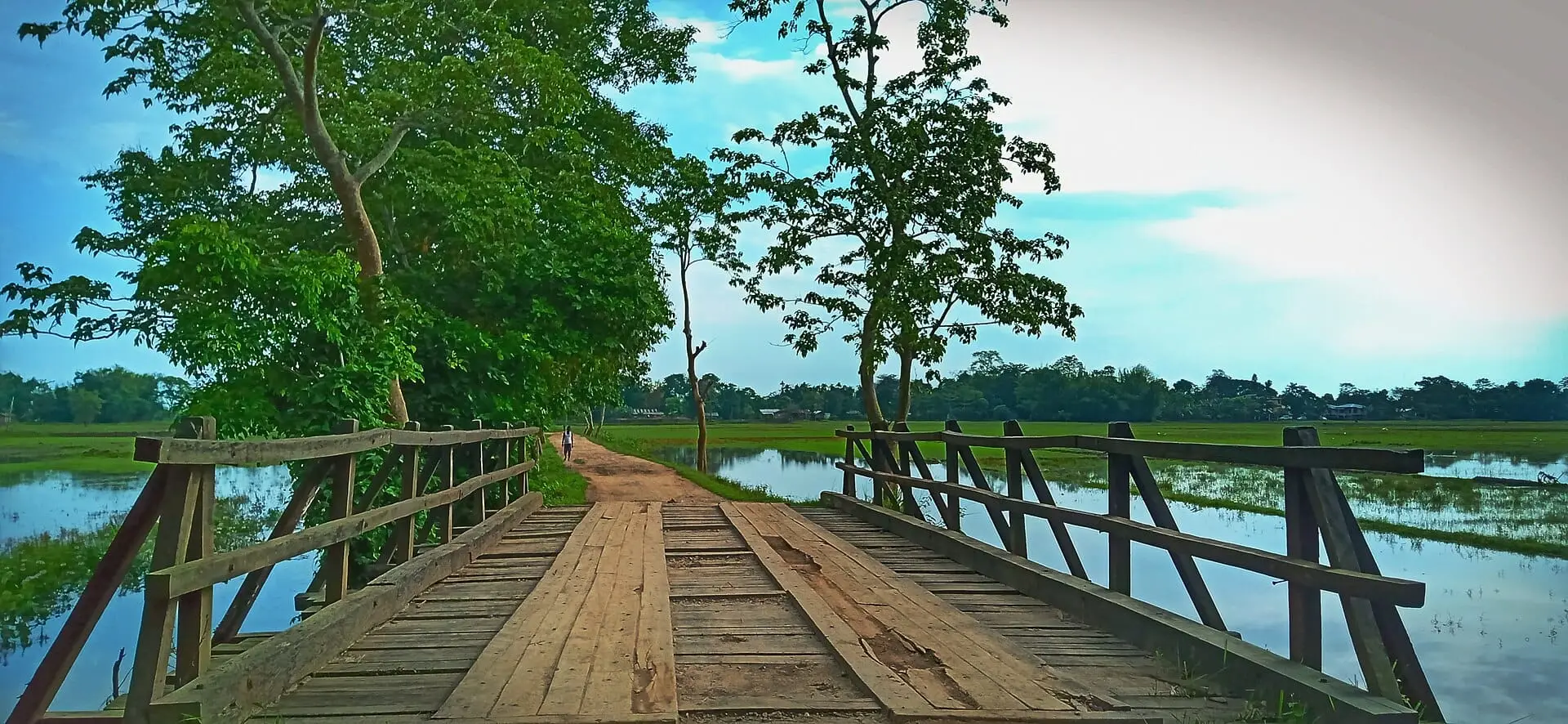
A wooden bridge on the forest track to the Agaratoli range of Kaziranga. Photo: KAUSIKA BORDOLOI, CC BY-SA 4.0
Did you know?
A visit that changed everything
In 1904 Mary Curzon, wife of the Viceroy, came to see Kaziranga's rhinos. She urged her husband to protect them, and the area became a proposed reserve forest on 1 June 1905.
Home of most of Assam's rhinos
The 2022 count found 2,613 one-horned rhinos in Kaziranga, out of 2,895 in the whole of Assam. It is the largest population of the species anywhere.
A park that floods on purpose
In July and August the Brahmaputra can cover 70 to 80 per cent of the park for 5 to 10 days. The floods refill the wetlands, and the animals move to higher ground until the water falls.
Named in a love story
One local legend says the park takes its name from Kazi and Rawnga, a young couple who ran away together into the forest.
Discover Kaziranga
Kaziranga National Park sits on the south bank of the Brahmaputra in Assam, a long stretch of tall elephant grass, shallow lakes and patches of forest about 40 km from east to west. It is home to more one-horned rhinos than anywhere else on earth, and it has been a UNESCO World Heritage Site since 1985. On a good morning drive you can see rhinos grazing a few metres from the track, wild buffalo in the water, herds of elephants crossing the open ground and swamp deer in the grass.
It is also one of the easiest wildlife trips in Northeast India. The highway runs along the park’s southern edge, the safari gates are close to it, and there is a stay for every kind of traveller. This Kaziranga travel guide covers the safari ranges, how to reach, the best time to visit and how to plan two or three good days.
Things to do in Kaziranga
Take a jeep safari
The jeep safari is the main way to see the park, since walking inside is not allowed. Rides run twice a day, in the morning and the afternoon, and last about two to three hours. Mornings are cooler and the animals are busier. If you stay three nights, try for four drives so you can see more than one range.
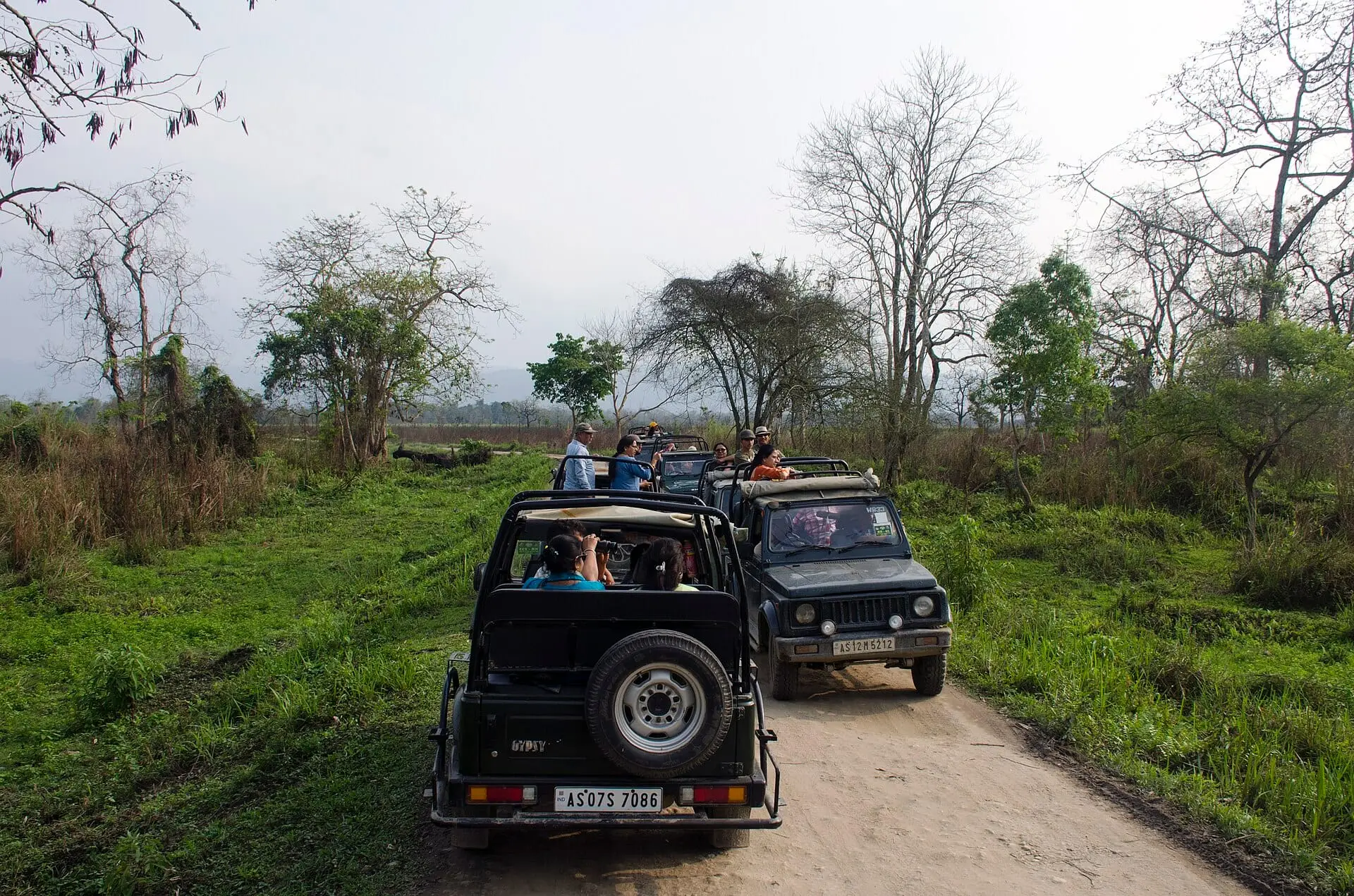
Each range has its own gate and its own feel:
- Kohora (Central): wetlands, grassland and woods, with rhinos and a chance of tigers. The most popular range and a good place to start.
- Bagori (Western): open grassland where rhinos and wild water buffalo are often in view. Good for photographs.
- Agaratoli (Eastern): quieter and further away, and the one for birdwatchers.
- Burapahar (Ghorakati): the least visited, with fewer facilities.
The park also has a fifth range, the Northern range at Biswanath, on the far bank of the river.
Ride out on an elephant at sunrise
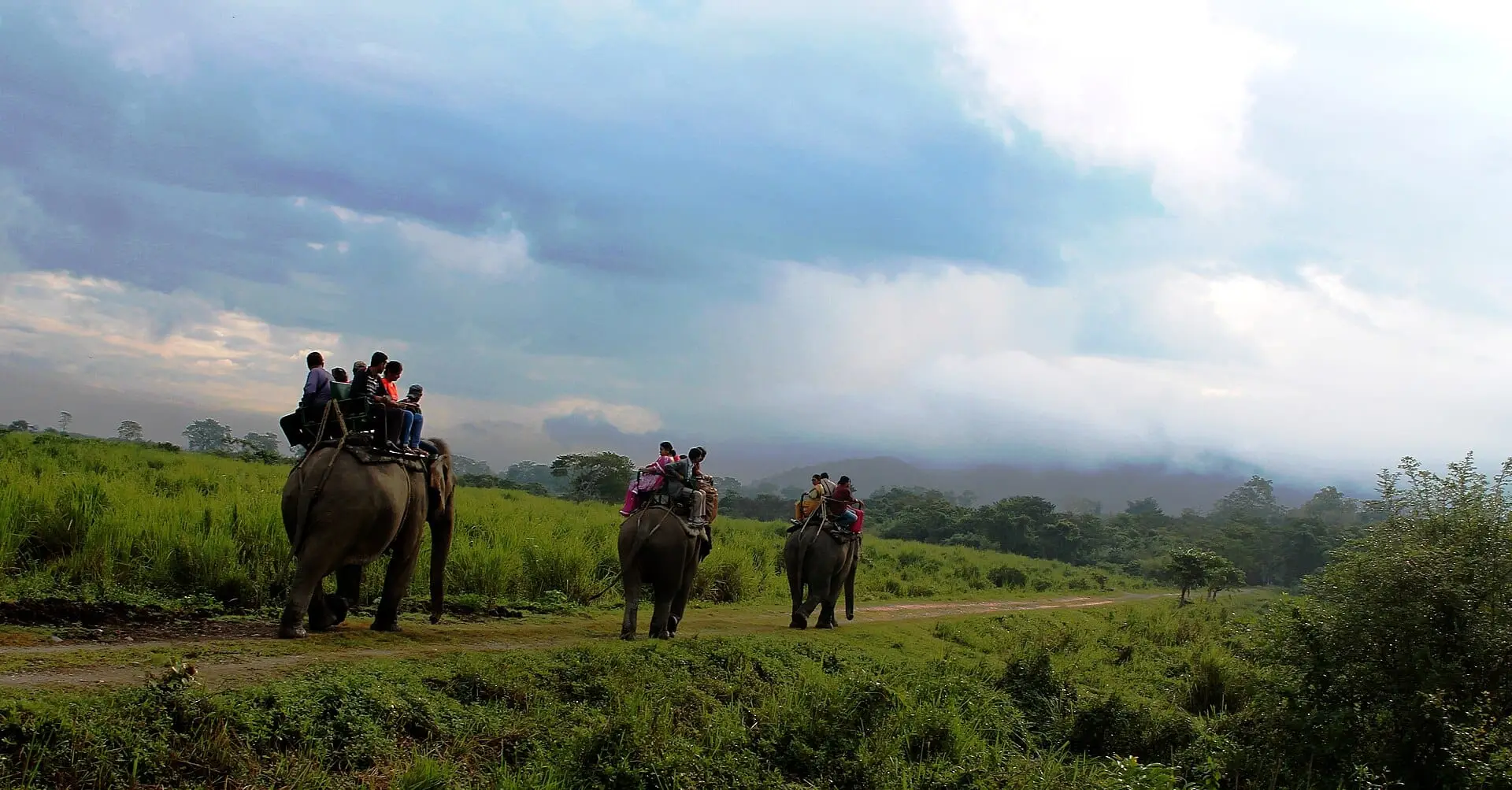
Elephant safaris run early in the morning at the Kohora and Bagori gates. They take you into tall grass that jeeps cannot reach, often right up to grazing rhinos. Each season they start a little after the jeeps.
Look for the Big Five
Kaziranga is known for five large animals: the one-horned rhino, the Bengal tiger, the Asian elephant, the wild water buffalo and the swamp deer. Tigers are here in good numbers, but they keep to cover, so treat a sighting as a bonus. You may also see hog deer, wild boar and the capped langur in the trees.
Go birdwatching
The park is an Important Bird Area. In winter, migratory birds arrive from Central Asia, and the lakes fill with geese, storks and ducks. Watch for the black-necked stork, the oriental pied hornbill and birds of prey such as Pallas’s fish eagle. The observation towers at Sohola, Mihimukh, Kathpara, Foliamari and Harmoti give you wide views over the grassland.
Visit the orchid park and the tea gardens
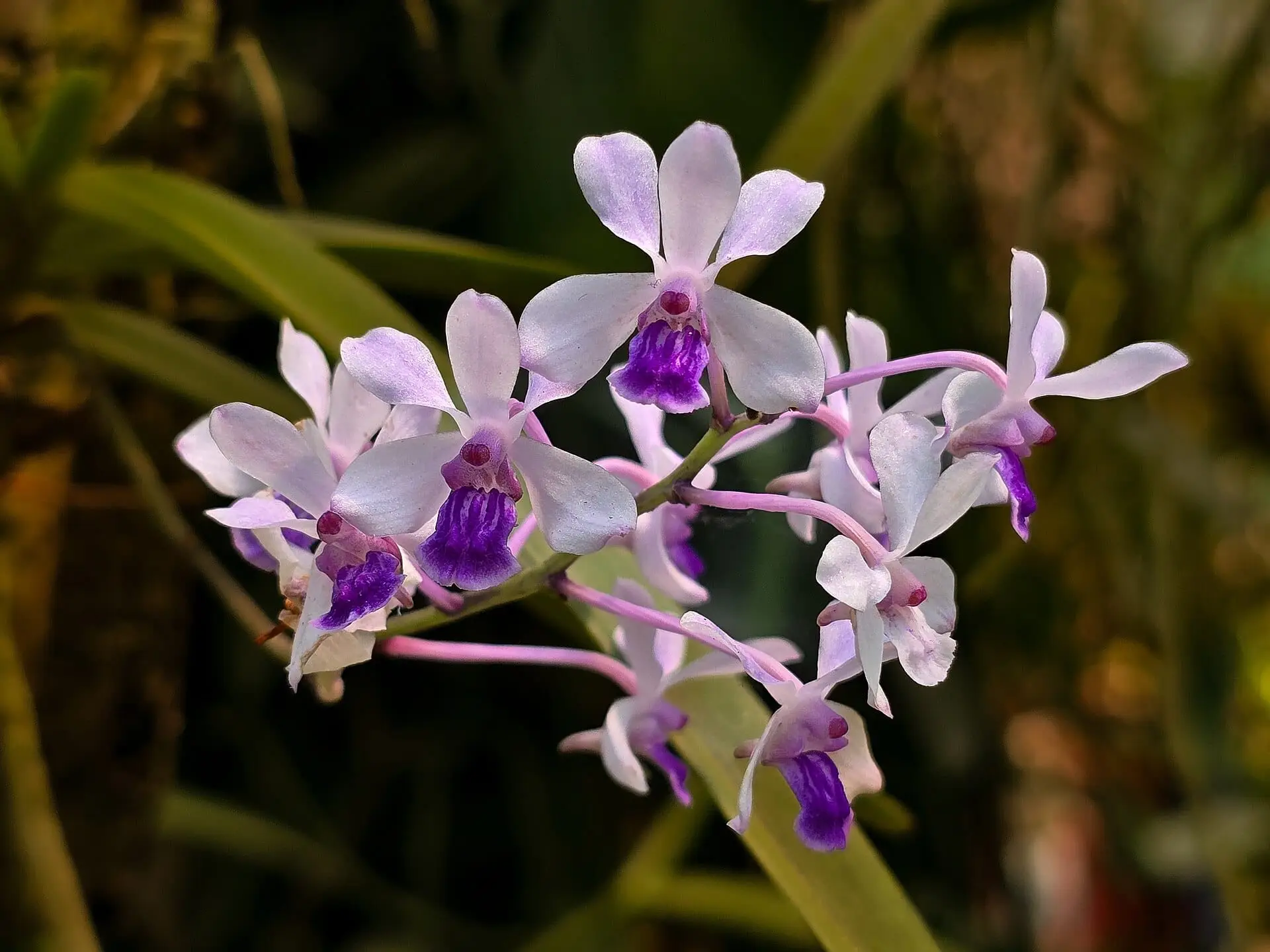
Just outside the park, the Kaziranga National Orchid and Biodiversity Park at Durgapur grows more than 500 kinds of orchid, along with bamboo, cane and local fruits and greens. It is a calm way to spend a hot afternoon. Tea gardens nearby are good for a walk, and boat rides on the Brahmaputra sometimes turn up river dolphins.
Learn the park’s story
Stop at the interpretation centre at the Bagori range to understand how the park came to be. Kaziranga began as a proposed reserve forest in 1905, after Mary Curzon, wife of the Viceroy, visited in 1904 and failed to see a single rhino. It became a wildlife sanctuary in 1950 and a national park on 11 February 1974. By the 2022 count it was home to 2,613 rhinos, the largest population of the species anywhere. Knowing a little of this history makes every rhino you see on the drive feel more special.
How to reach Kaziranga
By air: Jorhat airport is the nearest, about 97 km away. Guwahati’s Lokpriya Gopinath Bordoloi International Airport, about 217 km away, has the most flights from the rest of India, and many visitors fly in there and drive.
By rail: Furkating is the nearest railway station, about 75 to 80 km from the park. Jorhat station is about 90 km away and is linked by train to Guwahati and Dibrugarh. Guwahati station is about 240 km away.
By road: Kaziranga is about 195 to 220 km from Guwahati, about a 4 hour drive. The highway skirts the southern edge of the park, and Kohora, the main gateway, sits right on it. Buses from Guwahati, Jorhat and Tezpur stop at Kohora; Tezpur is about 75 km away and Jorhat about 96 km. Drive slowly through the park stretch, as animals cross the road, especially during floods.
Best time to visit Kaziranga
November to February: The best time to visit Kaziranga for most people. Mornings are cool and often misty, the grass has been burnt back so animals are easier to see, and migratory birds are around. This is also the busiest time, so book safaris early.
March and April: Warmer, with clear views across the grassland and animals gathering near water. Good for photography, but the afternoons get hot.
May to September: The monsoon. The park closes to visitors, as the Brahmaputra floods much of it, mostly in July and August. Most of the park’s rain, about 2,220 mm a year, falls in these months.
October: The park reopens in phases. In 2026 jeep safaris restarted in the Central and Western ranges on 3 October, with elephant safaris following a few weeks later. In 2025 the Central range opened on 2 November. Dates change every year, so check before you plan.
Permits and practical tips
- Permits: Assam does not need an Inner Line Permit. You need a safari permit for each ride, booked online or through your hotel. Rules can differ for Indian and foreign visitors, so check what applies to you when you book.
- Book ahead: In December, January and the holiday weeks, morning slots fill up fast.
- Dress for the drive: Winter mornings in an open jeep are cold. Carry a warm layer, a cap and a scarf for the dust, and wear dull colours.
- Binoculars: Bring a pair if you have one. Many animals stay a little way off the track.
- Respect the rules: Stay in the vehicle, keep your voice low and never ask the driver to chase an animal.
- Cash: Carry some cash for small shops and tips along the highway.
Where to stay
Most stays are close to the highway around Kohora and Bagori. Staying near Kohora makes early safaris easier. You can choose from government tourist lodges run by Assam Tourism, simple budget hotels along the main road, homestays in nearby villages and larger resorts, some of them beside rivers or tea gardens. Many places can arrange your safari permits, vehicle and guide if you ask a day ahead.
A suggested itinerary
Day 1: Arrival. Drive from Guwahati or Jorhat and check in near Kohora. In the late afternoon, walk around the orchid park at Durgapur or a tea garden nearby.
Day 2: Central and Western ranges. An early elephant ride or jeep safari in Kohora, back for breakfast, then an afternoon jeep safari in Bagori for rhinos and wild buffalo on the open grass.
Day 3: Eastern range. A morning jeep safari in Agaratoli with your binoculars, for the birds and the quiet. Rest in the afternoon, or take a boat on the Brahmaputra if one is running.
Day 4: Onward. One last morning drive if you have time, then head on. Kaziranga pairs well with Majuli, the river island across the Brahmaputra from Jorhat.
Kaziranga: questions people ask
When is Kaziranga National Park open?
The park closes every year for the monsoon, when the Brahmaputra floods much of it, and usually stays shut from May until the autumn. It reopens in phases: in 2026 jeep safaris restarted in the Central and Western ranges on 3 October, and elephant safaris follow a few weeks later. Check the opening dates for your year before you book.
What is the best time to visit Kaziranga?
November to April is the open season. December to February is cool and misty in the mornings, with migratory birds about. March gives clearer views for photography, though afternoons get warm.
How do I reach Kaziranga from Guwahati?
Kaziranga is about 195 to 220 km from Guwahati by road, which is about a 4 hour drive along the highway that runs past the park's southern edge. Buses from Guwahati and Jorhat stop at Kohora, the main gateway.
Which is the nearest airport and railway station to Kaziranga?
Jorhat airport is the nearest, about 97 km away. Guwahati airport, about 217 km away, has more flights. The nearest railway station is Furkating, about 75 to 80 km away, and Jorhat station is about 90 km away.
Which safari range in Kaziranga is best?
Kohora (Central) is the most popular and the easiest to start with. Bagori (Western) is open grassland where rhinos and wild buffalo are often seen. Agaratoli (Eastern) is quieter and good for birds, and Burapahar sees the fewest visitors.
What are the safari timings in Kaziranga?
Jeep safaris run in a morning and an afternoon slot, each about two to three hours. For the 2026 season, entry was 7:30 am to 10 am and 1:30 pm to 3 pm. Elephant safaris run early in the morning at Kohora and Bagori.
Will I see a tiger in Kaziranga?
Kaziranga has a good number of tigers, but they keep to the tall grass and sightings are never certain. Rhinos, elephants, wild buffalo and deer are far easier to see, so go for the whole park rather than one animal.
Do I need a permit to visit Kaziranga?
Assam does not need an Inner Line Permit. You do need a safari permit for each ride, which you can book online or through your hotel.
Want to see Kaziranga with us?
Tell us your dates and who is coming. We will put together a custom trip or a ready package to Kaziranga, with stays, a car and a local guide, and send it to you on WhatsApp.
More places nearby
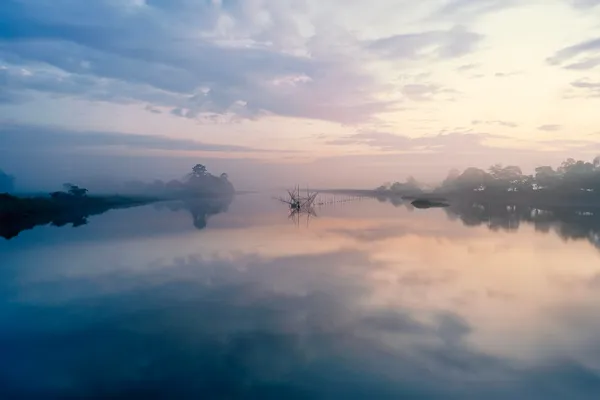 Assam
Majuli
Plan a trip to Majuli, the great river island of Assam: old satras, mask makers, Mising villages, the ferry from Jorhat and the best time to visit.
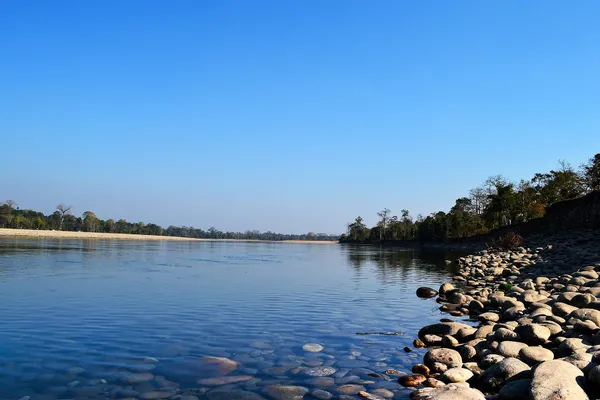 Assam
Nameri National Park
Plan your Nameri National Park trip: rafting on the Jia Bhoroli, forest walks, the rare white-winged wood duck, how to reach and the best time to visit.
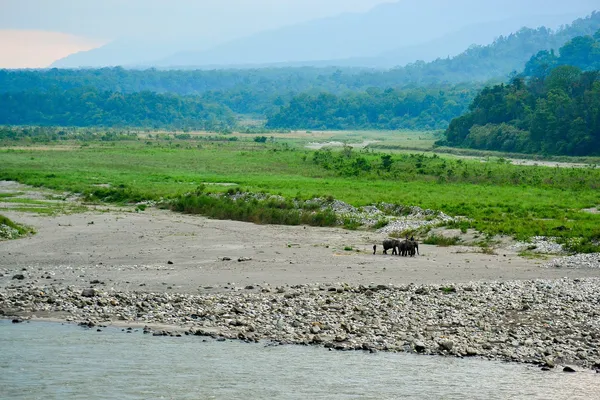 Assam
Manas
Plan your trip to Manas National Park in Assam: tigers, golden langurs, wild buffalo, jeep safaris, the river at Mathanguri, the season and how to reach.
Sources
Last checked 17 November 2026. Rules, roads and opening months change, so check with us or the local authorities before you travel.
- Wikipedia: Kaziranga National Park
- Outlook Traveller: Planning the perfect trip to Kaziranga
- ThePrint: Kaziranga reopens for tourists after annual monsoon closure (2026)
- The Sentinel: Central Kohora Range of Kaziranga reopens for tourists (2025)
- The Sentinel: How to reach Kaziranga National Park
- Wikivoyage: Kaziranga National Park
- Wikipedia: Inner Line Permit