


Majuli Travel Guide: Satras, Mask Making and the Ferry from Jorhat
Plan a trip to Majuli, the great river island of Assam: old satras, mask makers, Mising villages, the ferry from Jorhat and the best time to visit.
Photo: Shikhers, CC BY-SA 4.0
Majuli at a glance
- Best time
- October to March
- Ferry
- Nimati Ghat (Jorhat) to Kamalabari, 1 to 1.5 hours
- Nearest airport
- Jorhat; Lilabari (North Lakhimpur) also works
- Nearest railway station
- Jorhat
- By road
- From Lakhimpur district via Dhakuakhana
- Permits
- No ILP needed for Assam
- Ideal stay
- 2 to 3 nights
Photos of Majuli
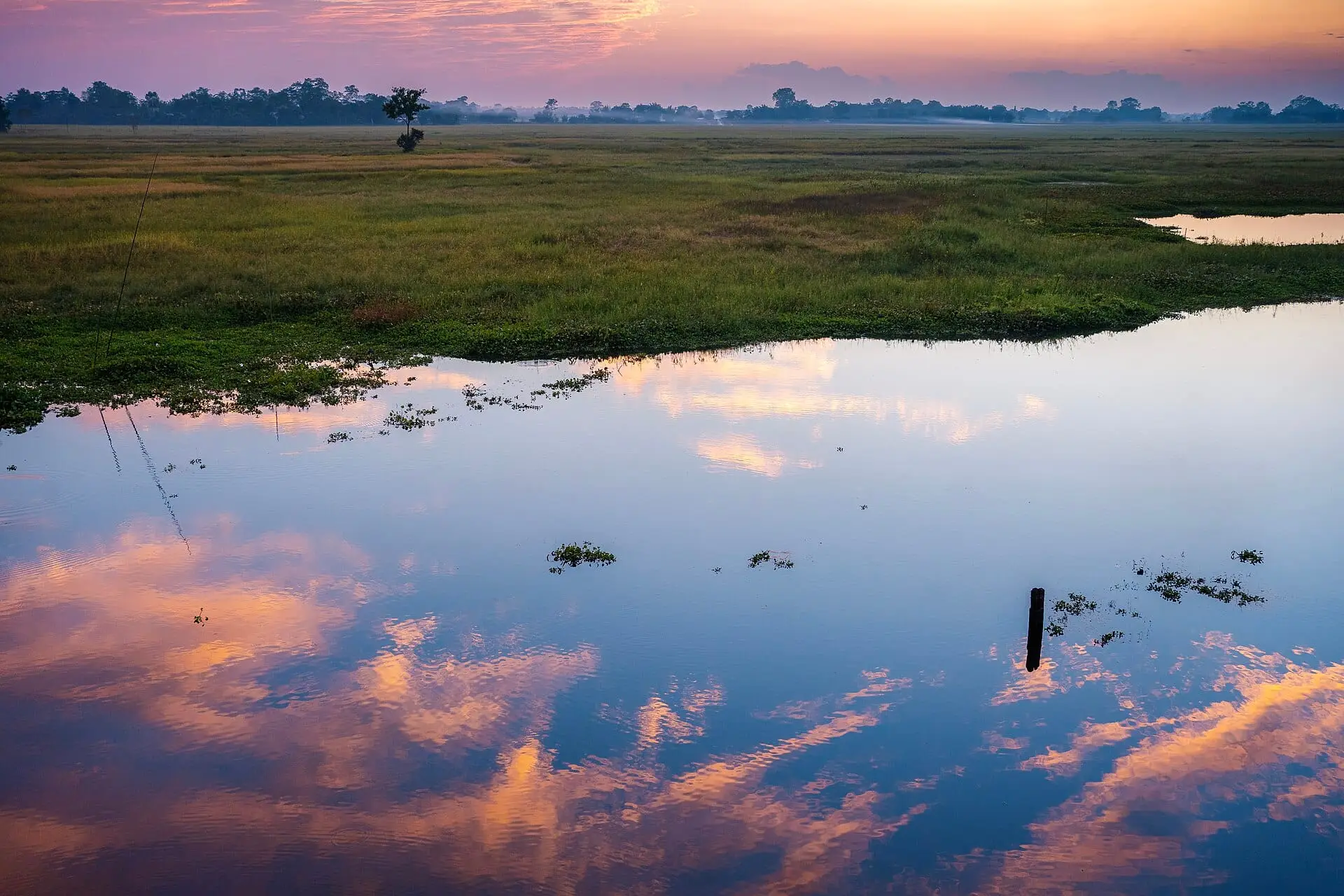
Flat green pastures on Majuli island, with the Brahmaputra all around. Photo: Shikhers, CC BY-SA 4.0 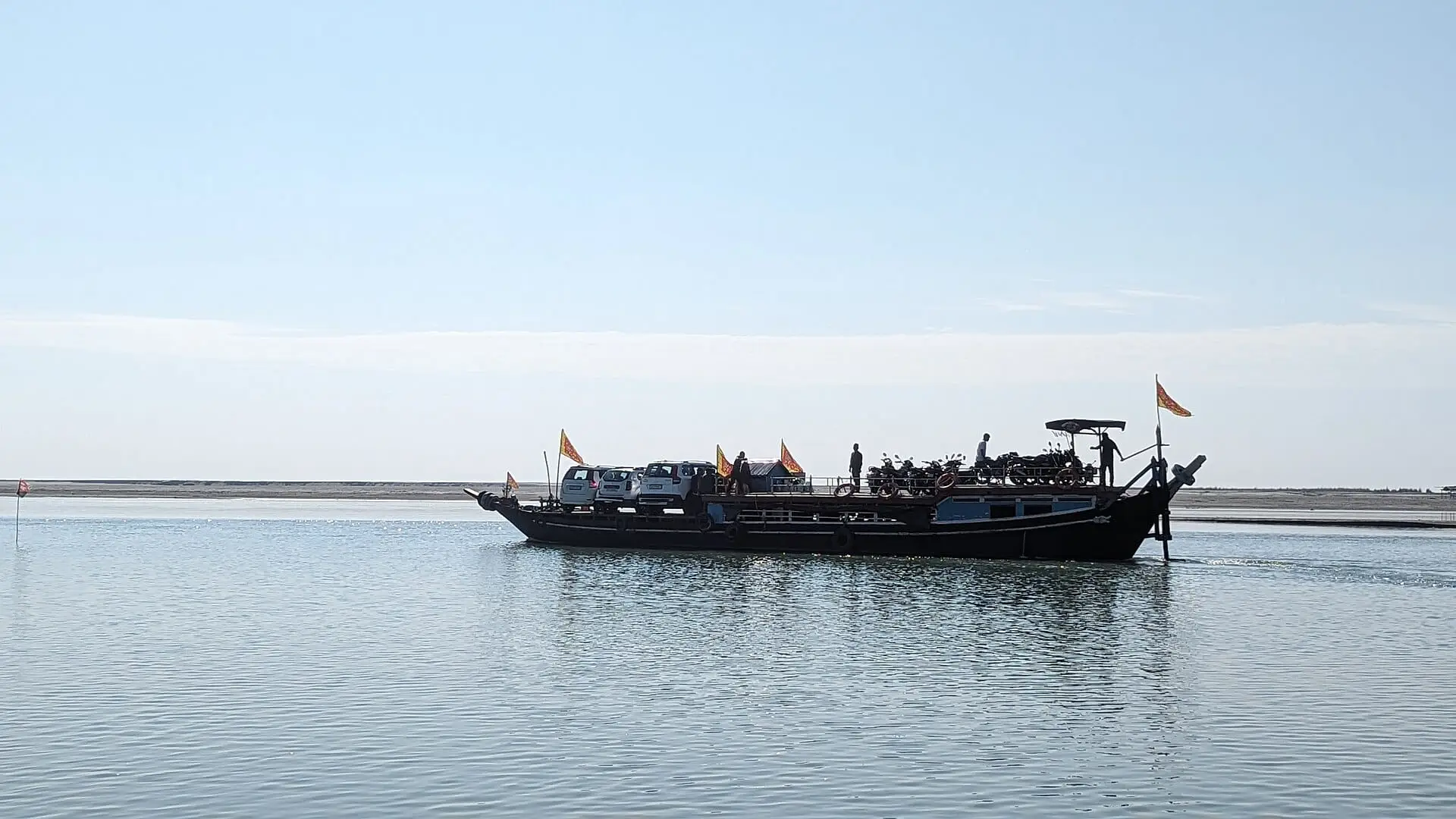
A passenger ferry crossing the Brahmaputra to Majuli. Photo: Joli Rumi, CC BY-SA 4.0 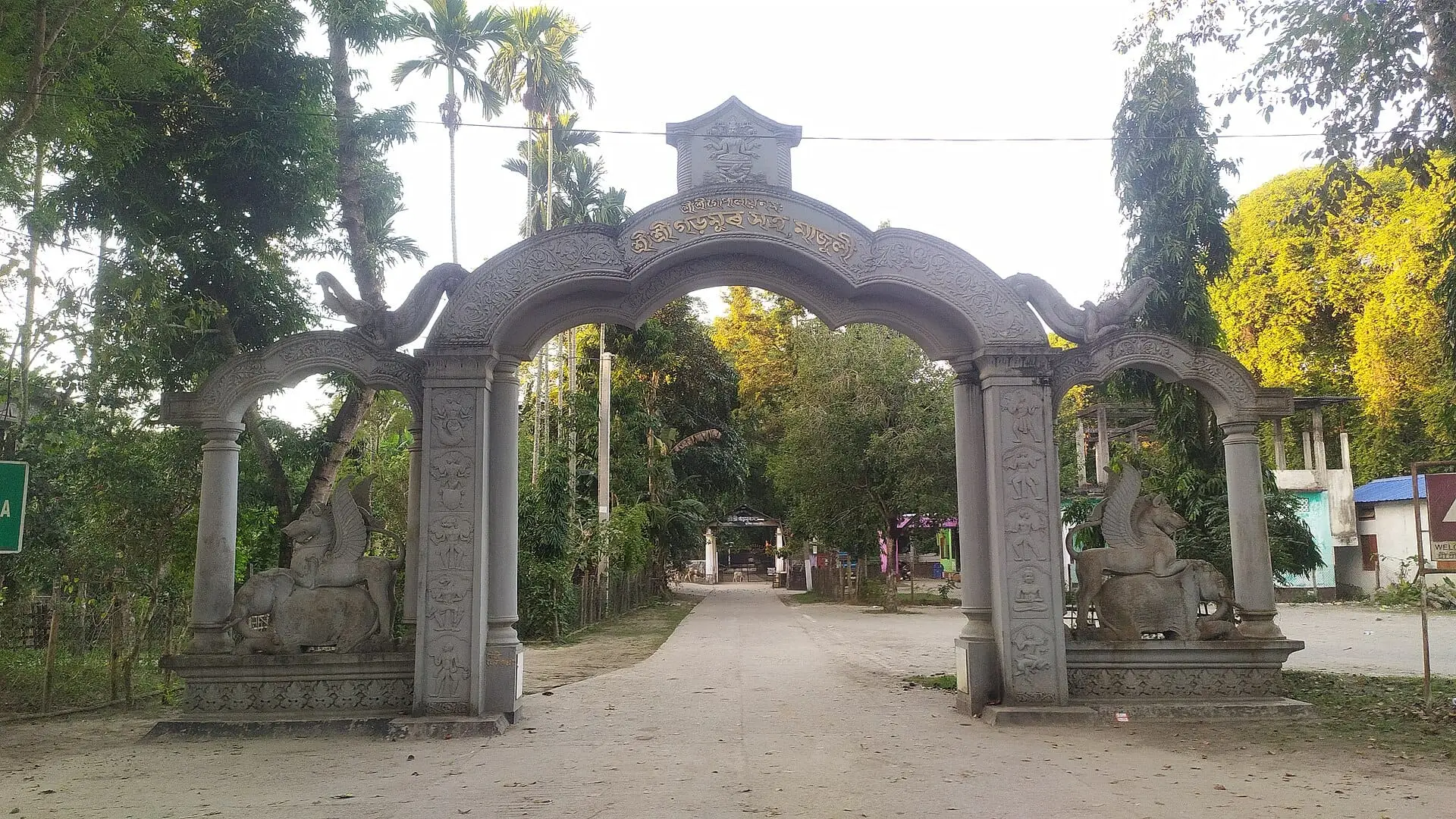
The main arched gate of Garamur Satra in Majuli. Photo: BhuyanBhaskar, CC0 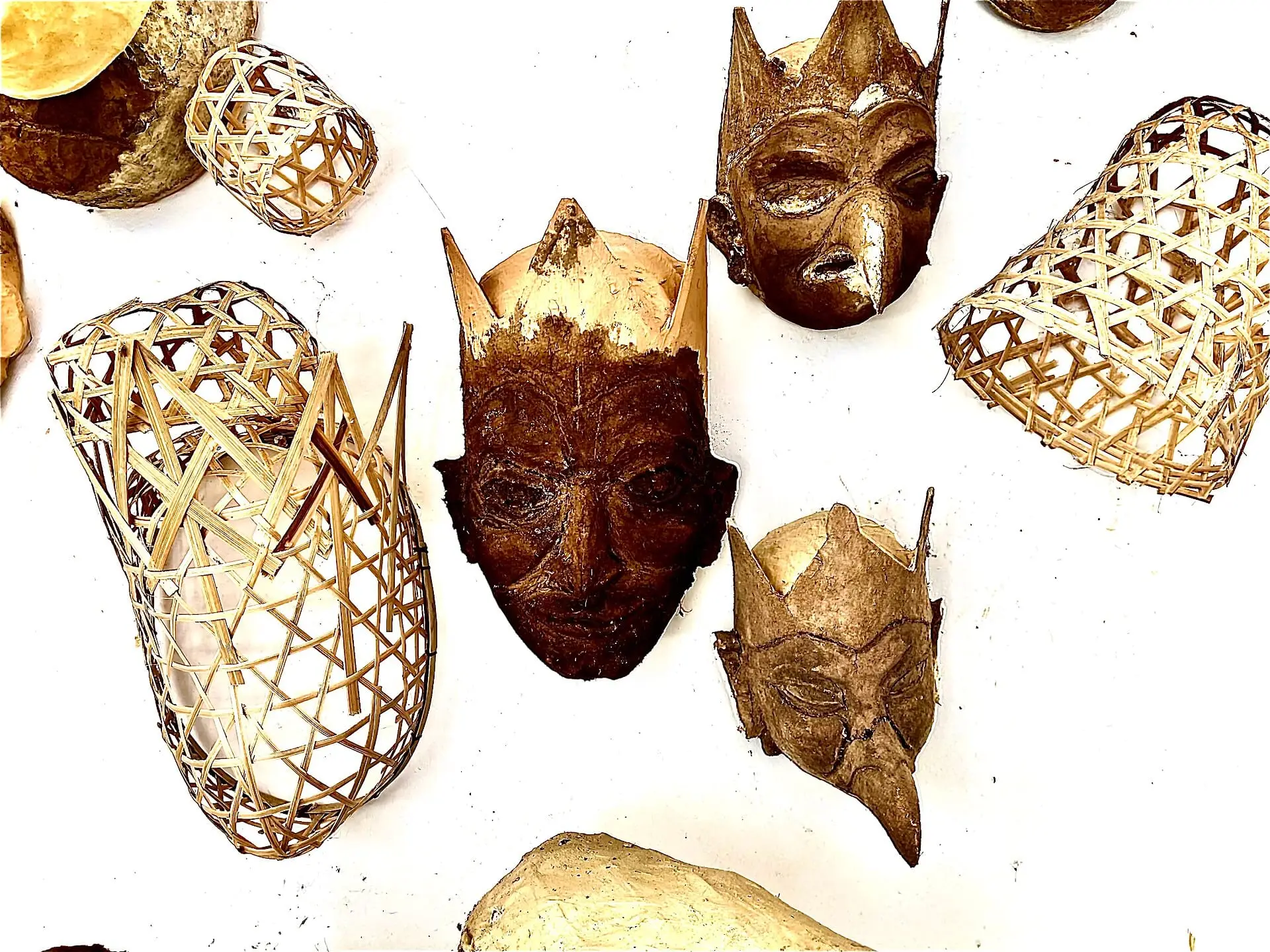
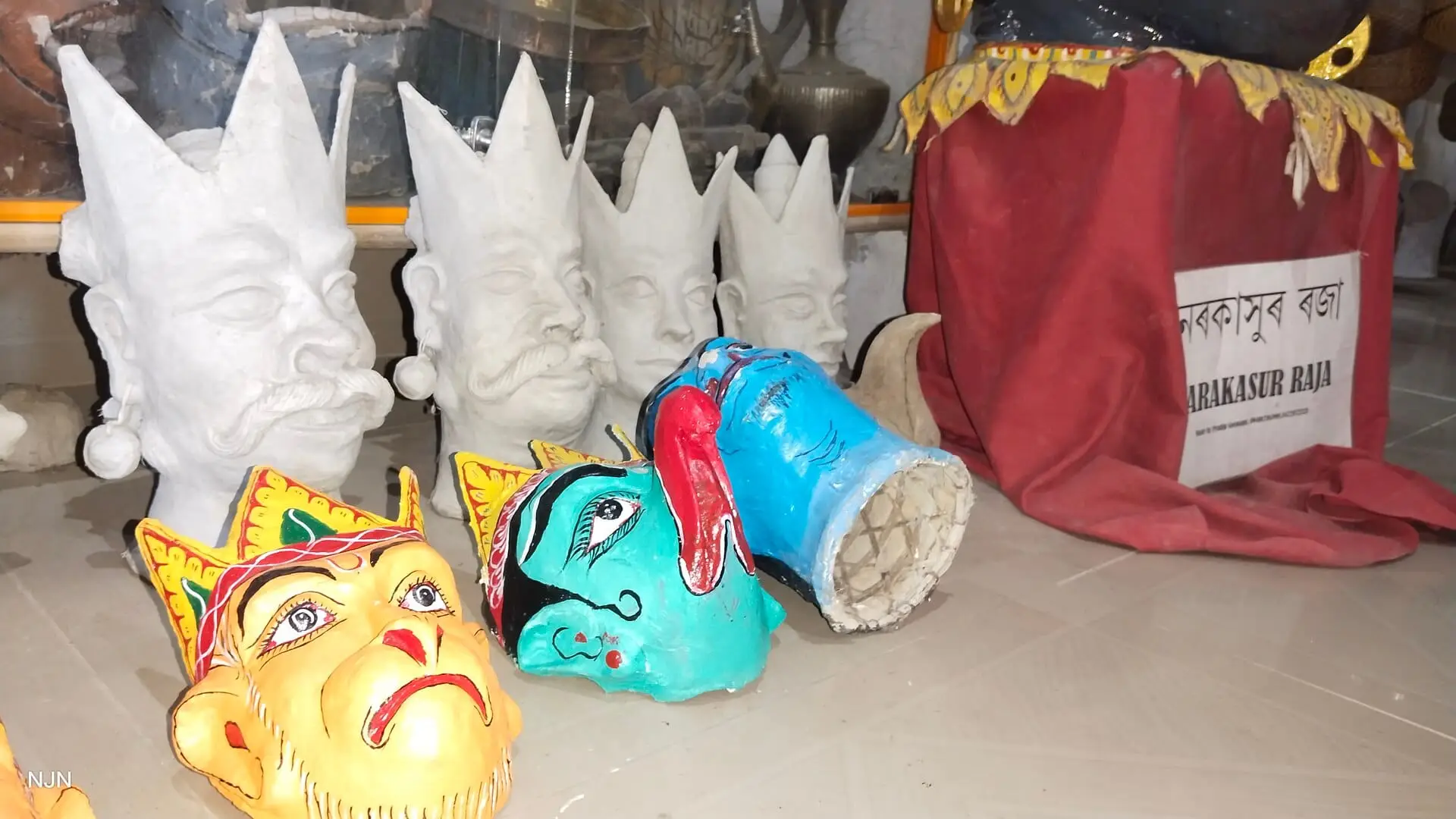
A handmade painted mask from Majuli, used in satra drama. Photo: Shayankbaruah, CC0 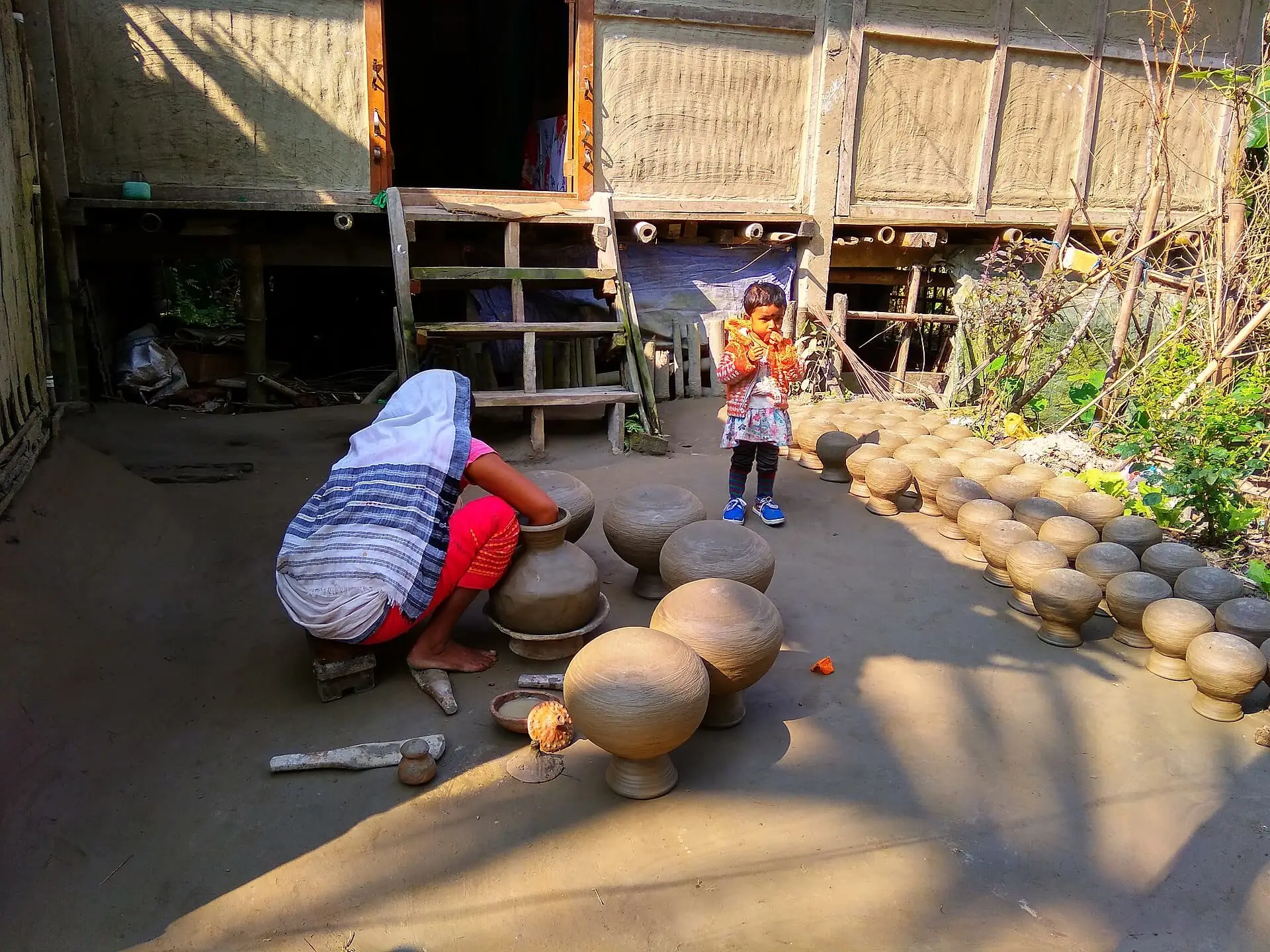
Handmade clay pottery at Salmora village on Majuli. Photo: Indranil Gayan, CC BY-SA 4.0 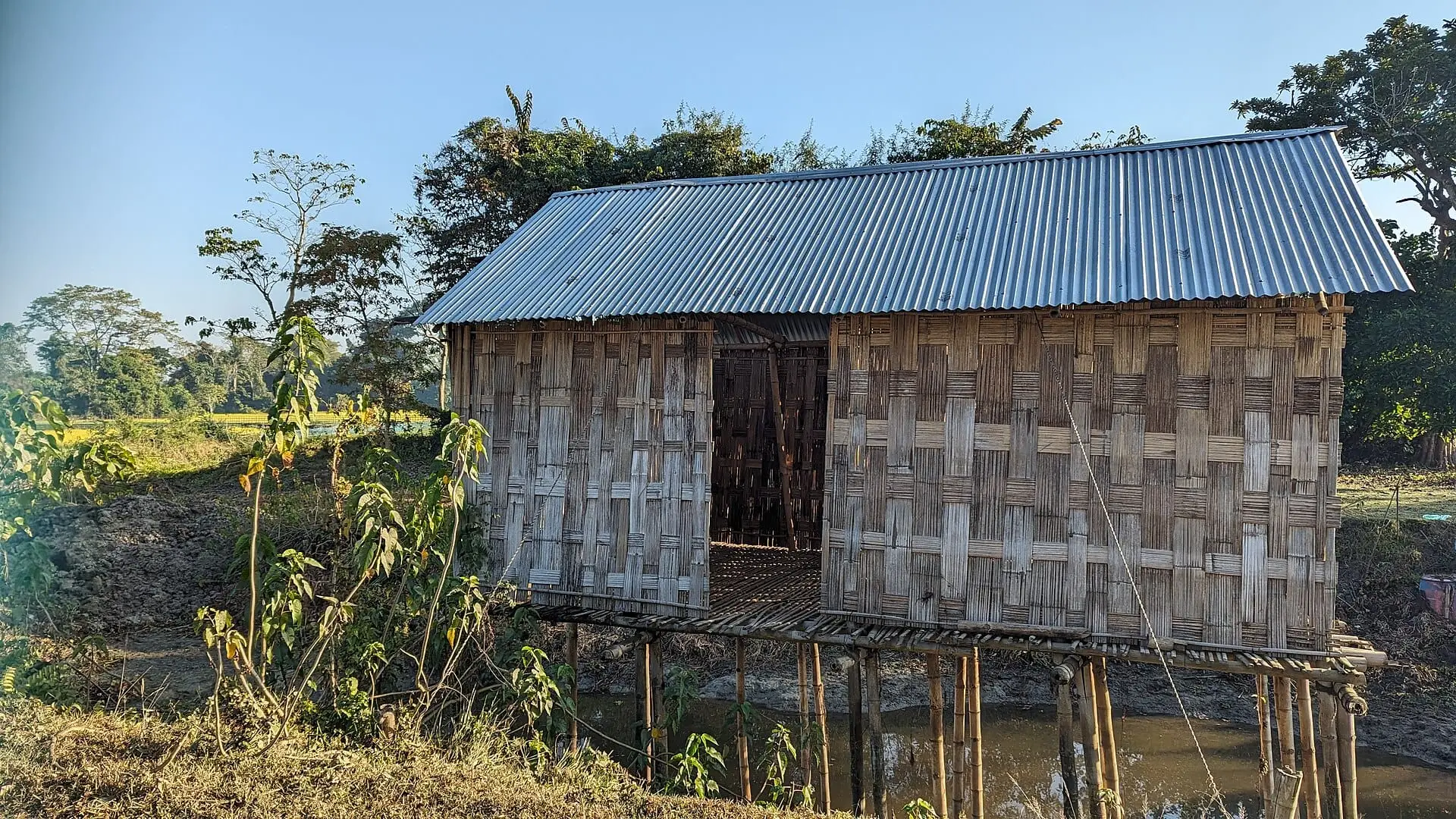
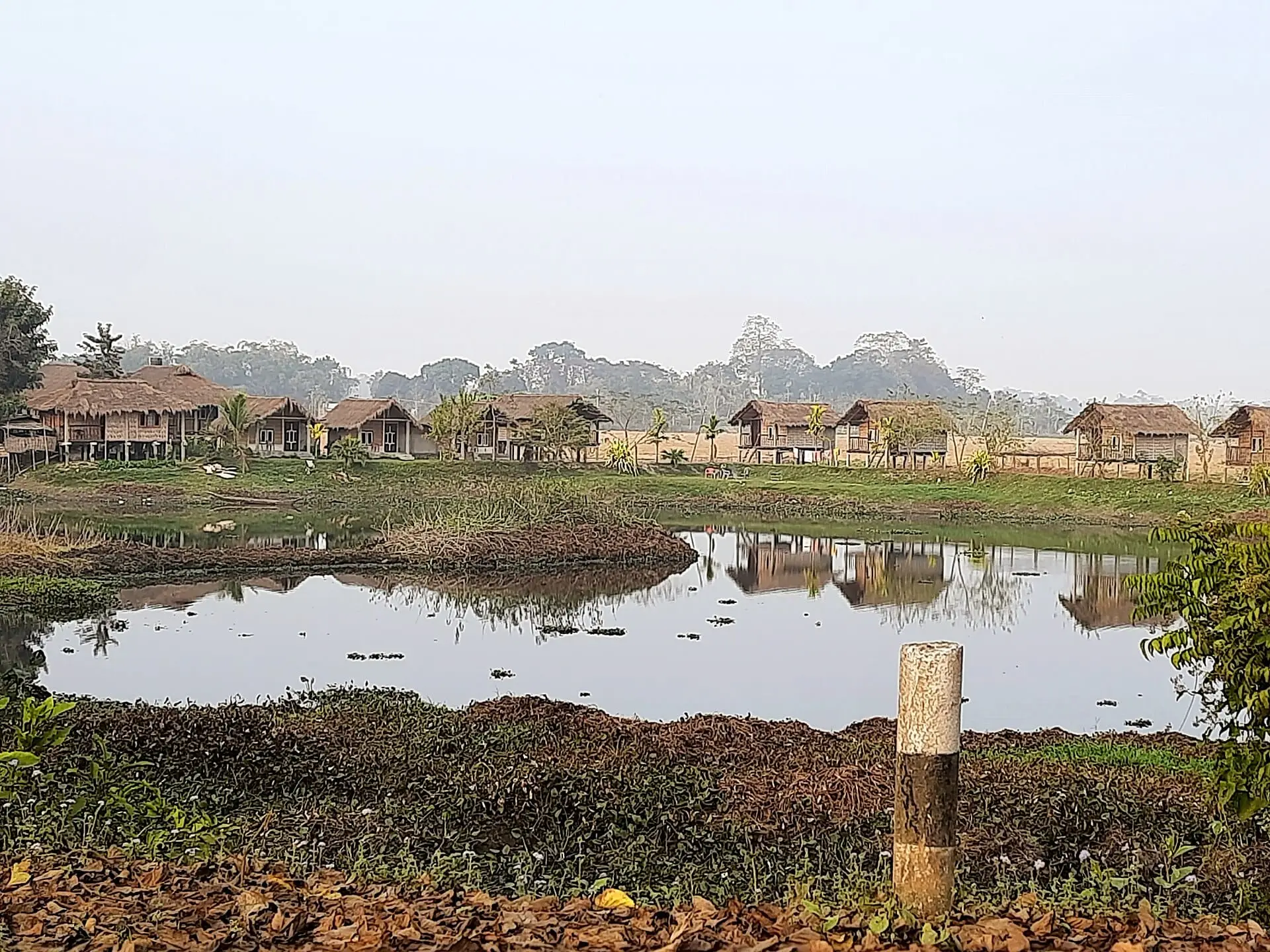
A bamboo house on stilts at Chitadar Chuk village, Majuli. Photo: Joli Rumi, CC BY-SA 4.0 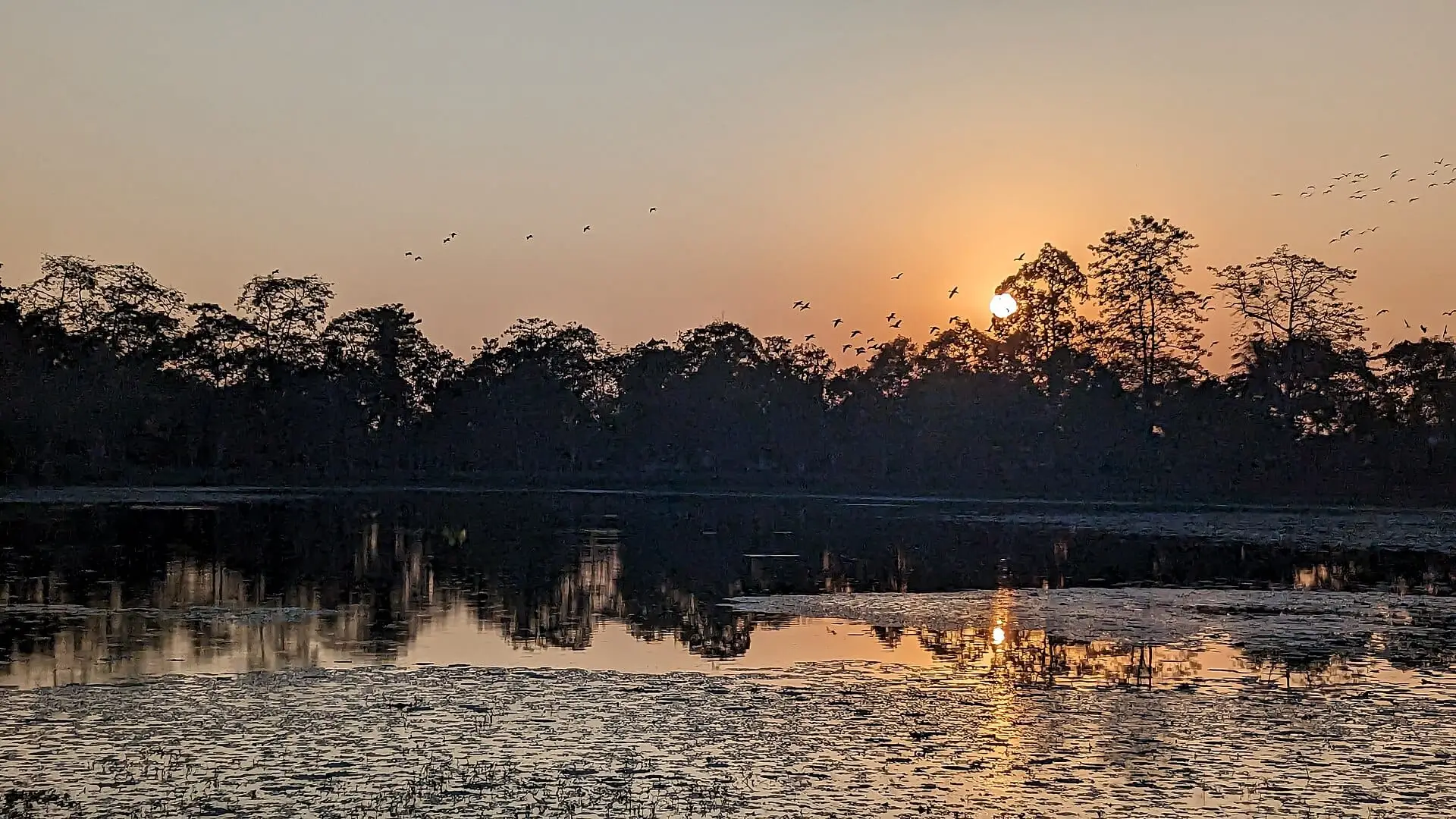
Sunrise over the Luhit river at Majuli. Photo: Joli Rumi, CC BY-SA 4.0
Did you know?
World's largest river island
Guinness World Records lists Majuli as the world's largest river island.
Home of the satras
The saint Srimanta Sankardev started the first satra on Majuli, and more than 20 are still active, where monks keep up music, dance, drama and mask making.
Masks in the British Museum
Masks made at Samaguri Satra, which dates to 1663, are shown in the British Museum. Mask maker Hem Chandra Goswami received the Padma Shri in 2023.
Pots shaped without a wheel
At Salmora, the potters shape their pots by hand and turn them with their toes, without a potter's wheel, a craft they have kept since the 16th century.
Festivals in and around Majuli
Worth timing your trip around. Rooms fill up fast at festival time, so plan early.
Raas
October – NovemberAli-Ai-Ligang
February – March
Discover Majuli
Majuli is a large, flat island in the middle of the Brahmaputra in Upper Assam, a short ferry ride from Jorhat. Guinness World Records lists it as the world’s largest river island, and in 2016 it became India’s first island district. It is a place of green paddy fields, grazing land, bamboo villages and slow river light, and you feel the pace drop the moment you step off the boat.
What makes Majuli special is the life on it. The island is the heart of the satras, the monasteries of Assam’s Vaishnav faith, where monks still keep up music, dance, drama and mask making. Mising families live in houses on stilts by the water, potters shape clay by hand, and the year runs on festivals. This Majuli travel guide covers the things to do, how to reach Majuli by ferry, the best time to visit and how to plan two or three easy days.
Things to do in Majuli
Visit the satras
The saint Srimanta Sankardev started the first satra on Majuli, and over time 65 were set up across the island. Floods and erosion have forced many to move or close, but more than 20 are still active. Each has its own speciality:
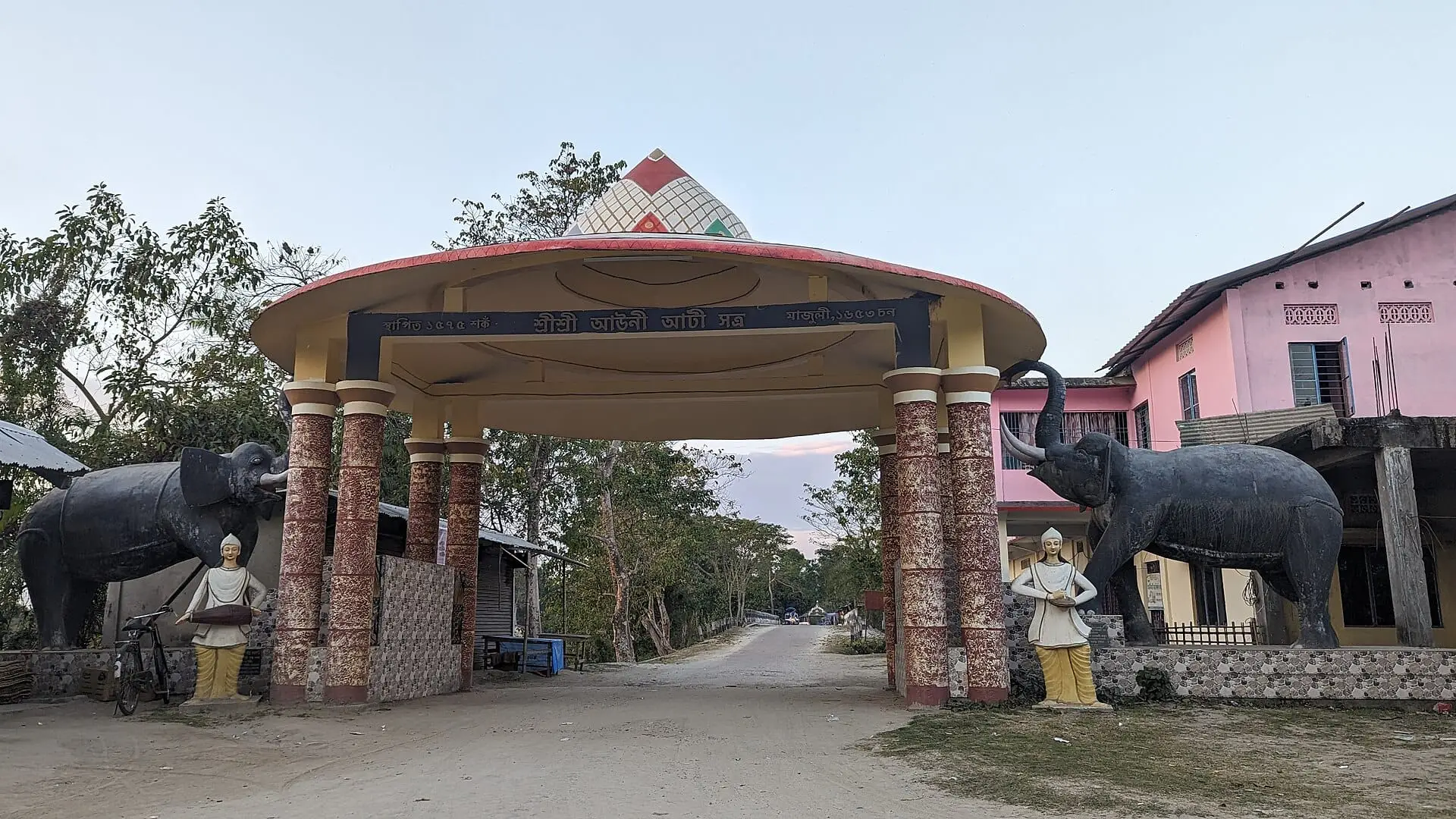
- Auniati Satra: known for the Paal Naam chanting festival and Apsara dance, with a collection of old Assamese utensils, jewellery and crafts.
- Kamalabari Satra: a centre for art, culture and classical studies, also known for its boat making.
- Dakhinpat Satra: home of the Raas festival, first performed here in 1840.
- Garamur Satra: known for its Raas celebrations and a collection of old cannons.
- Benegenaati Satra: keeps royal robes and a gold umbrella from the Ahom king Gadadhar Singha.
Visit quietly, dress modestly, take your shoes off where asked and ask before taking photographs inside.
Watch the mask makers at Samaguri
Samaguri Satra, founded in 1663, has kept the craft of mask making alive since the 1600s. Monks and artisans build the masks from bamboo and clay to play gods, demons and animals from the Ramayana and Mahabharata in bhaona, the satra drama. Some are small face masks and some are much larger. Some Samaguri masks are now in the British Museum. The satra is open from 7 am to 5 pm, and you can often watch a mask take shape.
See the potters of Salmora
In Salmora, a potters’ community has made clay pots since the 16th century. The women shape each pot by hand and turn it with their toes, with no potter’s wheel at all. Floods and embankments have made good river clay harder to find, so buying a small piece directly helps keep the craft going.
Spend time in a Mising village
The Mising are the largest community on Majuli and Assam’s second-largest plains tribe. Their chang ghar, houses of bamboo, timber and thatch raised on stilts, let floodwater pass underneath. Women weave on handlooms at home, making traditional cloth such as the ege and ribi gaseng. A homestay or a walk through a village with a local guide is the best way to understand how life here moves with the river.
Go to a festival
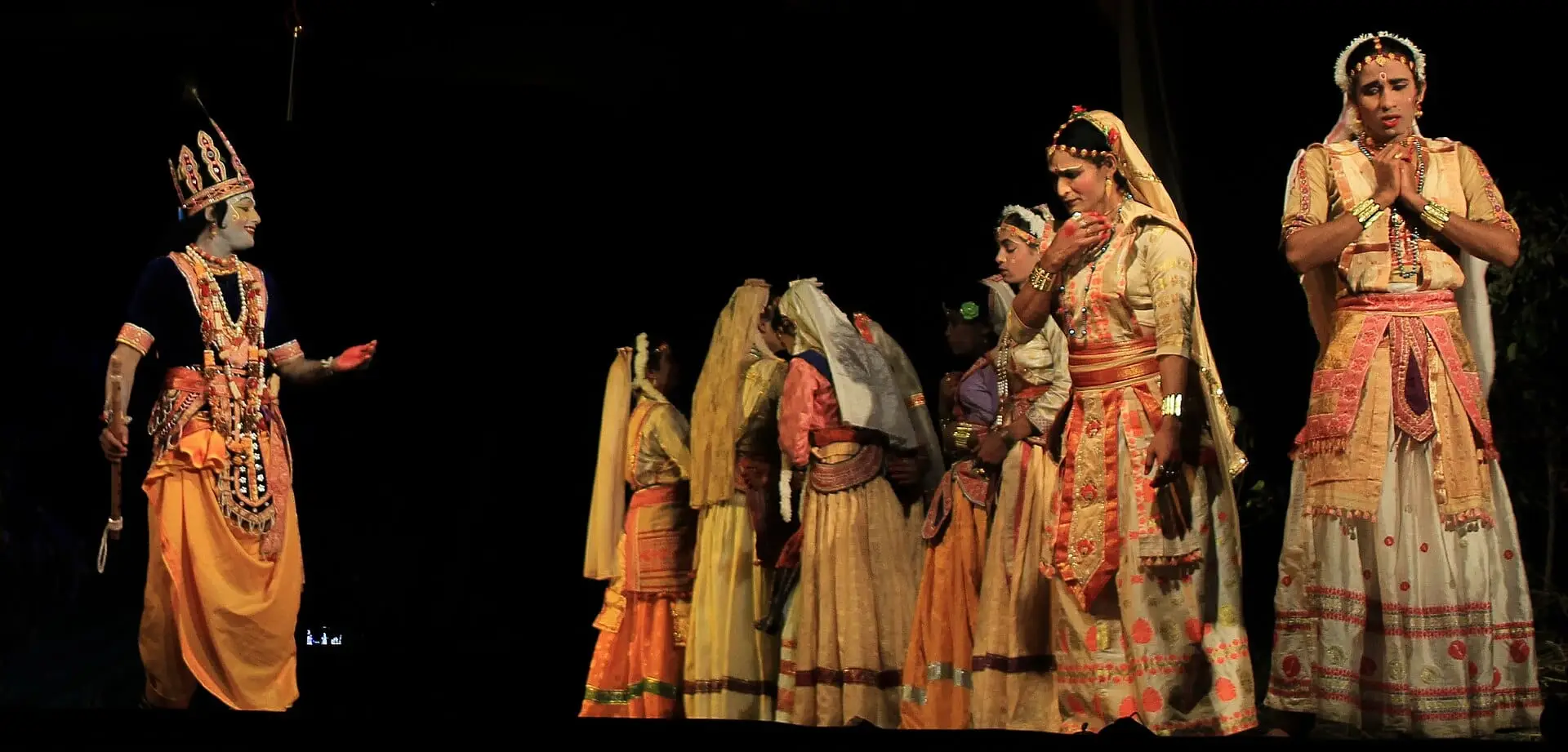
If you can, time your trip for Raas, held on the full moon of Kati and Aghun (October or November) for about four to five days, with performances from the life of Krishna. Paal Naam at Auniati Satra runs over the last five days of Kati. The Mising spring festival Ali-Ai-Ligang falls on the first Wednesday of Phagun (February or March), with dancing, feasts and the sowing of the first seeds.
Slow down by the water
Sunrise and sunset over the Luit channel are reason enough to stay a night. In winter, migratory birds gather at Sakuli Beel, and the district also suggests boating on the Tuni river.
How to reach Majuli
By air: Jorhat airport has flights from Guwahati and other cities. From Jorhat it is a short drive to the ferry. Lilabari airport near North Lakhimpur is another option if you come by road from the north bank.
By rail: Majuli has no railway. The district names Jorhat as the nearest railhead, and Mariani Junction is another station close by.
By road and ferry: Get to Jorhat first. Buses run from Guwahati to Jorhat, about 250 km away. From Jorhat, Nimati Ghat is about 12 to 20 km. Government ferries cross from Nimati Ghat to Kamalabari on Majuli in about 1 to 1.5 hours. They run in daylight only, from early morning to mid-afternoon, and timings change with the river, so go early and check on the day. Fog, strong currents or very high or low water can delay or cancel a crossing. Vehicle ferries run at times, but confirm before you bring a car or bike.
From the north bank: You can also reach Majuli by road from Lakhimpur district via Dhakuakhana.
A road bridge from the Jorhat side has been under construction for some years, but for now the ferry is still the main way across.
Best time to visit Majuli
October to March: The best time to visit Majuli. Winter days are cool, about 7 to 18°C, the skies are clear, and the satras are busy with festivals. November, once the floodwaters go down, is the busiest month.
March to July: Hot and humid, with temperatures up to about 34°C. Quieter, but the heat can be tiring.
Monsoon: Majuli gets about 215 cm of rain a year. Floodwaters can rise more than 1.5 metres, ferries can be disrupted and parts of the island go under water. It is not a good time for a holiday visit.
Permits and practical tips
- Permits: Assam does not need an Inner Line Permit, so Indian visitors can travel freely. Foreign visitors should check current rules.
- Plan around the ferry: Ferries stop by mid-afternoon. Do not plan a late arrival in Jorhat and hope to cross the same day.
- Getting around: The island is spread out. Autos can be hired for the day from the ferry terminal, and your stay can usually arrange one. Agree the plan before you set off.
- Food: Try local rice dishes such as komal saul, a soft rice eaten after soaking in warm water. Carry some snacks for long days between villages, as places to eat are few.
- Cash: Carry enough cash for your stay, crafts and transport.
- Etiquette: Satras are places of worship. Dress modestly, keep your voice low and ask before photographing people or rituals.
Where to stay
Majuli has a good spread of simple stays. You can choose from bamboo cottages and family homestays, many in Mising villages close to the river, government circuit houses and tourist lodges, and small guest houses around Kamalabari and Garamur. Homestays are the warmest choice, often with home-cooked meals. Around Raas, rooms fill fast and many families open their homes to guests.
A suggested itinerary
Day 1: Across the river. Reach Jorhat in the morning and take a late-morning ferry from Nimati Ghat. Settle into your stay, then walk to the river for the sunset.
Day 2: Satras and masks. Visit Auniati and Kamalabari in the morning, then Samaguri to watch the mask makers. End the day at Garamur or Dakhinpat.
Day 3: Villages and crafts. Spend the morning in a Mising village and the afternoon with the potters of Salmora. In winter, add a visit to Sakuli Beel for the birds.
Day 4: Back to the mainland. Take a morning ferry back to Jorhat. From there, Kaziranga National Park is an easy drive for the next part of your trip.
Majuli: questions people ask
How do I reach Majuli?
Most people take the ferry from Nimati Ghat near Jorhat to Kamalabari on Majuli. The crossing takes about 1 to 1.5 hours. You can also come by road from Lakhimpur district on the north bank, via Dhakuakhana.
What are the ferry timings to Majuli?
Ferries run in daylight only, roughly from early morning to mid-afternoon, and the last boats leave early. Timings change with the season and the river, and fog or strong currents can delay or cancel crossings, so check on the day and reach the ghat early.
How far is Nimati Ghat from Jorhat?
Nimati Ghat is about 12 to 20 km from Jorhat, depending on where in town you start. Plan for a short taxi or bus ride to the ghat before the ferry.
What is the best time to visit Majuli?
October to March is the best time to visit Majuli. Winter days are cool, around 7 to 18°C, and November is a lively month, with the Raas festival and the floodwaters gone. Summer, from March to July, is hot and humid.
What is Majuli famous for?
Majuli is famous for its satras, the monasteries of Assam's Vaishnav tradition started by Srimanta Sankardev. It is also known for mask making, hand-shaped pottery, Mising villages with houses on stilts and its festivals, especially Raas.
When is the Raas festival in Majuli?
Raas is held on the full moon of the Assamese months of Kati and Aghun, which falls in October or November. It runs for about four to five days, and families on the island host many of the visitors.
How many days do I need in Majuli?
Two nights give you time for the main satras, a mask maker, a pottery village and a Mising village without rushing. Add a night if you are coming for Raas or want slow days by the river.
Do I need a permit to visit Majuli?
No. Assam does not need an Inner Line Permit, so Indian visitors can travel to Majuli freely. Foreign visitors should check the current rules before they travel.
Want to see Majuli with us?
Tell us your dates and who is coming. We will put together a custom trip or a ready package to Majuli, with stays, a car and a local guide, and send it to you on WhatsApp.
More places nearby
 Assam
Kaziranga
Plan your trip to Kaziranga National Park in Assam: one-horned rhinos, jeep and elephant safaris, the four safari ranges, the best time to go and how to reach.
 Arunachal Pradesh
Ziro Valley
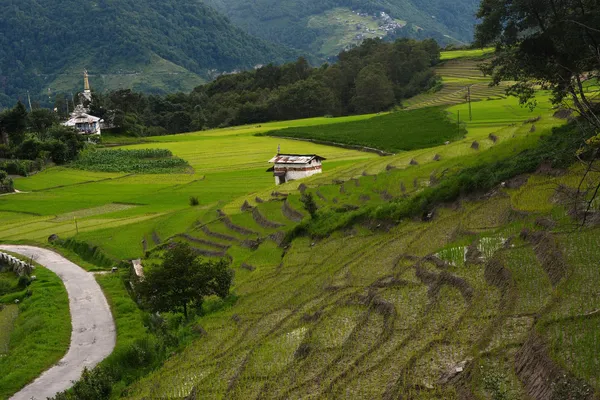
Plan a Ziro Valley trip: Apatani villages, rice and fish paddies, pine hills and Talley Valley, plus how to reach, the best time to visit and permits.
 Assam
Dima Hasao
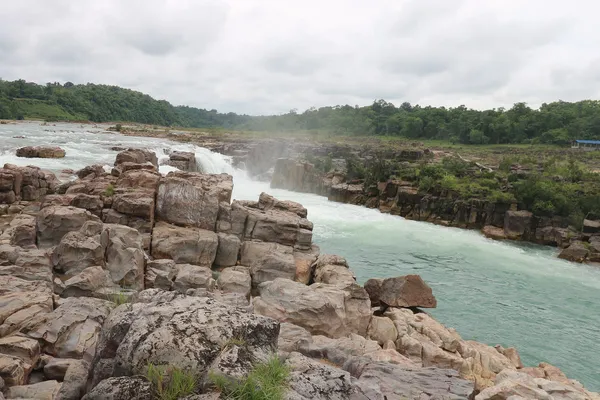
Explore Dima Hasao in the hills of Assam: Jatinga's bird nights, Panimoor falls, old Maibang, Umrangso, Dimasa culture and the Lumding to Silchar railway.
Sources
Last checked 17 November 2026. Rules, roads and opening months change, so check with us or the local authorities before you travel.
- Majuli District, Government of Assam: District at a glance
- Majuli District, Government of Assam: Festival celebrations
- Incredible India: Samaguri Satra
- Wikipedia: Majuli
- Wikivoyage: Majuli
- Al Jazeera: On huge river island in India's Assam, annual floods threaten local arts
- Down To Earth: Meet Assam's second-largest plains tribe
- Assam Info: Nimati Ghat, Jorhat
- Wikipedia: Inner Line Permit